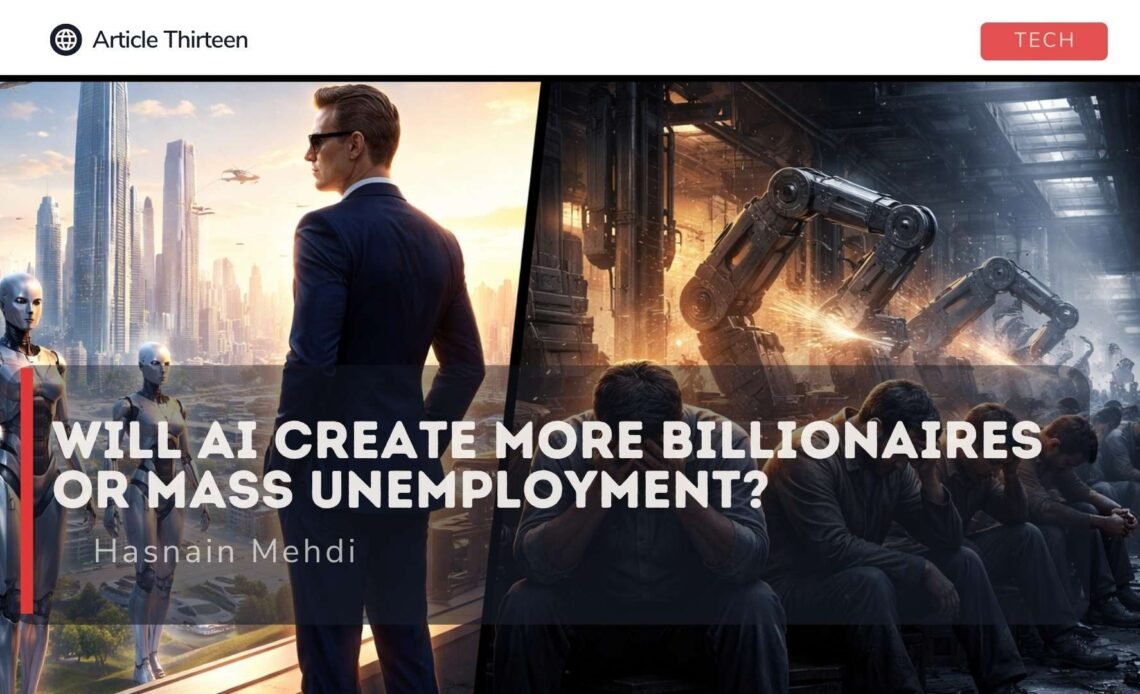
Artificial Intelligence (AI) is no longer just transforming industries, it is redefining who wins and who loses in the global economy. In 2026, the big question is: Will AI Create More Billionaires or Mass Unemployment?
As businesses rapidly adopt automation, AI is creating billion-dollar companies while simultaneously replacing millions of routine jobs.
This growing divide between wealth creation and job displacement is becoming one of the most important economic debates of our time.
AI and Wealth Creation: The Billionaire Effect

AI has been a catalyst for enormous wealth creation. Tech giants, industrial tech companies, and AI startups are generating billions in valuation through automation, predictive analytics, and AI-powered decision-making. For instance:
- Tech giants envision a future beyond smartphones, focusing on AI-driven ecosystems that create new revenue streams.
- Companies like Nvidia, despite recent fluctuations in stock value (why is Nvidia stock going down today Latest Analysis), are at the center of the AI hardware revolution.
For example, companies like Microsoft are rapidly monetizing AI through tools like Microsoft 365 Copilot, its official AI‑powered productivity assistant.
while, Nvidia dominates the AI hardware market by supplying the graphics processing units (GPUs) essential for training and running advanced AI models.
According to a McKinsey report on AI economic potential, artificial intelligence could generate up to $13 trillion in global economic value by 2030, significantly boosting corporate profits and accelerating the rise of new billionaires.
This aligns with trends observed during global tech disruptions caused by conflicts and supply chain challenges (US-Iran conflict disrupt the $3 trillion global tech industry).
AI and Labor Market Disruption: Rising Unemployment Risks
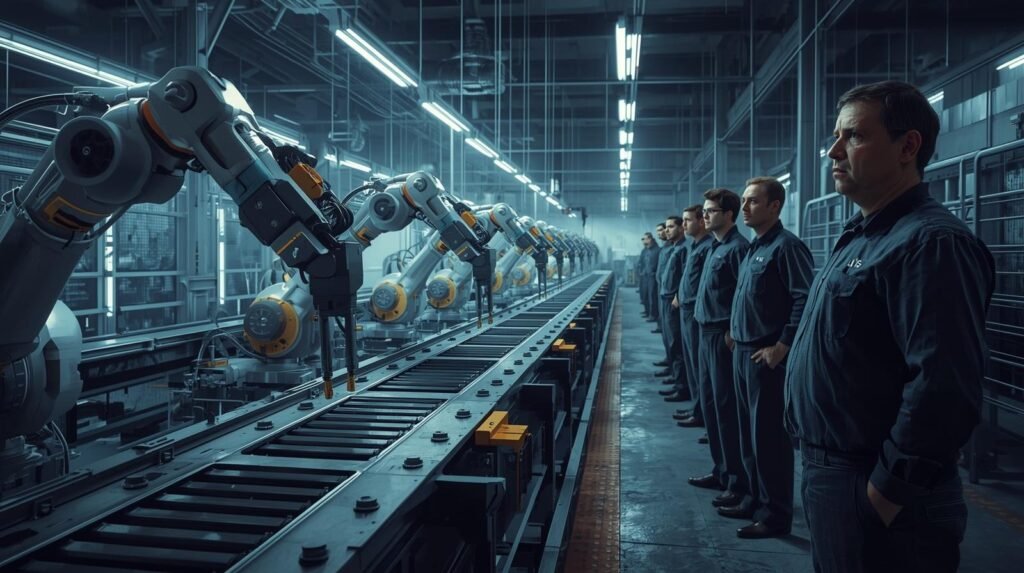
While billionaires thrive, workers in traditional industries may face job displacement. Automation and AI-powered workflows reduce demand for repetitive tasks in sectors like manufacturing, logistics, and administrative services.
- According to the World Economic Forum Future of Jobs Report 2023, an estimated 85 million jobs may be displaced by automation while 97 million new roles could emerge, indicating a major shift in the labor market rather than total job loss.
- Education tech companies must evolve to prepare workers for AI-driven roles (education tech companies).
Moreover, global conflicts and geopolitical tensions, such as those affecting the Strait of Hormuz and oil prices, exacerbate economic uncertainty (Strait of Hormuz closure,oil prices rise and trigger global inflation).
A Global Perspective: Economic Inequality and Technological Power
The rise of AI is also creating concentration of wealth and technological power.
According to the PwC Global AI Impact Report, artificial intelligence could boost global GDP by up to 14% by 2030, with most benefits concentrated in leading economies.
- The US vs China tech war illustrates how AI development is tied to geopolitical influence (US vs China tech war 2026).
- Cyber warfare and AI-enabled digital threats are increasingly influencing global business and labor dynamics (cyber warfare).
These trends suggest a dual reality: AI creates extreme wealth for a few while increasing vulnerability for many workers globally.
The Role of Policy and Education
Governments and educational institutions have a critical role in balancing AI-driven wealth creation with employment stability:
- Upskilling and reskilling initiatives can prepare the workforce for AI-centric roles.
- Progressive taxation and social policies could redistribute gains from AI-driven wealth creation.
- Collaboration between industry, academia, and government is vital to prevent social unrest and economic imbalance.
Will AI Create More Billionaires or Mass Unemployment in 2026?
The reality is that AI is likely to create both more billionaires and more unemployment at the same time.
On one hand, companies investing in artificial intelligence are generating massive profits, creating a new wave of billionaires in the global tech industry.
On the other hand, AI-driven automation is replacing routine jobs across sectors like manufacturing, customer service, and logistics.
In 2026, the real impact depends on how quickly economies adapt.
If workers are reskilled and new opportunities are created, AI can drive growth; otherwise, it may widen economic inequality and job loss.
Conclusion
So, will AI create more billionaires or mass unemployment? The answer lies in how society manages AI adoption. Without strategic interventions, the technology could indeed widen the gap between the ultra-wealthy and the working class. Conversely, responsible AI deployment paired with workforce preparation can foster inclusive economic growth.
As the debate continues, the question remains: will AI create more billionaires or mass unemployment in the coming years?
For readers interested in understanding how AI is influencing global markets, check out our articles on AI agent military use.
Frequently Asked Questions (FAQs)
Will AI create more billionaires or mass unemployment?
AI is likely to do both—creating enormous wealth for tech leaders while replacing repetitive jobs across industries.
How will AI affect jobs in 2026?
AI will automate routine tasks in manufacturing, logistics, and customer support while creating demand for tech-savvy roles.
Which industries are most at risk of job loss?
Manufacturing, administrative services, and data entry roles face the highest risk from automation and AI technologies.
Can AI create new opportunities for workers?
Yes, roles in data analysis, cybersecurity, AI development, and digital services are emerging rapidly.
Is economic inequality increasing because of AI?
Yes, AI concentrates wealth in leading tech companies and investors, widening the gap between skilled and unskilled workers.
How can people prepare for AI-driven changes?
Upskilling, reskilling, and continuous digital learning are essential to stay relevant in an AI-powered economy.
What can governments do to balance wealth and jobs?
Governments can implement education initiatives, workforce training, and social policies to reduce inequality and protect employment.