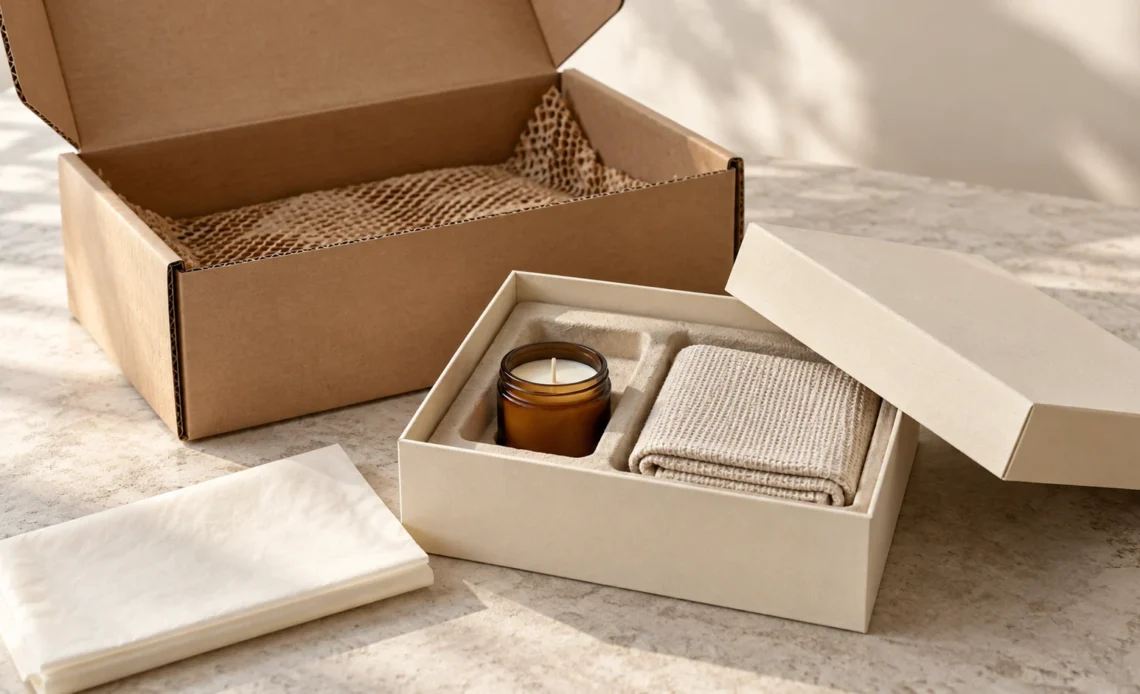
A gift box has two jobs. It should protect what is inside and make the gift feel thoughtfully presented.
The best box depends on the product, how it will reach the recipient, and the impression you want to create. Lightweight retail gifts usually work well in folding paperboard cartons. Products sent through a delivery network often need corrugated protection. Premium gift sets may suit rigid boxes, although they can still require an outer shipping carton.
The material should come first. Color, foil and ribbon cannot rescue a box that bends under the product or allows it to move around in transit.
“Cardboard” can mean three different materials
Cardboard is a broad everyday term. Packaging suppliers may use it to describe paperboard cartons, corrugated boxes and rigid setup boxes, even though the three materials behave differently.
Suppliers often group these options under cardboard packaging, but comparing the construction of each format is more useful than choosing by appearance alone.
| Material | Best suited to | Main advantage | Important limitation |
|---|---|---|---|
| Folding paperboard | Chocolates, cosmetics, accessories and lightweight retail gifts | Smooth printing and efficient flat storage | Limited protection for heavy or fragile products |
| Corrugated board | Mailed gifts, subscription boxes and larger gift sets | Good cushioning and strength for its weight | Can feel less luxurious without careful design |
| Rigid setup board | Jewelry, perfume, corporate gifts and premium collections | Substantial feel and polished presentation | Higher cost, storage space and shipping weight |
Folding paperboard
Folding cartons are made from a single layer of paperboard that is cut, creased and folded into shape. Solid bleached sulfate, often called SBS, provides a smooth white printing surface. Kraft paperboard offers a more natural brown appearance.
Paperboard works well for small and lightweight products such as:
- Chocolates and confectionery
- Scarves and other light apparel
- Candles and small cosmetics
- Jewelry placed inside a fitted insert
- Party favors and event gifts
These cartons normally arrive flat, which saves storage space. They can support detailed graphics and several closure styles, including tuck ends, pillow boxes and window cartons.
Their weakness is structural protection. A folding carton should not be expected to carry a heavy or delicate product through a parcel network without additional support.
Corrugated board
Corrugated fiberboard contains a fluted paper layer attached to one or more flat linerboards. According to the Fibre Box Association, the flutes help the board resist pressure while providing cushioning for the contents.
This makes corrugated board a practical option for:
- E-commerce gift boxes
- Subscription packages
- Gift hampers
- Multiple-product sets
- Products that will be stacked, stored or shipped
Smaller flute profiles, such as E-flute, create a compact structure with a relatively smooth printing surface. Larger flute profiles generally provide more cushioning and compression strength.
A printed corrugated mailer can look polished enough to serve as the presentation box and shipping container for some products. Delicate or high-value gifts may still need a fitted insert, protective wrap or separate outer carton.
Rigid setup board
Rigid gift boxes are made from thick board wrapped in printed, colored or textured paper. They arrive assembled and do not fold flat like ordinary cartons.
Their solid construction creates the substantial feel associated with perfume, watches, jewelry and high-end corporate gifts. Common formats include two-piece lid-and-base boxes, drawer boxes and magnetic-closure boxes.
A rigid box improves presentation, but it is not automatically suitable for courier handling. Decorative paper can scuff, corners can be dented and magnetic lids can open under pressure. When the gift will be mailed, placing the rigid box inside a correctly sized shipping carton is usually the safer option.
Choose a box style that suits the experience
Once the material is settled, choose the structure. The opening style should help the recipient reach the gift without turning the moment into a small engineering puzzle.
Two-piece lid and base
This familiar design has a separate lid that lifts from the base. It suits clothing, keepsakes, chocolates and gift sets. A close-fitting lid creates a premium feel without requiring magnets or complicated mechanisms.
Magnetic-closure box
Hidden magnets hold a hinged lid in place. This style works well for premium kits and corporate gifts that may be reused. Its additional components can increase manufacturing cost and complicate recycling, so the visual benefit should justify the extra material.
Drawer or sleeve box
A tray slides out of an outer sleeve. The gradual reveal works particularly well for jewelry, small electronics and curated gift sets. A ribbon pull can make the drawer easier to open, but the fit must be tested so it neither jams nor slides out accidentally.
Gable box
A gable box includes a built-in handle and is useful for favors, small food gifts and event giveaways. It is convenient to carry, although the top shape reduces stacking efficiency.
Window box
A die-cut window lets shoppers see the item before opening the package. It can help with food, crafts and visually distinctive products. The window material, adhesive and local recycling rules should be considered during development.
Corrugated mailer
A mailer folds into a protective enclosure with an attached lid. It is a sensible choice when the gift will travel through an e-commerce delivery system. A shaped insert or paper cushioning can make the interior feel more considered.
Protection depends on fit, not just board thickness
A strong box can still fail if the product moves inside it. The box and insert need to work as one protective system.
Before ordering, check:
- Product dimensions: Measure the product at its widest and tallest points, including caps, handles and accessories.
- Product weight: A heavy item can tear through light paperboard or distort an oversized box.
- Empty space: Leave enough room for an insert or cushioning, but avoid excessive movement.
- Fragile points: Protect glass edges, closures, corners and any part that can scratch.
- Shipping route: A box carried by hand faces different conditions from one moving through warehouses and delivery vehicles.
Paperboard dividers, molded-pulp trays and folded corrugated inserts can hold products in position without covering the gift in loose filler. Foam may provide protection for certain products, but its material and disposal implications should be reviewed before use.
Requesting a physical sample is worthwhile when the product is fragile or the order is large. Test the real product inside the sample rather than judging an empty box.
Add printing and finishes after the structure works
Printing gives the box its identity. Finishing changes how the surface looks or feels. Neither should be confused with structural protection.
Common options include:
- Digital printing: Suitable for short runs, prototypes and designs that change frequently.
- Offset printing: Often chosen for detailed graphics and larger production quantities.
- Flexographic printing: Common on corrugated packaging and efficient for simpler artwork.
- Embossing or debossing: Raises or presses a design into the surface.
- Foil stamping: Adds a reflective metallic detail to a logo or small design element.
- Spot UV: Creates gloss on selected areas rather than coating the whole box.
- Matte or gloss coating: Changes the overall appearance and surface feel.
- Soft-touch lamination: Creates a smooth, tactile finish but adds another material layer.
Use decorative effects selectively. One well-positioned embossed mark may feel more confident than foil, gloss, ribbons and patterns competing on every surface.
Color also needs testing on the chosen board. Ink can appear different on brown kraft, uncoated paper and bright white coated stock. A printed proof or production sample is more reliable than a color viewed only on a screen.
Make environmental claims specific
A paper-based box is not automatically sustainable in every situation. Size, fiber source, coatings, inserts, transport weight and local recycling systems all matter.
Useful questions for a supplier include:
- Does the box contain recycled fiber?
- Is certified material available?
- Can the box be recycled through common local programs?
- Can magnets, windows, ribbons or inserts be removed?
- Is a plastic laminate necessary?
- Can the same protection be achieved with less material?
- Does the box fit the product closely enough to avoid wasted space?
The Forest Stewardship Council explains the difference between FSC 100%, FSC Recycled and FSC Mix labels. If certified sourcing matters to the project, ask for the exact certification claim rather than accepting a vague statement such as “environmentally friendly.”
Recycling rules also differ by location. The U.S. Environmental Protection Agency advises checking what the local program accepts and notes that shiny or laminated paper products may not be recyclable in the same way as plain paper and cardboard.
A practical box brief
Before requesting prices, prepare a short brief containing:
- Exact product dimensions and weight
- Number of products in each box
- Whether the box will be displayed, carried or shipped
- Preferred material and box style
- Required insert or divider
- Printing colors and artwork
- Desired finish
- Estimated order quantity
- Target delivery date
- Recycling or certified-fiber requirements
- Need for a physical sample or transit test
A clear brief helps suppliers recommend an appropriate board grade and avoids paying for decorative features before the protective requirements are understood.
The right box balances presentation and protection
There is no single cardboard gift box that suits every product.
Choose folding paperboard for lightweight retail gifts and efficient storage. Use corrugated board when cushioning and shipping performance matter. Select a rigid box when presentation is central to the experience, then protect it with an outer carton if it will enter a parcel network.
The most successful gift packaging does not rely on decoration alone. It fits the product, survives its journey and makes the opening feel intentional.