
Most hair routines start at the ends.
Dry ends? Add conditioner. Frizz? Add cream. Flat roots? Blame the shampoo, the weather, your pillowcase, maybe the moon.
The scalp usually gets attention only when something feels wrong. It starts itching. Hair gets greasy too fast. Flakes show up. Curls look dull even after wash day. That is usually when people start buying new products, but the real fix is often less dramatic: clean the scalp in a way that matches both your roots and your hair type.
Scalp care by hair type is not about making your routine longer. It is about not treating straight, wavy, curly, coily, fine, thick, oily, and dry hair like they all behave the same.
They don’t. Annoying, but true.
Your Hair Type and Scalp Type Can Disagree
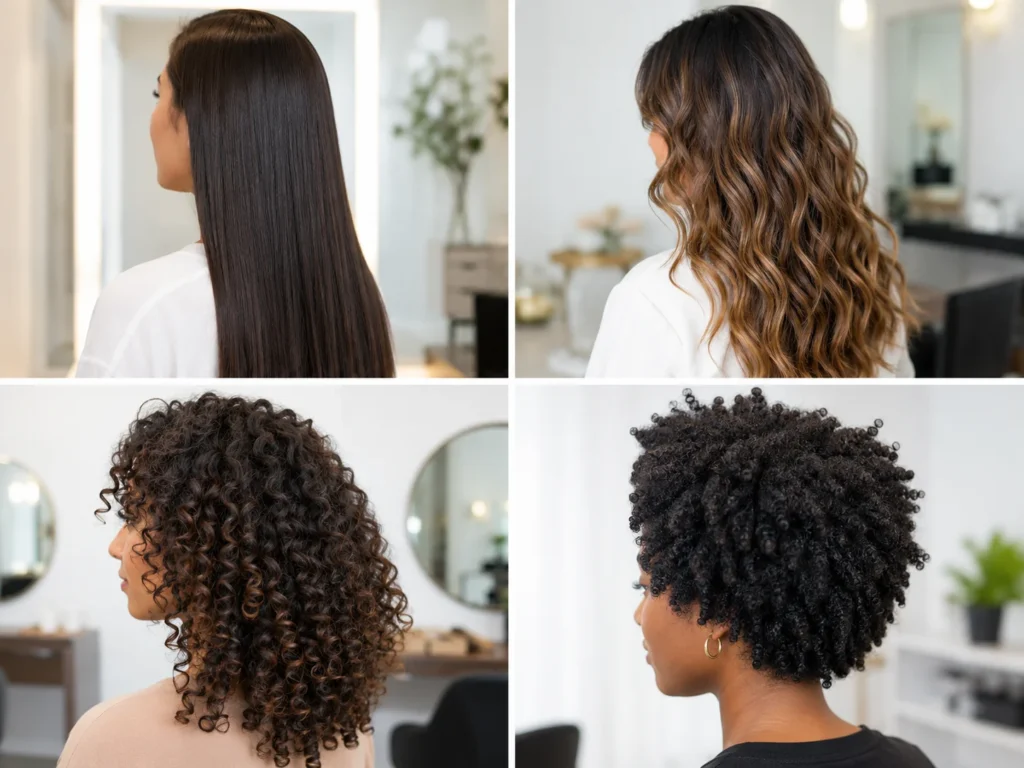
Hair type is about the strand. Scalp type is about the skin underneath.
That means someone can have curly hair that feels dry through the ends but still has an oily scalp. Someone with straight hair can have dry, tight roots. Thick hair can hide buildup for days. Fine hair can look greasy 12 hours after washing, even when nothing “wrong” happened.
This is why copying another person’s wash routine can go sideways. Their scalp might handle six days between washes. Yours might be quietly planning a rebellion by day three.
Dermatologists generally recommend choosing a wash schedule based on oiliness, hair texture, scalp condition, and lifestyle. Health.com’s dermatologist-reviewed guide explains that oilier hair often needs more frequent washing, while dry, curly, coily, or chemically treated hair may need a gentler rhythm.
The better question is not, “How often should my hair type wash?”
It is, “What does my scalp need, and how do I give it that without drying out the rest of my hair?”
The Fast Version
| If your hair is… | Your scalp may struggle with… | Try this first |
|---|---|---|
| Straight or fine | Oil showing quickly | Wash more often with a light shampoo |
| Wavy | Flat roots and dry ends | Keep products light near the scalp |
| Curly | Dry lengths but coated roots | Clean the scalp well, condition the ends |
| Coily | Dryness, residue, tight styles | Wash in sections so the scalp gets reached |
| Thick | Hidden buildup | Rinse longer and work through the roots |
| Color-treated | Dryness or sensitivity | Use milder cleansing and watch harsh formulas |
That table is a starting point, not a medical chart. If your scalp is painful, bleeding, swollen, or shedding suddenly, it is time to ask a dermatologist instead of testing another random bottle from the bathroom shelf.
Fine or Straight Hair Usually Shows Oil First
Fine and straight hair often gets oily-looking faster because scalp oil can move down the strand more easily. It does not mean your hair is dirty in some dramatic way. It just means oil has an easy road.
The trap is using rich products too close to the roots. Heavy masks, thick conditioners, and oils can make fresh hair look flat before lunch. Fine hair can be very unforgiving like that.
Keep conditioner mainly on the mid-lengths and ends. Rinse well. If the scalp feels oily, wash it. There is no prize for stretching wash day if your roots feel uncomfortable.
Dry shampoo can help for a day. Maybe two. After that, the scalp usually wants an actual wash, not another layer of powder pretending to be a plan.
Wavy Hair Needs Balance, Not More Stuff
Wavy hair can be weirdly easy to overdo. A little product gives shape. A little too much product turns the roots flat and the ends stringy.
If your waves look good right after styling but collapse fast, check the roots first. Buildup near the scalp can pull everything down. So can conditioner applied too high, heavy creams, or not rinsing thoroughly.
A good wavy-hair scalp routine is usually boring in the best way:
- Shampoo the roots
- Condition the ends
- Keep leave-ins light
- Clarify only when hair starts feeling coated or dull
Not glamorous. Very useful.
Curly Hair Can Feel Dry While the Scalp Feels Greasy
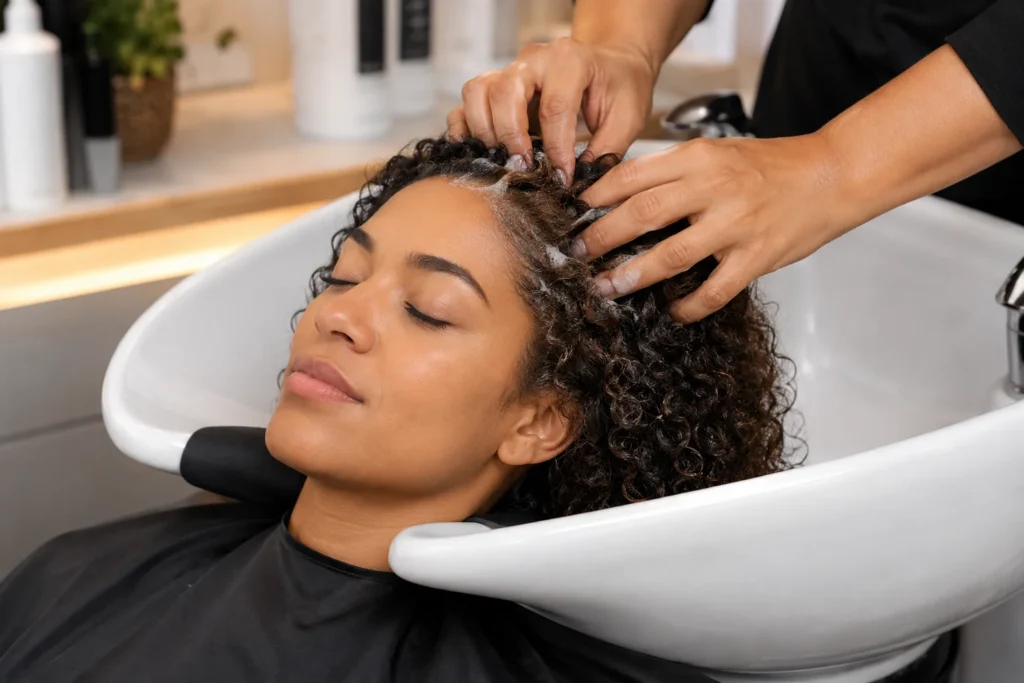
Curly hair makes scalp care trickier because oil has to travel around bends and spirals. The ends may feel dry long before oil ever reaches them. So people add more leave-in, more cream, more gel, maybe an oil for “extra moisture,” and then the scalp starts feeling coated.
That does not mean curly hair should be scrubbed aggressively. It means the scalp needs to be cleaned on purpose.
Use fingertips at the roots. Let shampoo focus on the scalp. Let the rinse carry some cleanser through the lengths without roughing up the curls. Conditioner belongs where the hair feels dry, not automatically on the scalp.
A curl-focused resource like HairIsCurly can help readers connect the dots between texture, product weight, porosity, and wash habits. That matters because curly hair problems are often blamed on the wrong thing.
If curls feel waxy, limp, sticky, or hard to refresh, buildup may be part of the problem. This guide on whether clarifying shampoo is good explains when a deeper cleanse helps and when it may be too harsh.
Coily Hair Needs Scalp Access
Coily hair is often more prone to dryness and breakage, so stretching wash days can make sense. The mistake is stretching them so far that the scalp never really gets cleaned.
Creams, oils, edge control, sweat, and styling residue can collect at the roots. That buildup may not show right away, especially in thick or dense hair. But the scalp usually feels it.
Sectioning helps. It takes more patience, yes. Nobody is pretending wash day is a quick commercial montage. But sectioning makes it easier to reach the scalp instead of just washing the top layer of hair.
Protective styles need the same attention. If your scalp feels sore, itchy, or tight under a style, do not ignore it. A style should protect your hair, not turn your scalp into a hostage situation.
Buildup, Dryness, and Dandruff Are Not the Same
People often use the same fix for all three, which is how routines get messy.
Buildup usually feels coated or waxy. Hair may look dull, heavy, or greasy even after washing.
Dryness feels more tight or rough. The scalp may feel uncomfortable after harsh cleansing or during colder weather.
Dandruff can involve recurring flakes, itching, redness, or oily-looking scaling. Verywell Health notes that regular cleansing helps remove oil, sweat, dead skin, and product buildup, but people with curly or textured hair may need to balance that with dryness and breakage concerns.
If itching comes with shedding, soreness, or a sudden change in your scalp, ArticleThirteen’s article on itchy scalp and hair loss in women is a useful next read.
When Clarifying Is Worth It
Clarifying shampoo is not something every person needs every week. It is also not something to fear forever.
It makes sense when the hair feels coated, limp, greasy after washing, or strangely resistant to products that used to work. It can be helpful after heavy styling products, lots of dry shampoo, oils, hard water exposure, or long gaps between proper cleansing.
The mistake is using clarifying shampoo as a routine reset when nothing needs resetting. Curly, coily, color-treated, and damaged hair can feel rough if clarified too often.
A better approach is to watch the hair:
- If roots feel coated, clarify.
- If ends feel brittle, slow down.
- If flakes or itching keep returning, look beyond product buildup.
Hair care is partly observation. Slightly annoying observation, but still.
When a Routine Is Not Enough
Most scalp issues improve with better cleansing, lighter products, or a smarter wash schedule. Some do not.
Get professional advice if you notice:
- Sudden hair loss
- Patchy shedding
- Painful bumps
- Thick scaling
- Burning or bleeding
- Severe itching that keeps coming back
- Flakes that do not improve with basic care
A good stylist, trichologist, or dermatologist should look at your scalp, hair type, styling habits, and product use together. If you are visiting a salon or clinic for scalp treatments, ArticleThirteen’s guide on improving beauty clinic service standards is a helpful reminder that good beauty care should be clean, personal, and honest.
What Your Roots Probably Need
Most people do not need a complicated scalp routine.
They need to stop treating the scalp and the ends like they have the same job.
Your scalp may need more cleansing. Your ends may need more moisture. Your roots may need lighter products. Your curls may need a gentler wash. Your protective style may need better scalp access.
Start there before buying five new products.
Ask yourself:
- How quickly do my roots get oily?
- Do my ends feel dry, or does my scalp feel dry too?
- Do products sit heavy near my roots?
- Does my hair feel clean after washing?
- Am I dealing with buildup, dryness, or something that needs medical advice?
Healthy hair does not start with the most impressive product shelf. It starts with paying attention to the part of the routine most people rush through.
Your roots are usually not asking for anything fancy.
Just the right kind of clean. The right amount of moisture. And maybe a little less chaos on wash day.