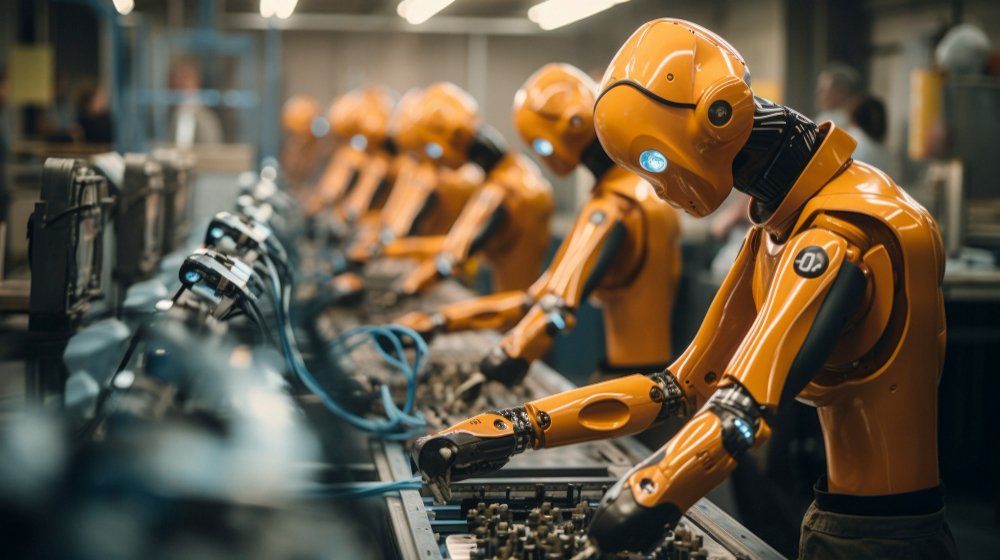
NEW YORK, March 15, 2026 – According to recent reporting from The Wall Street Journal, humanoid robots are no longer just showpieces for tech demos. Instead, humanoid robots are starting to take on real industrial work in factories and warehouses, especially where employers face labor shortages, repetitive tasks, and an aging workforce.
Humanoid robots are now entering a new phase. For years, they were mostly linked to viral videos and bold promises. However, the latest factory deployments show that robots are becoming part of a serious business strategy.
Humanoid Robots Are Being Sent to Fill Labor Gaps
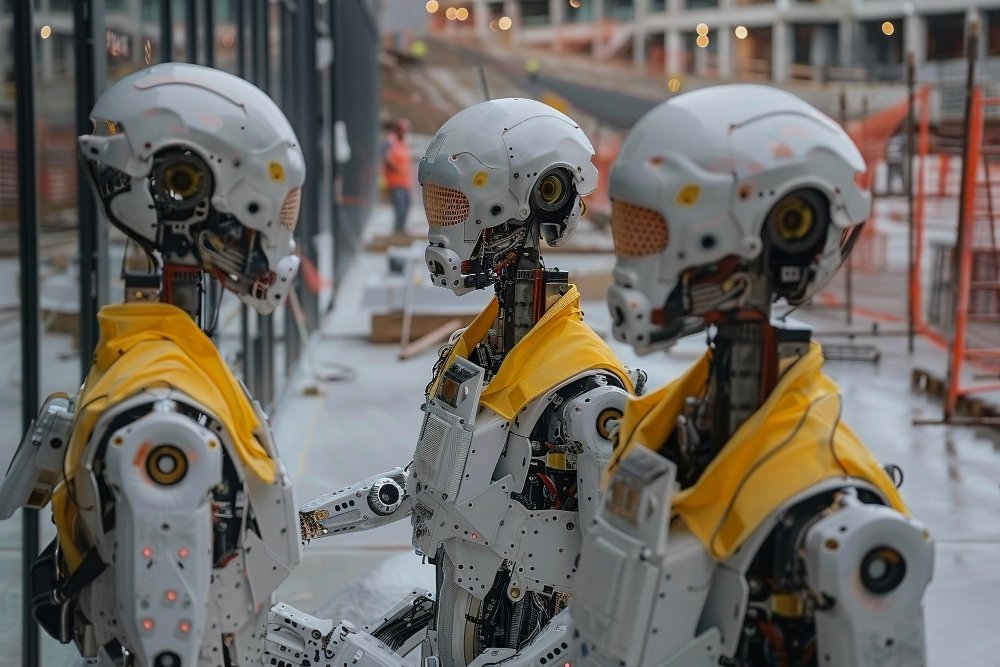
The strongest business case for humanoid robots is clear. Manufacturers need workers for repetitive tasks, but many roles remain hard to fill due to labor shortages.
Business Insider reported that Agility Robotics is deploying its humanoid robot, Digit, at Toyota’s manufacturing plant in Canada. The company says these humanoid robots are aimed at repetitive work such as moving totes and handling routine physical tasks. Agility has also worked with Amazon, GXO, and Schaeffler.
Daniel Diez, chief business officer at Agility Robotics, described the situation:
“It’s the same exact issue: Labor gaps in these highly repetitive physical tasks. They simply can’t find the people to do this work.”
That point matters because humanoid robots are being sold less as replacements for all workers and more as tools for jobs that companies struggle to staff. As a result, humanoid robots are being framed as a response to labor scarcity, not just labor cost.
Key Numbers Behind the Rise of Humanoid Robots
- 400,000+ U.S. manufacturing job openings in December 2025
- More than 25% of manufacturing workers are 55 or older
- Schaeffler aims to deploy hundreds of Digit robots in its factories by 2030
- Quanta reports that while walking and balance have improved, fine manipulation and force control remain major obstacles
A Business Case Built Around Existing Workspaces
One reason this category is attracting attention is that humanlike machines can move through spaces already designed for workers. Warehouses and plants were built around human movement, human reach, and human workflows. Because of that, robotics firms argue that a two-legged system with arms can fit into those environments with fewer layout changes.
That matters for industrial groups with older facilities. A company may prefer to test a flexible machine instead of redesigning a whole production area. Therefore, pilot programs become easier to justify.
The Wall Street Journal highlighted this trend at Schaeffler’s plant in Cheraw, South Carolina, where humanoids has been used for manual transport tasks such as carrying baskets during long shifts. The report said Schaeffler sees room for much broader deployment in the years ahead.
So, the latest experiments are not just about spectacle. They reflect a practical effort to make automation work inside real industrial settings.
Read More:
- Scalp Care by Hair Type: What Your Roots Are Trying to Tell You
- How Digital Marketing Changes as a Business Grows
- How AI Search Is Changing SEO for Businesses in 2026
- Itchy Scalp and Hair Loss in Women: Hidden Causes + Fix
- How to Detect AI-Generated Images & Videos in 2026 (Easy & Accurate Guide)
The Statistics Behind the Humanoid Push
The broader labor picture explains why this market is getting serious attention.
Business Insider noted that the U.S. manufacturing sector had more than 400,000 job openings in December 2025. It also reported that more than a quarter of manufacturing workers are age 55 or older. Those figures point to a difficult mix of immediate hiring pressure and long-term retirement risk.
That backdrop strengthens the commercial argument for robotics. If companies cannot fill enough roles, they will keep looking for new ways to support output. In that environment, even limited success can be meaningful.
Investors are watching for the same reason. This is not only a technology story. It is also a workforce and productivity story.
U.S. Manufacturing Pressure Points
| Pressure Point | Status |
|---|---|
| Manufacturing job openings (Dec. 2025) | 400,000+ |
| Workers age 55+ share | 25%+ |
| Need for repetitive task coverage | High |
| Fine manipulation capability today | Limited |
Humanoid Still Struggle With Precision Work

Even so, humanoid robots are far from solving every factory problem.
Quanta Magazine reported that while humanoid robots have improved sharply in movement and balance, they still struggle with delicate physical interaction. Walking, lifting, and moving are one thing. Handling fragile, irregular, or high-precision tasks is another.
That technical gap remains one of the biggest reasons humanoid robots have not yet scaled everywhere. They can carry bins, move containers, and support logistics. But many still struggle with the “small stuff” — the precise force control needed for tasks involving delicate objects or complex assembly.
As Quanta noted through expert interviews, humanoid robots still face major limits in force control, compliance, and fine manipulation. That means the future of humanoid robots may depend not only on AI software, but also on better hardware, sensors, and safer physical interaction.
In other words, humanoid robots are improving fast. Yet they are still better at structured repetition than subtle human dexterity.
Schaeffler and Agility Show the New Factory Playbook
The most important story around humanoid robots is not a science-fiction vision. It is the new industrial playbook taking shape.
Agility Robotics is placing humanoids in real facilities. Schaeffler is using humanoid robots while also building partnerships around components and industrial integration. Toyota is starting with a limited deployment. These steps are cautious. Yet they are also meaningful.
This is how industrial adoption usually starts. First, companies test humanoid robots in narrow tasks. Next, they track uptime, safety, and cost. Then, if the results hold, they expand.
That makes humanoid robots a business story as much as a technology story. The winners may not only be robot makers. They may also be the manufacturers that learn how to deploy humanoid robots in practical, limited, high-value roles.
What Humanoid Robots Mean for Workers
The rise of humanoid robots will also raise labor questions. Some workers will see opportunity in safer workplaces and higher-skilled roles. Others will worry that humanoid robots could eventually displace human jobs.
For now, the factory use cases remain narrow. Humanoid robots are mostly being assigned repetitive and physically demanding tasks. In many plants, management argues that these jobs are hard to fill anyway. That makes the current pitch more acceptable.
Still, public trust will matter. Humanoid robots may be entering the workplace slowly, but they will be judged not only by productivity. They will also be judged by safety, worker treatment, and whether the gains are shared fairly.
Humanoid Robots Still Struggle With Precision Work
Even so, humanoid robots are far from solving every factory problem.
Quanta Magazine reported that while humanoid robots have improved sharply in movement and balance, they still struggle with delicate physical interaction. Walking, lifting, and moving are one thing. Handling fragile, irregular, or high-precision tasks is another.
That technical gap remains one of the biggest reasons humanoid robots have not yet scaled everywhere. They can carry bins, move containers, and support logistics. But many still struggle with the “small stuff” — the precise force control needed for tasks involving delicate objects or complex assembly.
As Quanta noted through expert interviews, humanoid robots still face major limits in force control, compliance, and fine manipulation. That means the future of humanoid robots may depend not only on AI software but also on better hardware, sensors, and safer physical interaction.
Schaeffler and Agility Show the New Factory Playbook
The most important story around humanoid robots is not a science-fiction vision. It is the new industrial playbook taking shape.
Agility Robotics is placing humanoid robots in real facilities. Schaeffler is using humanoid robots while also building partnerships around components and industrial integration. Toyota is starting with a limited deployment. These steps are cautious. Yet they are also meaningful.
This is how industrial adoption usually starts. First, companies test humanoid robots in narrow tasks. Next, they track uptime, safety, and cost. Then, if the results hold, they expand.
That makes humanoid robots a business story as much as a technology story. The winners may not only be robot makers. They may also be the manufacturers that learn how to deploy humanoid robots in practical, limited, high-value roles.
What Humanoid Robots Mean for Workers
The rise of humanoid robots will also raise labor questions. Some workers will see opportunity in safer workplaces and higher-skilled roles. Others will worry that robots could eventually displace human jobs.
For now, the factory use cases remain narrow. Humanoid are mostly being assigned repetitive and physically demanding tasks. In many plants, management argues that these jobs are hard to fill anyway. That makes the current pitch more acceptable.
Still, public trust will matter. Humanoid may be entering the workplace slowly, but they will be judged not only by productivity. They will also be judged by safety, worker treatment, and whether the gains are shared fairly.
Chart: Current Strengths vs. Limitations of Humanoid
Strengths
- Walking and mobility: ███████████████
- Carrying and transport tasks: ██████████████
- Working in human-designed spaces: █████████████
Limitations
- Delicate handling: █████
- Force control: ██████
- Complex assembly precision: ████
Source: Quanta Magazine’s reporting on dexterity, compliance, and force control challenges
Humanoid Robots Are Real, But the Rollout Will Be Gradual
The latest reporting suggests that robots are finally moving from promise to practice. However, the rollout will likely be gradual, not explosive.
Factories are not buying humanoid just because the machines look futuristic. They are testing humanoid robots because labor gaps are real, repetitive work remains hard to staff, and existing industrial sites need flexible automation.
At the same time, technical limits remain clear. Humanoid can already do some useful work. But they are not yet ready for every task humans do with ease.
That is why 2026 could become a defining year. Human robots are no longer only about hype. They are becoming a measured industrial bet, and the companies that prove a reliable return on deployment may shape the next phase of global manufacturing.
The next chapter for humanoid will depend on whether they can move beyond pilot programs and become trusted, cost-effective co-workers inside the world’s factories.
FAQs About Humanoid Robots
What are humanoid robots?
Humanoid robots are machines designed with a humanlike body structure, often including arms, legs, and a torso, so they can work in spaces built for people.
Why are factories interested in humanoid robots?
Factories see potential in these systems because they may help with repetitive physical jobs, labor shortages, and tasks inside existing industrial spaces.
Which companies are involved in this market?
Recent reports connect this trend to Agility Robotics, Schaeffler, Toyota, Amazon, and GXO, among others testing industrial automation tools.
What is slowing wider adoption?
The biggest challenges include precision handling, force control, safety, durability, and the cost of large-scale deployment.
Why does this matter for business?
This matters because manufacturers need ways to address labor shortages, improve productivity, and modernize operations without fully redesigning their facilities.