Technology has become the backbone of modern life. From smartphones and laptops to artificial intelligence and cloud infrastructure, the global economy now depends heavily on digital systems. However, rising global conflicts are beginning to threaten this stability, impacting supply chains, innovation, and the prices of technology worldwide.
If these trends accelerate, consumers may soon notice the impact directly through higher smartphone prices, rising cloud subscription costs, and more expensive AI-powered services.
Therefore, several developments, including trade wars, cyber conflicts, and supply chain disruptions, are pushing the global tech industry into a new and uncertain era.
How Global Conflicts Disrupt Technology Supply Chains
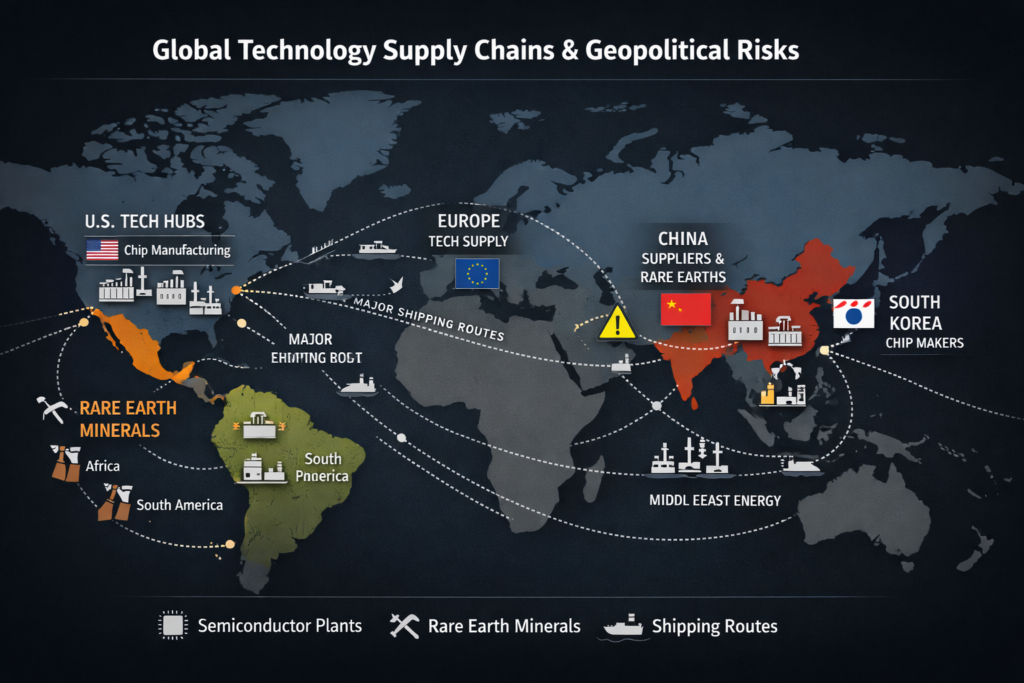
Modern technology products rely on extremely complex global supply chains. Moreover, A single smartphone may contain components manufactured across dozens of countries.
Semiconductors, the most critical part of modern electronics, are produced through a highly specialized global network. According to the Semiconductor Industry Association, the semiconductor market exceeded $526 billion globally in 2023.
However, geopolitical tensions can disrupt this network almost instantly. Trade restrictions, sanctions, and military conflicts can halt shipments of essential components.
For example, many global automakers and technology companies depend heavily on Chinese supply chains for manufacturing components and rare earth materials. If trade tensions escalate, production costs rise quickly.
This means that global conflicts do not only affect governments or militaries, they can directly impact the price of the smartphone in your pocket.
For a deeper look at how geopolitical tensions affect the tech industry, read our analysis: US-Iran conflict disrupting the global tech industry
The Semiconductor Battlefield
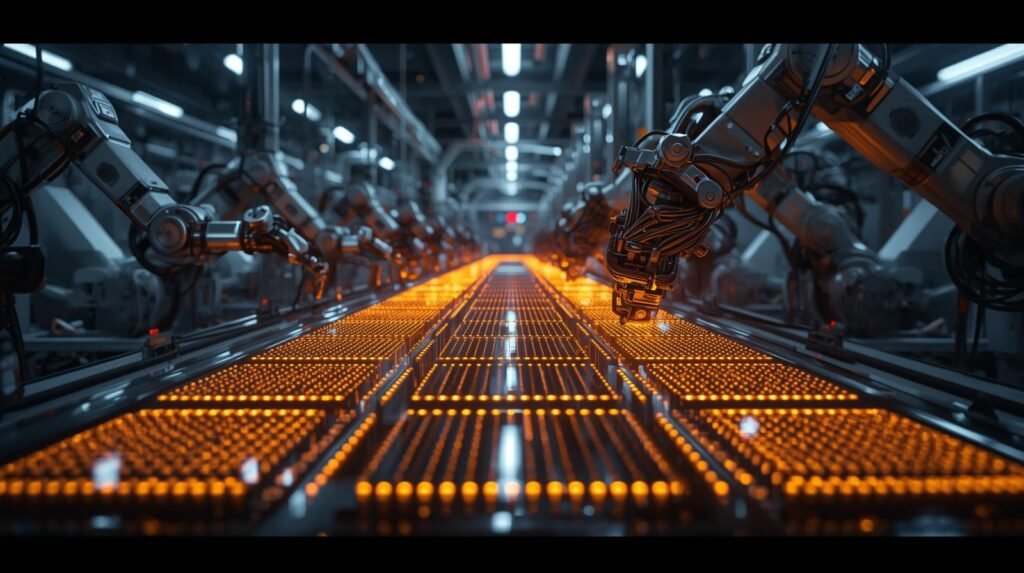
Semiconductors have become one of the most strategic resources in modern geopolitics. Countries now see chip manufacturing as a national security priority. The United States, China, and the European Union are investing billions to secure domestic semiconductor production.
According to the U.S. CHIPS and Science Act, the United States has allocated over $52 billion to boost domestic chip manufacturing. But building semiconductor factories is expensive and slow. In fact, A single advanced chip fabrication plant can cost $10 billion to $20 billion and take several years to complete.
If geopolitical tensions escalate during this transition, the result could be severe shortages and higher prices for everything from gaming GPUs to AI servers. Therefore, this is already visible in the stock market, where chip companies face volatility when geopolitical tensions rise.
Related analysis: Why Nvidia stock is falling and what investors should know
Cyber Warfare and Digital Infrastructure Risks
Another major reason technology could become more expensive is the rise of cyber warfare. Modern conflicts increasingly occur in cyberspace. Governments and state-backed groups target financial systems, energy grids, and technology infrastructure. According to the World Economic Forum, cybercrime could cost the global economy $10.5 trillion annually by 2025.
Therefore, Technology companies must invest billions in cybersecurity defenses to protect their networks and data centers. These costs eventually get passed down to consumers through higher service prices, software subscriptions, and cloud infrastructure fees. Cyber warfare is becoming a hidden driver of global technological change.
For more context on this trend: Cyber warfare shaping the new world order
Why Investors Are Watching Geopolitical Risks in Technology
Investors increasingly monitor geopolitical risks when evaluating technology companies. Semiconductor manufacturers, cloud infrastructure providers, and AI firms rely heavily on stable global supply chains.
Any disruption caused by sanctions, trade restrictions, or military tensions can rapidly influence stock prices and corporate investment strategies.
Military Technology Is Reshaping the Tech Industry
- Another powerful trend is the growing connection between technology companies and military development.
- Artificial intelligence, robotics, and autonomous systems are becoming central to modern warfare strategies.
- As a result, Governments are investing heavily in AI-driven defense technologies, including autonomous drones, battlefield analytics, and predictive intelligence systems.
- According to the Stockholm International Peace Research Institute (SIPRI), global military spending reached $2.44 trillion in 2023, the highest level ever recorded.
- As governments compete for technological superiority, many innovations are being redirected toward defense applications.
- This can reduce availability of commercial technology and increase costs for civilian markets.
- Explore how AI is transforming warfare: AI agents and their role in modern military strategy
Trade Wars and Technology Fragmentation
- Perhaps the most significant driver of rising technology prices is the growing technology divide between major global powers.
- The United States and China are engaged in an intense technological rivalry involving semiconductors, artificial intelligence, and advanced manufacturing.
- Export restrictions, tariffs, and investment bans are reshaping the global tech landscape.
- When countries block technology transfers or restrict exports, companies are forced to redesign supply chains or develop alternative technologies.
- These changes often take years and require massive investments.
- The result is a more fragmented global technology ecosystem where innovation becomes slower and more expensive.
Detailed analysis: US-China tech war and its impact on living standards
Why Consumers Could Soon Pay More for Technology
If geopolitical tensions continue to rise, consumers may experience several changes:
- Higher device prices: Smartphones, laptops, and gaming hardware may become more expensive due to supply chain disruptions.
- More expensive cloud services: Tech companies facing higher infrastructure and security costs may increase subscription prices.
- Slower innovation cycles: Companies forced to restructure supply chains may delay new product development.
- Regional technology ecosystems: Instead of one global technology market, separate regional technology systems could emerge.
All these factors contribute to a future where technology is no longer as affordable as it once was.
The Future of Technology in a Fragmented World
Despite these challenges, the technology industry is adapting.
Countries are investing in domestic manufacturing, companies are diversifying supply chains, and new technologies are being developed to reduce dependence on fragile global networks. However, these adjustments take time. Until a new global equilibrium emerges, global conflicts will likely remain one of the biggest drivers of rising technology costs.
For consumers, businesses, and investors, understanding this connection between geopolitics and technology will become increasingly important in the coming decade.
Why the AI Boom Is Increasing Semiconductor Demand
AI servers require significantly more advanced chips than traditional computing systems. According to industry estimates, AI-related semiconductor demand could double within the next five years.
FAQs
Why could technology become more expensive in the future?
Technology could become more expensive due to geopolitical tensions, semiconductor shortages, supply chain disruptions, and rising cybersecurity costs.
How do global conflicts affect the tech industry?
Global conflicts disrupt manufacturing, limit trade, increase cybersecurity spending, and create competition for critical technologies such as semiconductors and artificial intelligence.
Why are semiconductors so important in global conflicts?
Semiconductors power nearly all modern electronics. Because they are essential for both civilian and military technology, countries consider chip production a strategic priority.
Could the US-China rivalry affect technology prices?
Yes. Trade restrictions and export controls between the United States and China are forcing companies to restructure supply chains, which increases production costs.
Is cyber warfare increasing technology costs?
Yes. Companies must invest heavily in cybersecurity to protect infrastructure from cyber attacks, and these expenses are often passed on to consumers.