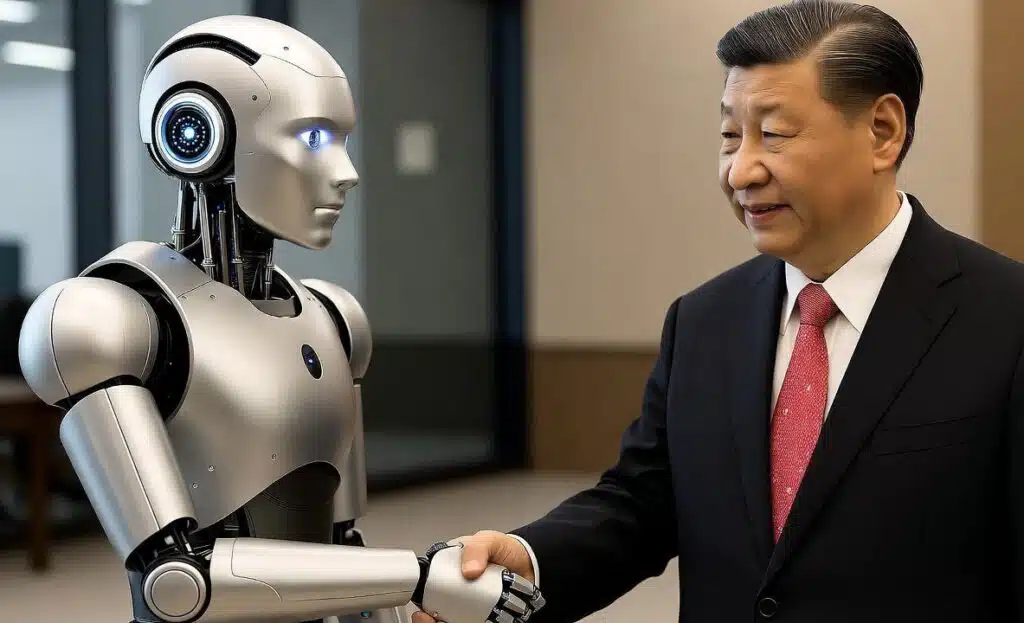
Xi’s AI ambitions accelerates innovation but raises risks for China’s fragile job market. Expert analysis on automation, policy pressure, and economic stability
Introduction: When Technological Ambition Meets Labor Market Reality
China’s aggressive artificial intelligence expansion is entering a decisive phase. Under the leadership of Xi Jinping, AI has been elevated from an innovation theme to a national economic survival strategy. It is now positioned as a pillar of technological sovereignty, productivity reform, and long-term geopolitical competitiveness.
However, as automation accelerates across manufacturing, logistics, finance, and public services, a deeper question is emerging:
Can China scale AI leadership without destabilizing employment and social balance?
The tension between rapid automation and labor market fragility may define the next phase of China’s economic policy.
China’s AI Ambitions: A State-Led Technological Transformation
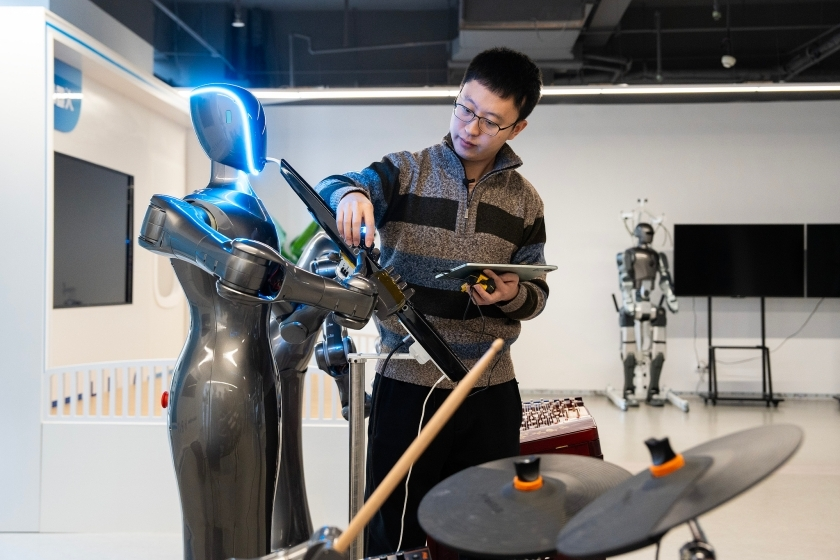
Xi’s AI Ambition is not a private-sector experiment in China — it is a centrally directed national priority.
Through initiatives aligned with long-term industrial roadmaps such as Made in China 2026 and the New Generation Artificial Intelligence Development Plan, Beijing has embedded AI into:
- Industrial automation and robotics
- AI-powered logistics and supply chains
- Generative AI and enterprise software
- Smart city infrastructure
- Military-civil fusion technologies
- Semiconductor independence initiatives
Unlike Western AI growth, which is largely market-driven, Xi’s AI expansion is coordinated through state-backed funding, regulatory alignment, and data-scale advantages.
The objective is clear:
Boost productivity, offset structural slowdowns in real estate and exports, and reduce dependence on foreign technology.
Yet productivity acceleration through automation inevitably reshapes labor demand.
Could AI Create More Jobs Than It Destroys?
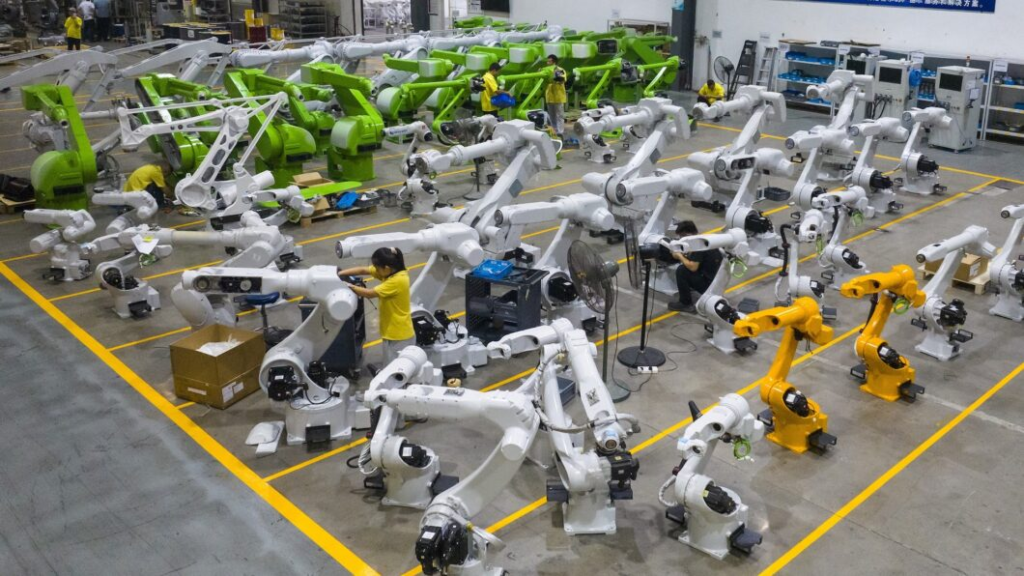
Supporters of rapid AI expansion argue that:
- AI generates new high-skill engineering roles
- Robotics maintenance and AI system design create advanced manufacturing jobs
- Domestic chip development stimulates semiconductor employment
- Smart infrastructure expands urban digital services
China is investing heavily in STEM education and vocational retraining programs to prepare workers for higher-value roles.
Yet the transition is uneven.
High-skill AI jobs require education levels many displaced workers do not immediately possess.
The central challenge is not whether AI creates jobs — it is whether new job creation outpaces displacement in both scale and timing.
The Fragile Employment Landscape in China
China’s employment environment remains structurally sensitive despite ongoing economic modernization. Youth unemployment has fluctuated sharply in recent years, private-sector confidence remains uneven, and small-to-mid-sized enterprises continue to face liquidity constraints amid regulatory tightening and soft domestic consumption.
Several structural pressure points amplify the vulnerability of the labor market:
- Slowing recovery in the property sector
- Export volatility amid global trade tensions
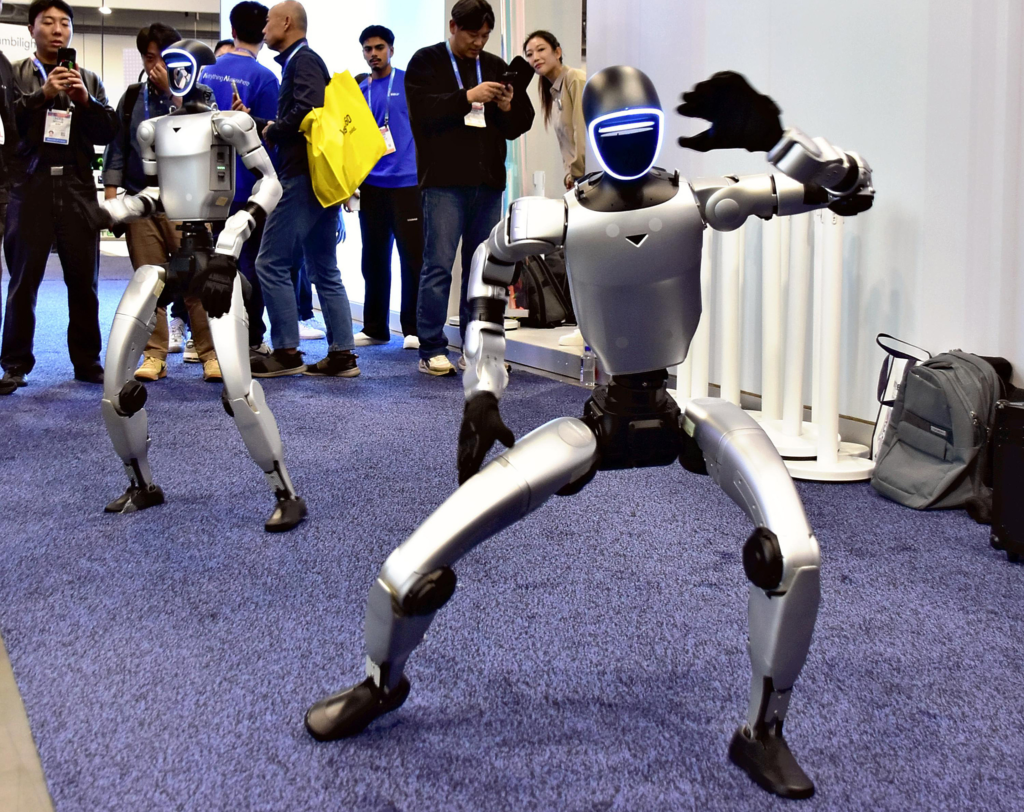
- Gradual transition from labor-intensive industries to automation-driven production
- Rising operating costs for SMEs
- Demographic aging pressures reducing workforce expansion
These challenges existed before AI acceleration — but artificial intelligence intensifies them.
Automation vs. Stability: Xi’s AI Ambitions Policy Dilemma
China’s leadership has long treated employment as a pillar of social stability. Under the governance framework of Xi Jinping, economic growth is evaluated not only by GDP expansion but by its capacity to sustain social cohesion.
The strategic dilemma is increasingly visible:
Option 1: Accelerate AI Adoption
- Boost productivity growth
- Enhance technological sovereignty
- Strengthen global competitiveness
- Offset demographic decline
Option 2: Moderate Deployment Pace
- Protect employment in traditional industries
- Reduce short-term social disruption
- Maintain consumer confidence
- Prevent regional labor shocks
Neither path is cost-free.
Accelerating automation strengthens China’s position in the global AI race but risks near-term employment strain. Slowing automation preserves social stability but could reduce long-term competitiveness, particularly amid strategic rivalry with advanced economies.
Economic Implications: Short-Term Disruption, Long-Term Productivity Gains?
Economists broadly agree that automation enhances long-term productivity and total factor efficiency. However, transitional phases — particularly in large, labor-intensive economies — can generate measurable short-term disruption.
In China’s case, AI-driven automation intersects with an already evolving economic structure.
Short-Term Economic Pressures
In the near term, accelerated automation may produce measurable disruptions:
- Reduced demand for mid-skill and routine labor
- Wage compression in manufacturing and administrative sectors
- Slower hiring momentum in traditional industries
- Increased income inequality between coastal tech hubs and inland provinces
- Precautionary household savings due to job insecurity
Mid-skill labor — once the backbone of China’s export-driven growth — faces the highest displacement risk. As AI systems replace repetitive and predictable tasks, demand increasingly shifts toward technical and managerial roles.
This transition can create a mismatch between available jobs and workforce qualifications, particularly outside major metropolitan clusters such as Beijing and Shenzhen.
If not managed carefully, short-term labor stress could dampen consumer confidence — a key variable in China’s broader economic rebalancing strategy.
Long-Term Structural Gains
Despite short-term volatility, the long-run economic case for AI adoption remains compelling.
Potential long-term advantages include:
- Higher output per worker
- Enhanced productivity growth
- Innovation spillovers into robotics, semiconductors, biotech, and advanced materials
- Greater competitiveness in global AI exports
- Reduced reliance on foreign technological infrastructure
If managed effectively, AI could help China transition from labor-cost competitiveness to technology-driven value creation.
The determining variable is execution — particularly the speed and quality of workforce reskilling and SME digital adaptation.
Global Competitive Context: The AI Race and Strategic Timing

China’s AI expansion does not occur in isolation. It unfolds amid intense strategic competition with the United States, where technological leadership is viewed as a pillar of economic and national security.
Export controls on advanced semiconductors and AI chips have reinforced Beijing’s urgency to develop domestic capabilities. Technological sovereignty is now inseparable from economic resilience.
This creates a complex timing dilemma:
- Delaying AI deployment to protect employment may weaken China’s global positioning.
- Accelerating automation too rapidly risks domestic instability — something Beijing has historically avoided.
China’s modernization agenda is therefore multidimensional:
- Boost productivity
- Preserve employment stability
- Achieve semiconductor independence
- Maintain social cohesion
Balancing these priorities requires calibrated pacing rather than abrupt transformation.
Read More: Escalating tech war between Washington and Beijing
What This Means for Investors and Policymakers
For Global Investors
The intersection of AI expansion and labor fragility produces mixed but strategically important signals:
Opportunities
- Strong momentum in AI infrastructure, robotics, and semiconductor sectors
- State-backed funding alignment with national strategy
- Long-term productivity upside
Risks
- Potential policy intervention to cushion employment
- Regulatory adjustments in labor-heavy sectors
- Volatility in industries undergoing rapid automation
Investors should monitor:
- Provincial employment data
- SME financing conditions
- Signals from central policy meetings
- Sector-specific automation mandates
AI exposure in China remains structurally attractive — but politically sensitive.
For Policymakers
Artificial intelligence cannot be treated solely as a productivity engine. It must be integrated into a broader economic stabilization strategy that includes:
- Vocational retraining acceleration
- SME digital transition support
- Regional rebalancing investment
- Managed automation pacing
The strategic objective is not merely AI leadership — it is AI leadership without destabilization.
Expert Perspective: Structural Transition Phase
From a macroeconomic standpoint, China appears to be entering a structural transition phase rather than facing immediate crisis. However, timing matters.
If AI productivity gains materialize before labor disruptions deepen, China could strengthen its long-term growth model. If displacement outpaces policy adaptation, domestic economic confidence could weaken.
The balance between innovation and inclusion will determine the sustainability of Xi’s AI ambitions.
Conclusion: Innovation Requires Stability
China’s AI strategy represents one of the most ambitious technological transformations in modern economic history. Yet economic modernization cannot be separated from labor market resilience.
Xi’s AI ambitions and China’s fragile employment market are not opposing forces — but they require careful calibration. The success of this strategy will depend not just on algorithmic breakthroughs, but on how effectively China manages human capital in the age of automation.