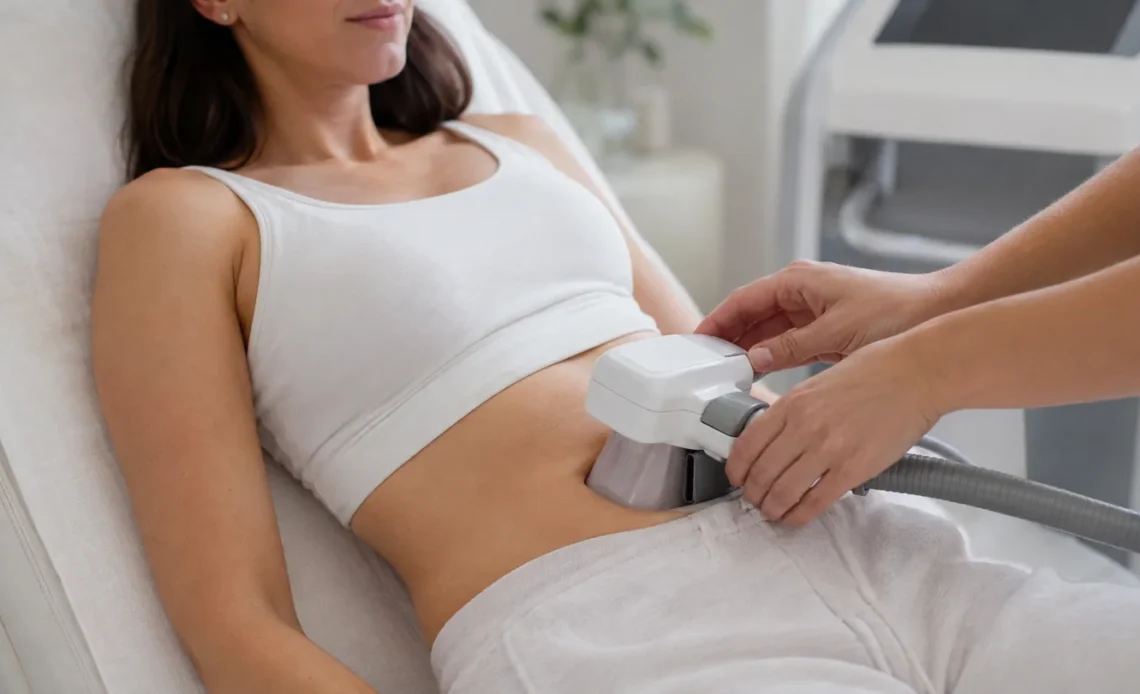
CoolSculpting is a brand of cryolipolysis, a non-surgical body-contouring procedure that uses controlled cooling to reduce a small, pinchable fat bulge. It is not a weight-loss treatment, and it cannot promise a particular body shape.
The procedure can produce a visible local change for a suitable patient, but results develop gradually and vary. It also has risks, including a rare complication in which the treated area grows larger instead of smaller. This guide is educational and cannot replace an assessment by a qualified healthcare professional.
| What it can do | Reduce the appearance of a localized fat bulge in an approved treatment area |
|---|---|
| What it cannot do | Treat obesity, produce major weight loss or guarantee a specific shape |
| When change appears | Usually over several weeks to months, not immediately |
| Downtime | Often limited, although temporary discomfort, bruising, swelling or numbness can occur |
| Important rare risk | Paradoxical adipose hyperplasia, or PAH, which may require surgery |
How CoolSculpting works
Fat cells are more vulnerable to controlled cold than the surrounding skin and other tissues. During cryolipolysis, an applicator cools a selected layer of fat beneath the skin. The damaged fat cells trigger an inflammatory response and are gradually cleared by the body.
The US Food and Drug Administration’s body-contouring guidance describes the usual process:
- The provider examines and marks the treatment area.
- A protective gel pad and an applicator are placed on the skin.
- Some applicators use suction to draw the fatty tissue into a cooling cup. Others rest against the treatment area without suction.
- Controlled cooling is delivered for a set period. The provider may massage the area after removing the applicator.
Prescription-use devices should be used by or on the order of a physician. The FDA says the safety and effectiveness of over-the-counter or home “fat freezing” has not been established. An ice pack is not a budget CoolSculpting machine. It is a good way to risk a cold injury.
What results should you expect?
CoolSculpting is intended to make a treated bulge look smaller, not to move the number on the scale in a meaningful way. If your goal is losing weight rather than changing one bulge, our evidence review explains whether weight-loss gummies work. The Cleveland Clinic’s cryolipolysis overview says changes may begin around three weeks, become more noticeable after about two months, and take three to six months to reach their full effect. Individual results vary, and more than one session may be recommended.
Destroyed fat cells do not regenerate, but that does not make the overall result permanent in every practical sense. Remaining fat cells can enlarge if you gain weight, the body continues to change with age, and untreated areas may change differently. Ask the provider to explain the likely change for your anatomy rather than relying on a dramatic before-and-after gallery.
Who may be a suitable candidate?
A suitable candidate is generally healthy, has a localized area of pinchable fat, and wants a modest contour change without surgery. CoolSculpting is not designed to treat obesity, loose skin, or visceral fat around the internal organs.
FDA-cleared CoolSculpting uses include visible fat bulges beneath the chin and jaw, on the abdomen, flanks, thighs, upper arms, back, bra area and beneath the buttocks. Clearance applies to specific devices, applicators and body sites. It does not mean every person or every treatment area is appropriate.
Side effects and serious risks
Temporary redness, swelling, bruising, tenderness, aching, tingling and numbness are among the commonly reported effects. Some people experience persistent numbness, nodules, contour irregularity, skin discoloration, severe pain, freeze burns or nerve effects. The risks depend partly on the treatment site and the person’s medical history.
Paradoxical adipose hyperplasia
Paradoxical adipose hyperplasia, usually shortened to PAH, causes a firm bulge of fatty tissue to grow in the treated area instead of shrinking. The FDA says reported cases have developed two to five months after treatment. PAH does not resolve on its own and may require surgery.
A 2025 systematic review and meta-analysis pooled 28 studies involving 13,078 patients. It estimated PAH in about 0.22% of patients, roughly 1 in 455, but rated the evidence as low certainty because follow-up and reporting were limited. That estimate should be discussed as an uncertain risk, not a precise personal forecast.
Who should avoid fat freezing?
The FDA advises against fat freezing for people with conditions that react dangerously to cold or affect circulation in the treatment area. These include:
- Raynaud’s disease, pernio or chilblains
- Cold urticaria
- Cryoglobulinemia
- Paroxysmal cold hemoglobinuria or cold agglutinin disease
- Poor circulation in the proposed treatment area
A provider should also review pregnancy or breastfeeding, nerve problems, damaged or inflamed skin, recent surgery, scars, hernias and any implanted device near the area. Do not hide a medical condition because a treatment package is on sale.
How to choose a provider
Cryolipolysis results depend on patient selection, applicator placement and realistic planning. The American Society of Plastic Surgeons recommends a clinical assessment of the bulge’s size and shape before selecting an applicator.
- Ask who will assess you, operate the device and handle complications.
- Confirm the exact device, applicator and body site are cleared for the proposed use.
- Request a written estimate covering the number of areas and likely sessions.
- Ask how the clinic recognizes and manages PAH, burns and persistent nerve symptoms.
- Compare cryolipolysis with doing nothing, lifestyle changes and surgical options where appropriate.
When to contact the clinic after treatment
Contact the treating clinician if pain is severe or persistent, the skin blisters or looks burned, weakness or unusual nerve symptoms develop, or swelling and discoloration worsen instead of settling. A new firm bulge that enlarges in the shape of the applicator during the following months also needs medical review because it may be PAH.
Is CoolSculpting worth considering?
It can be reasonable for a healthy adult who wants a modest change in one suitable fat bulge and accepts that the result may be subtle, delayed or uneven. It is a poor match for someone seeking weight loss, skin tightening across a large area, instant results or a guaranteed transformation.
The useful question is not simply “Does CoolSculpting work?” It is whether the likely degree of contour change is worth the cost and the small but meaningful risk for you. A qualified clinician who explains limitations as clearly as benefits is the right place to answer that question.
