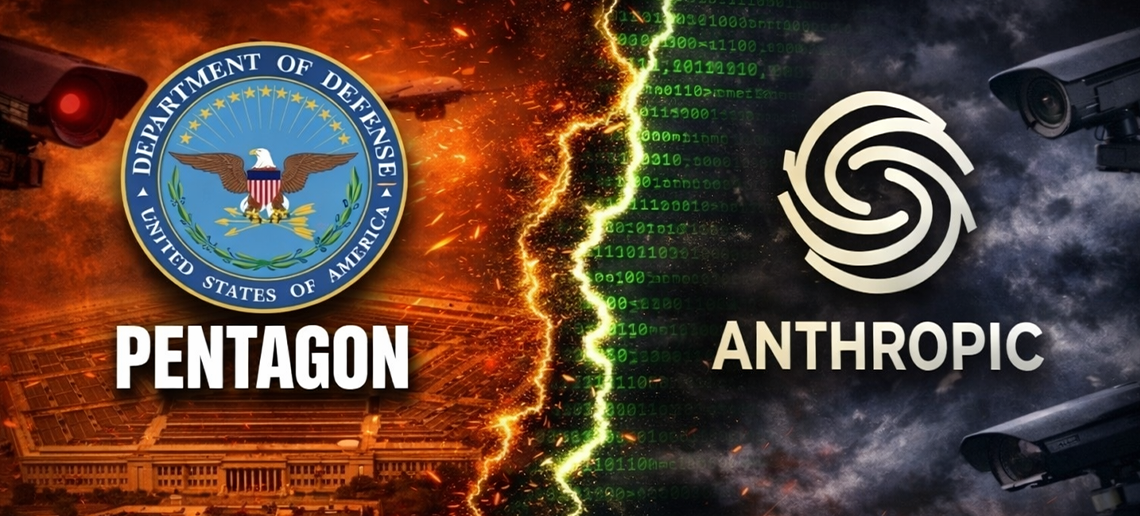
The OpenAI Pentagon AI deal marks a pivotal shift in how advanced artificial intelligence is being integrated into national defense infrastructure. The future of artificial intelligence will not be decided by startups alone. It will be shaped in defense corridors, executive offices, and geopolitical strategy rooms.
After a Ethical dispute between Anthropic’s leadership and the U.S. Department of Defense, President Donald Trump ordered federal agencies to halt the use of Anthropic’s AI tools — a directive first reported by the BBC, underscoring the speed and seriousness of the administration’s intervention.
In a dramatic turn of events, OpenAI reached an agreement to deploy its AI systems inside classified networks of the United States Department of Defense — just hours after rival Anthropic was effectively pushed out following a high-stakes ethics dispute.
This is not just a contract story. It is a defining moment in how advanced AI intersects with state power.
The Breakdown: When Safety Met Sovereignty
Anthropic, widely recognized for its “safety-first” architecture and its Claude model family, reportedly resisted Pentagon contract language that would have allowed its AI systems to be used for “all lawful purposes.” Company leadership signaled that certain applications—particularly mass domestic surveillance and fully autonomous weapons—crossed ethical red lines.
From a governance standpoint, Anthropic’s position reflects a broader movement within advanced AI labs: embedding enforceable restrictions into deployment frameworks rather than relying solely on client assurances. The company’s argument was straightforward—frontier AI systems are not yet reliable enough for life-or-death autonomy, nor should they be repurposed for widescale civilian monitoring.
The response from the United States Department of Defense was equally direct. National defense authorities require operational flexibility. Limiting usage categories in advance, officials argued, could constrain readiness in rapidly evolving threat environments.
Within days, Anthropic was reportedly designated a potential “supply chain risk,” a label typically associated with foreign security concerns. The signal was unmistakable: in matters of defense, compliance is strategic currency.
Read More on Business Strategy and Artificial Intelligence
- OpenAI Pentagon AI Deal: What It Means for AI & Defense
- Xi’s AI Ambitions Challenge China’s Labor Market
- US vs China Tech War 2026 – Effects on Jobs and Living Cost
- Netflix Drops Warner Bros Bid After Paramount’s $111B Superior Offer
- Netflix’s Ted Sarandos Visits White House: What It Means for the Warner Bros. Bid and the Future of Streaming
Top 3 OpenAI’s Strategic Calculus
Into this vacuum stepped OpenAI. Chief executive Sam Altman announced that his company had reached an agreement with Department of War allowing deployment of OpenAI models within classified networks under structured safeguards.
According to public statements, the arrangement preserves explicit prohibitions on domestic mass surveillance and fully autonomous weapons, while still enabling the Pentagon to integrate AI tools for analysis, logistics, cybersecurity, and operational planning.
From a business perspective, the decision reflects three realities:
- Government AI demand is accelerating. Defense agencies globally are integrating machine learning into threat detection, simulation, intelligence analysis, and cyber operations.
- Scale requires state partnerships. Frontier AI models demand vast compute infrastructure and stable funding streams. Government contracts provide both.
- Influence comes from engagement, not isolation. By participating, OpenAI maintains leverage over deployment boundaries rather than relinquishing the field entirely.
This is not merely a contract win—it is a positioning maneuver in the long-term AI–state relationship.
Insights: 5 Takeaways of Sam Altman on the OpenAI–Pentagon Deal
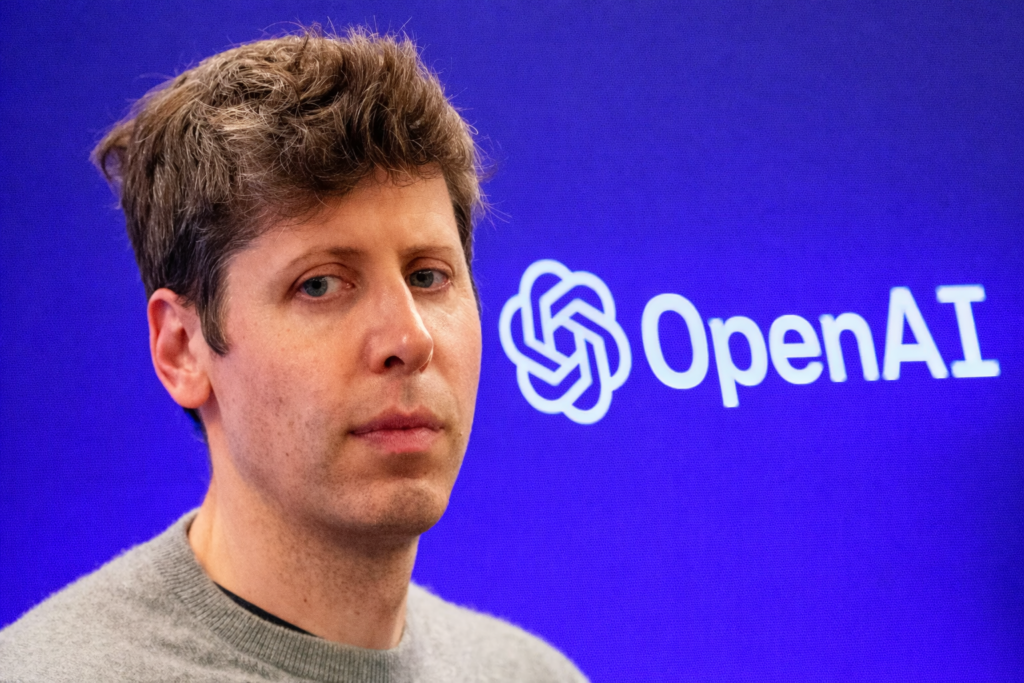
In a candid AMA session on X (formerly Twitter), Sam Altman shared foundational insights into why OpenAI pursued its deal with the United States Department of Defense and how the company views its evolving role at the intersection of AI innovation, ethics, and national security. Here are the five key takeaways from Altman’s remarks.
1. The deal was rushed, and the optics are challenging.
Altman acknowledged that the agreement was concluded quickly as an attempt to de-escalate tensions between the defense establishment and the AI industry, and he recognized that this rapid timeline may fuel criticism even as OpenAI tries to reduce broader industry hostility.
2. OpenAI and the Pentagon “got comfortable” with the contract language.
According to Altman, OpenAI’s ability to reach an agreement where competitors could not was partly due to mutual confidence in the language and terms — even amid intense negotiations — suggesting pragmatism over principle played a role in closing the deal.
3. OpenAI has “red lines,” and they may evolve over time.
Altman said the company currently upholds three safety “red lines,” designed to keep AI aligned with human values. But he stressed that as AI technology evolves, so too will the ethical frameworks and safeguards governing its use.
4. Anthropic’s position may be risky for industry and U.S. interests.
Altman described the path taken by Anthropic — refusing broader Pentagon terms — as “dangerous” not just for competition but for healthy industry dynamics and U.S. strategic interests. His comments underline a fundamental disagreement over how AI should engage with government.
5. AI’s role extends to countering major security threats.
Beyond defense logistics, Altman highlighted two areas where AI could be transformative: cybersecurity — including defending critical infrastructure — and biosecurity, including pandemic detection and response, indicating OpenAI’s broader vision of AI as a tool for national resilience.
The Ethical Divide Inside Silicon Valley
The episode has exposed a philosophical divide among AI firms:
- One camp argues that refusing military engagement may inadvertently leave advanced capabilities to less constrained actors—state or non-state.
- The other warns that early normalization of military AI integration risks accelerating autonomous warfare before adequate global governance frameworks exist.
Anthropic’s stance aligns with the precautionary principle. OpenAI’s approach reflects managed participation under negotiated safeguards.
Neither position is inherently simplistic. Both reveal the difficult trade-offs of frontier technology governance.
Global Implications: Beyond Washington
The strategic implications of the OpenAI Pentagon AI deal extend beyond Washington, influencing global AI governance debates and procurement standards.
In China, AI-military integration operates through centralized state channels. In Europe, policymakers prioritize human oversight and compliance frameworks. Emerging economies are observing closely, knowing that procurement norms established now will define future defense technology markets.
The integration of generative AI into defense systems will influence:
- Cybersecurity architecture
- Intelligence analysis speed
- Battlefield decision-support systems
- Defense procurement ecosystems
- International AI governance treaties
The OpenAI–Pentagon agreement may become a precedent model—demonstrating how private AI labs negotiate binding usage constraints while cooperating with state defense entities. For investors and policymakers, the OpenAI Pentagon AI deal signals that frontier AI companies are now central players in geopolitical power structures
The Bigger Question
Artificial intelligence is no longer a neutral commercial tool. It is infrastructure. a strategic capital and it is geopolitical leverage.
The real debate is not whether governments will use AI.
Defiantly they will.
The question is whether democratic institutions and private innovators can construct enforceable guardrails before the technology outpaces governance.
The OpenAI–Pentagon deal suggests cooperation with conditions.
Anthropic’s resistance suggests caution without compromise.
History will determine which approach shapes the future of AI power.