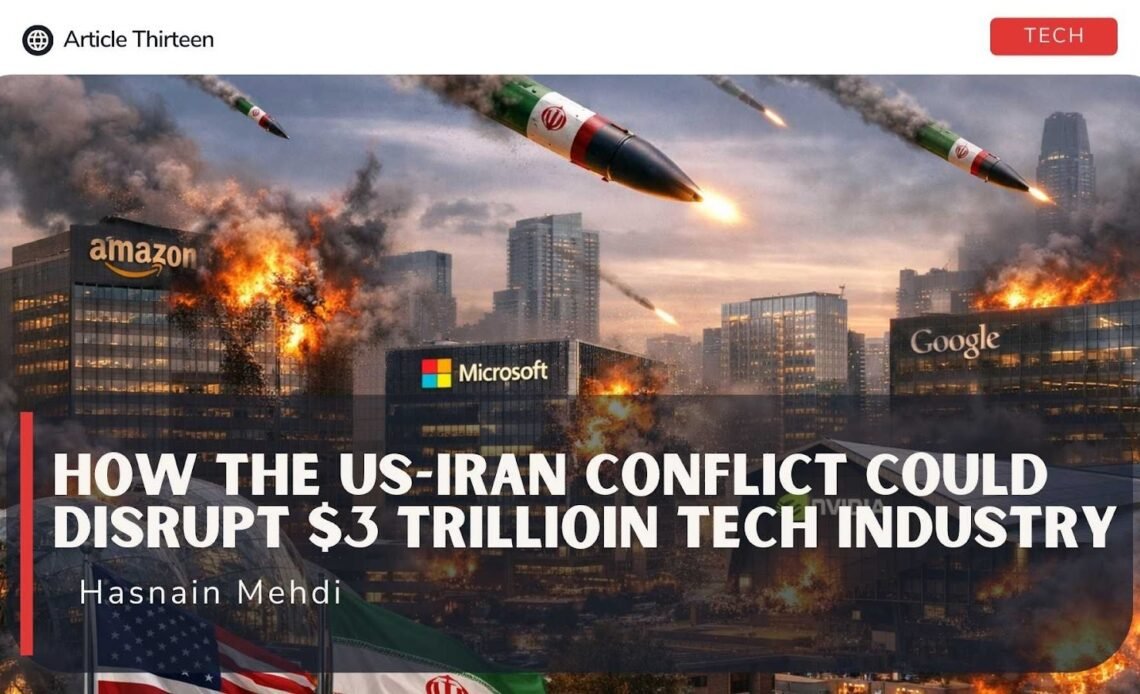
Geopolitical conflicts rarely remain confined to the battlefield. In today’s Tech industry digital economy, they spill over into financial markets, supply chains, cloud infrastructure, and semiconductor manufacturing.
The escalating tensions between the United States and Iran have sparked debates across media outlets and among analysts, with many asking: is America going to war? While political consequences dominate headlines, the economic ramifications—especially for the global tech industry—are just as profound.
Technology firms are increasingly entangled in geopolitical issues, not because they are politically involved, but because modern warfare depends heavily on digital infrastructure, AI, and cloud computing systems. If tensions escalate, companies such as Nvidia, Amazon, Microsoft, and Google could face indirect but significant disruptions.
Understanding how these conflicts intersect with technology markets helps investors, policymakers, and business leaders prepare for potential global disruptions.
Why the Global Tech Industry Is Vulnerable to Geopolitical Conflict
The technology sector has grown into one of the most valuable industries in the world. Leading technology companies now represent a combined market capitalization of more than $3 trillion.
Tech companies are no longer just consumer product providers, they are infrastructure companies. Their platforms power:
- Cloud computing and data centers
- Artificial intelligence systems
- Satellite communications
- Financial networks
These services form the digital backbone of modern economies, making technology firms strategic assets during geopolitical crises.
Could Rising Tensions Trigger a Global Tech Industry Shock?

Financial markets react quickly to geopolitical uncertainty. A key sector at risk is the semiconductor industry, which supplies processors that power AI systems, cloud platforms, and consumer electronics.
According to MarketWatch, The semiconductor industry alone is valued at over $600 billion today, and according to industry forecasts, the global semiconductor market could surpass $1 trillion by 2030.
Investors are already monitoring tech stock volatility, often asking why is Nvidia stock going down today during periods of geopolitical tension. Supply chain disruptions, energy costs, and geopolitical risk all contribute to stock movements in this sector.
Oil Prices, Energy Markets, and the Tech Economy
Energy prices are closely linked to technology operations. Semiconductor manufacturing, cloud servers, and data centers all require vast amounts of electricity.
Conflicts in the Middle East could disrupt oil production or shipping routes, directly affecting energy costs. This helps explain why analysts search for why oil price falling or rising during geopolitical crises
Higher energy costs increase operational expenses for cloud providers, semiconductor plants, and industrial tech companies.
The Hidden Role of Supply Chains in the Tech Industry

Modern technology products depend on global supply chains. Components often cross multiple countries before reaching final production lines.
For example, many global automakers depend on Chinese supply chains for critical components like batteries, electronics, and semiconductors. Tech companies face similar vulnerabilities:
- Semiconductor manufacturing
- Cloud server hardware
- Industrial automation machinery
Disruptions caused by political crises or sanctions could delay production, increase costs, and create ripple effects across international technology markets.
Why Cyber Warfare Is a Growing Concern

Cyber operations have become central to modern conflicts. Governments now increasingly target digital infrastructure, rather than just physical installations.
Tech companies, especially cloud providers, manage critical systems for:
- Businesses
- Governments
- Communications networks
- Financial institutions
- AI Agent Military Use
A major cyberattack could compromise critical services, making cybersecurity an essential focus for industrial tech and top tech companies alike.
How Investors Are Responding to Global Uncertainty
Financial markets reflect global anxiety. Rising tensions, such as those highlighted by Iran WW3 concerns, have immediate effects on technology stocks.
Investors fear disruptions in:
- Semiconductor production
- Cloud infrastructure
- Supply chains
- Energy markets
These concerns can explain short-term stock volatility, while long-term demand for AI, cloud computing, and semiconductors continues to grow
Read More: ArticleThirteen OpenAI Revenue.
The Long-Term Future of Technology in a Geopolitical World
Despite these risks, the tech industry remains resilient. Companies are investing in:
- Supply chain diversification
- Cybersecurity infrastructure
- Domestic semiconductor production
This shift marks the emergence of technology as a strategic national asset, creating a global race for industrial and digital superiority.
Even in uncertain times, industrial tech and AI innovation continue to drive growth
Conclusion
The US-Iran conflict illustrates how modern technology is inextricably linked to geopolitics.
From semiconductors worth billions to global cloud infrastructure, every disruption could affect companies, investors, and supply chains worldwide.
While headlines ask whether America is going to war, the more important story for businesses is how global conflicts influence technology markets worth $3 trillion.
FAQs
Could the US-Iran conflict affect global tech companies?
Yes. Tech companies rely on global supply chains, semiconductors, and cloud infrastructure. Geopolitical tensions could disrupt production and digital services
Why is Nvidia stock going down today during geopolitical tensions?
Stocks can be affected by supply chain risk, rising energy costs, or investor uncertainty during conflicts.
How could oil prices impact the tech industry?
Energy costs affect semiconductors, cloud computing, and industrial tech. Conflicts in oil-producing regions like the Middle East can create volatility.
Could cyber warfare target major tech companies?
Yes. Large tech firms hosting digital infrastructure could be potential targets for state-sponsored cyber attacks.