


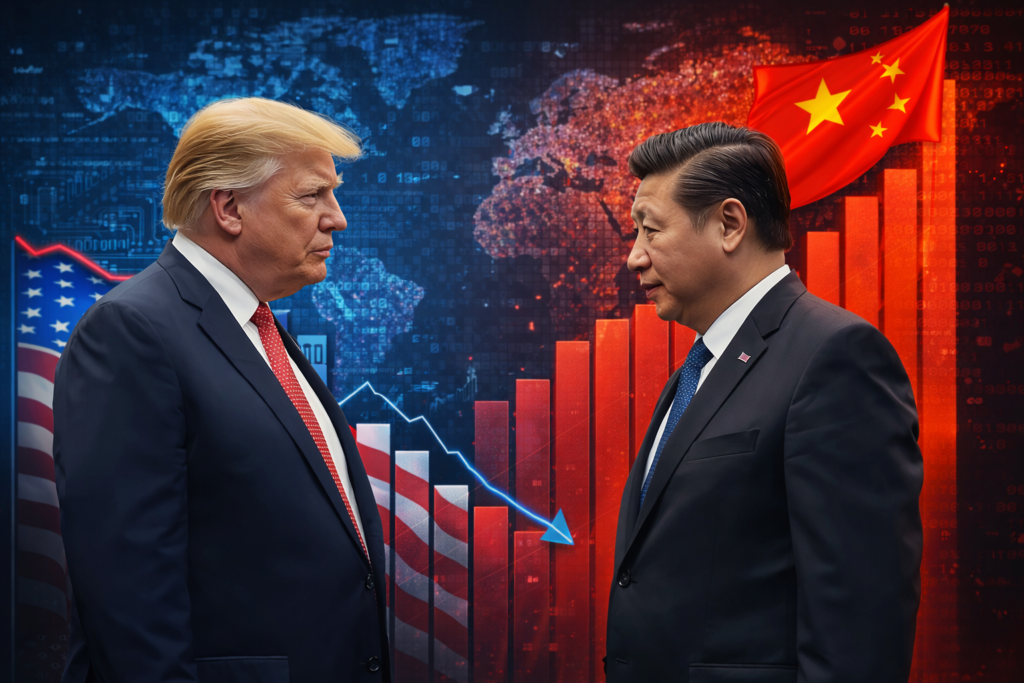
The Conflict Reshaping the Global Economy
The US vs China tech war in 2026 is no longer a limited dispute over tariffs. It has evolved into a structural transformation of the global economy.
What began as export controls on advanced chips has expanded into a strategic contest over:
- Semiconductor dominance
- Artificial intelligence leadership
- Rare earth supply chains
- Industrial policy
- Long-term employment trends
In practical terms, the smartphone in your hand is now part of a geopolitical chessboard.
This technological rivalry is not limited to Asia. Tensions in the Middle East are also influencing global technology markets, as explored in our analysis of how the US-Iran conflict could disrupt the $3 trillion global tech industry.
This rivalry increasingly influences wage structures, manufacturing investment, inflation trends, and consumer electronics pricing worldwide.
Explore More:
- Scalp Care by Hair Type: What Your Roots Are Trying to Tell You
- How Digital Marketing Changes as a Business Grows
- How AI Search Is Changing SEO for Businesses in 2026
- Itchy Scalp and Hair Loss in Women: Hidden Causes + Fix
- How to Detect AI-Generated Images & Videos in 2026 (Easy & Accurate Guide)
What Is Driving the US vs China Tech War in 2026?
The current phase includes:
- US restrictions on advanced semiconductor exports to China
- China’s tightening of rare earth export licensing
- Tariffs on strategic technology inputs
- Large-scale supply chain diversification
Technological rivalry is also expanding into cyber warfare, where cyber operations are becoming a major tool of state competition.
In October 2022 and expanded in 2023–2024, the U.S. Department of Commerce restricted exports of advanced AI and semiconductor technology to China. These controls target high-performance computing chips used in AI development.
Official Source: U.S. Bureau of Industry and Security
China, in response, implemented export controls on key rare earth elements including gallium and germanium (Reuters reporting).
Source: Reuters – Rare earth export tightening
The Semiconductor Factor: Why Chips Are Strategic Assets
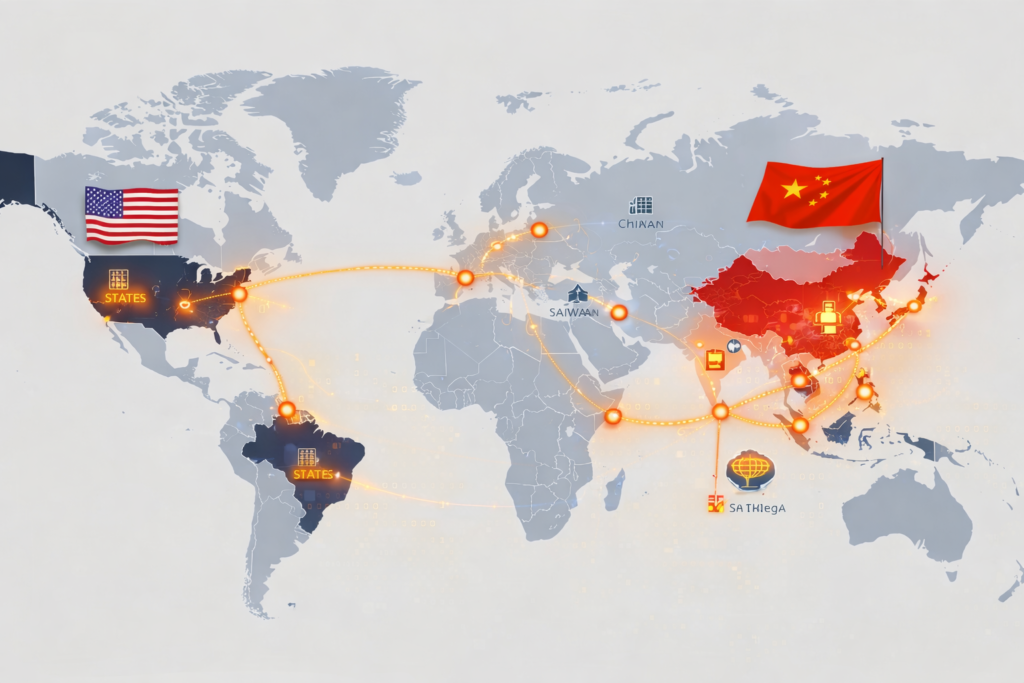
Semiconductors are foundational to:
- AI systems
- Electric vehicles
- Defense systems
- Telecommunications infrastructure
The importance of advanced chips also explains why companies like Nvidia experience significant market volatility during geopolitical tensions.
According to the Semiconductor Industry Association (SIA), global semiconductor sales surpassed $600 billion in 2024, reflecting strong demand for AI-driven computing infrastructure and advanced manufacturing technologies. making it one of the most strategically important industries in the world.
China currently accounts for a significant portion of global rare earth processing capacity (over 60%–70% depending on category), according to the International Energy Agency (IEA).
A critical geopolitical variable in the semiconductor equation is Taiwan, home to TSMC, the world’s most advanced contract chip producer. TSMC manufactures the majority of cutting-edge chips used in AI systems, defense technologies, and high-performance computing. Any instability in the Taiwan Strait would have immediate global economic consequences, making semiconductor supply not just an industrial issue but a strategic security concern.
1. Impact on Jobs: Structural Redistribution


A. Semiconductor Manufacturing Expansion
The United States is investing heavily in domestic chip manufacturing under the CHIPS and Science Act, allocating over $52 billion in subsidies to boost local production.
This creates:
- High-skill engineering jobs
- Semiconductor fabrication roles
- R&D positions
- AI hardware design roles
However, automation reduces traditional low-skill factory roles.
The result is not mass unemployment, but skill-based redistribution.
B. AI and High-Skill Job Growth
The tech rivalry accelerates demand for:
- AI engineers
- Data scientists
- Chip design specialists
- Cybersecurity analysts
- Advanced manufacturing technicians
C. Emerging Economies Gain Manufacturing Share
As firms diversify away from China-centric supply chains, countries such as:
- India
- Vietnam
- Mexico
are absorbing new manufacturing and assembly investments.
This reduces concentration risk and redistributes industrial employment geographically.
2. Why Living Costs Are Increasing
A. Higher Production Costs
Relocating manufacturing is expensive. Building semiconductor fabrication plants costs $10–20 billion per facility.
These capital expenditures increase:
- Production costs
- Compliance costs
- Logistics complexity
Over time, companies pass these costs to consumers.
B. Rare Earth Supply Constraints
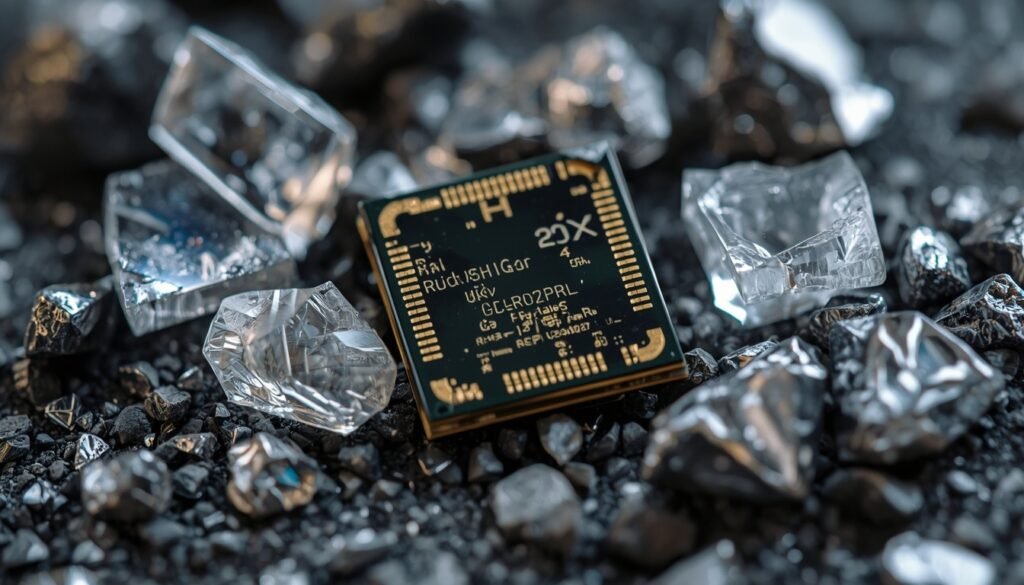
Rare earth elements such as:
- Gallium
- Germanium
- Yttrium
- Scandium
are essential for aerospace, chips, and clean energy technologies.
When export controls tighten, supply shrinks and prices rise, affecting downstream products.
Reuters reported aerospace and chip sectors experiencing supply disruptions due to tightened controls.
C. Tariffs and Import Pressures
Tariffs on Chinese tech components increase import costs. Even if final products are assembled elsewhere, higher input costs move through the value chain.
Consumers experience this as:
- Higher electronics prices
- More expensive vehicles
- Increased industrial equipment costs
This contributes to structural inflation rather than temporary price spikes.
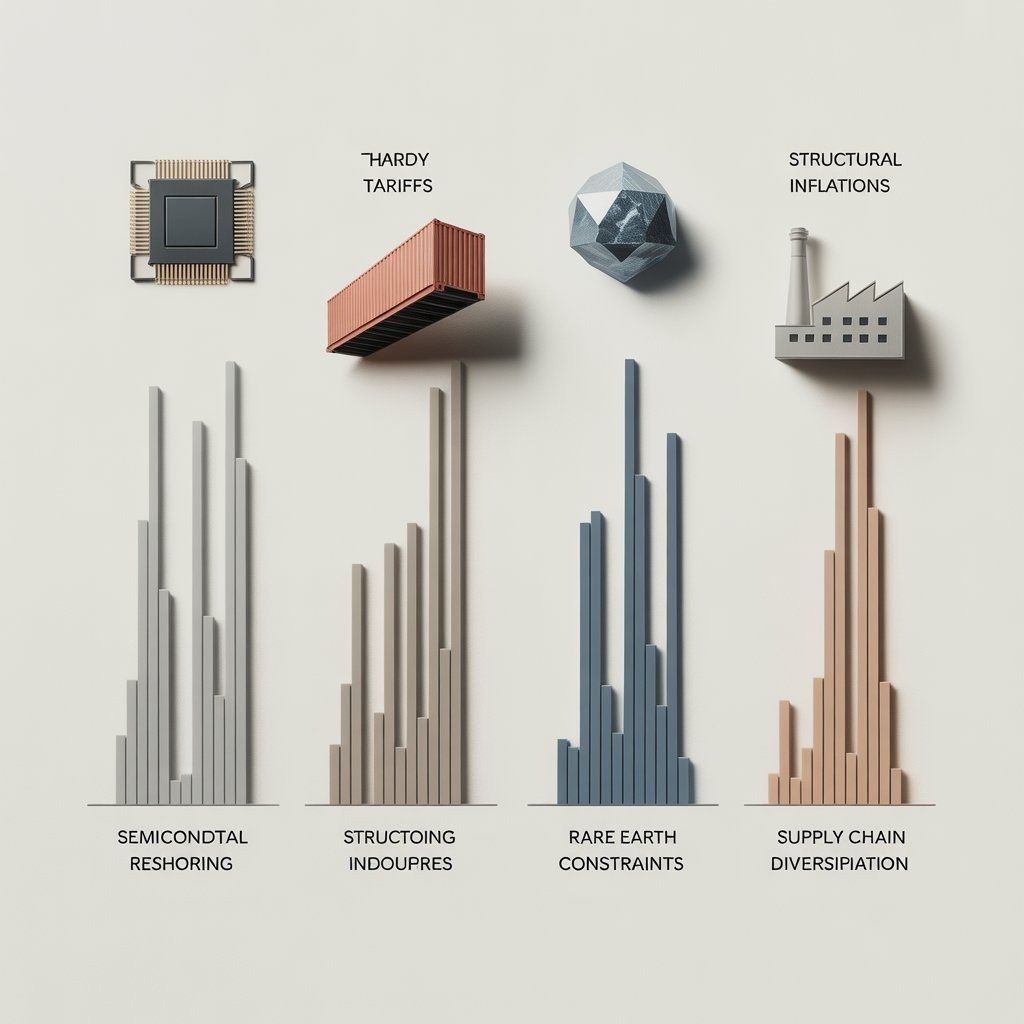
3. Inflation: Structural, Not Temporary
| Structural Driver | Inflation Mechanism | Duration Impact |
| Semiconductor Reshoring | High Capital & Production Cost | Long Term |
| Rare Earth Export Control | Supply Constraints | Medium to Long Term |
| Tariffs on Tech Inputs | Direct Import Cost Increases | Ongoing |
| Supply Chain Diversification | Logistics and Compliance Costs | Structural |

4. Strategic Outlook Toward 2035
Short-Term
- Consumers pay more
- Governments increase industrial subsidies
- Labor markets experience disruption
Long-Term
Technological leadership in:
- Advanced semiconductors
- AI infrastructure
- Critical minerals processing
- Manufacturing diversification
Conclusion: The Real Cost of Technological Rivalry
The US vs China tech war in 2026 is a structural shift in global economic power.
It determines:
- Where future jobs are created
- Which countries lead in AI and semiconductor technology
- How much consumers pay for critical goods
For individuals and businesses, adaptation through skill development, technological literacy, and strategic awareness will define opportunity in this new era.
Related Analysis
AI Agents in the Military: Will They Transform Modern Warfare?
Frequently Asked Questions
Will the US–China tech war increase unemployment?
Not uniformly. Jobs are shifting geographically and toward high-skill roles. Low-skill positions face automation pressure.
Why are electronics more expensive?
Export controls, rare earth tightening, tariffs, and supply relocation increase production costs that reach consumers.
Is this conflict temporary?
No. It represents long-term economic decoupling and strategic competition.