



Meta is not ending virtual reality, but it is clearly stepping back from the grand metaverse story that defined Mark Zuckerberg’s 2021 rebrand. The company is shifting Horizon Worlds toward mobile, keeping only limited VR support, while its filings show Reality Labs is still losing billions even as Meta redirects more of that spending toward wearables and next-generation interfaces.
Five years after Facebook renamed itself Meta, the company’s metaverse vision looks less like the next internet and more like a costly strategic detour that is being quietly narrowed. Meta’s latest developer updates say it is separating its Quest VR platform from Worlds and shifting Worlds to be “almost exclusively” mobile, a notable change for a product once presented as the center of a new digital economy.
That shift matters because the business stakes are still enormous. Meta’s 2025 results show Reality Labs generated $2.21 billion in revenue but posted a $19.19 billion operating loss, while the company said those losses are likely to remain at similar levels in 2026. At the same time, Meta’s core business remains powerful enough to fund the experiment: full-year revenue reached $200.97 billion in 2025, family daily active people averaged 3.58 billion in December, and cash plus marketable securities stood at $81.59 billion at year-end.
Meta’s Metaverse Retreat Has Become Hard to Ignore

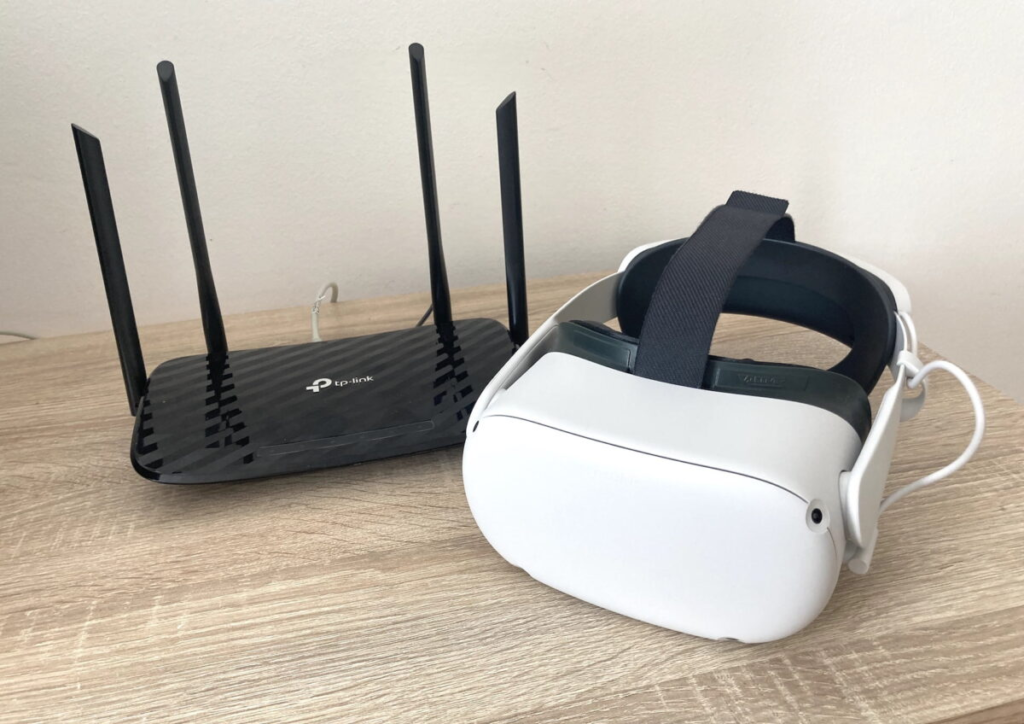
The clearest signal came from Meta’s own platform updates. In February, the company told developers it was explicitly separating VR from Worlds, doubling down on the VR ecosystem while moving Worlds toward mobile. Soon after, Meta said Horizon Worlds and related events would disappear from the Quest store, with VR access winding down in favor of the mobile app.
Then came a partial reversal. After backlash from loyal users, Meta CTO Andrew Bosworth said Horizon Worlds would remain available in VR in a limited form for existing games, even as the company stopped planning major new VR investment in the product. That is not a revival of the original metaverse ambition. It is closer to maintenance mode for a platform that no longer sits at the center of Meta’s story.
The contrast with Meta’s earlier messaging is striking. In its latest annual filing, the company still says it believes the metaverse is the next evolution in social technology. But the same filing also warns that market acceptance is uncertain and that Reality Labs may continue operating at a loss for the foreseeable future.
Read More: Meta Layoffs: Over 20% of Workforce to Be Affected by Massive Job Cuts
How the Metaverse Shift Affects Companies, Investors and Developers
For investors, the immediate damage is limited because Meta’s advertising machine remains huge. In 2025, companywide revenue rose 22% year over year, and its Family of Apps business produced $102.47 billion in operating income. Reality Labs is expensive, but it is being subsidized by a business that still throws off enormous scale and cash.
For developers, the message is more nuanced. Meta is not abandoning VR as a platform. Its own developer blog says Quest usage hit an all-time high in 2025, more than 100 titles generated over $1 million in gross revenue, and Meta Horizon+ surpassed 1 million subscribers while paying nearly $20 million to participating developers. That suggests VR gaming has a business case even if the social metaverse does no
Meta’s own usage data points in the same direction. The company says 86% of the effective time people spend in VR headsets goes to third-party apps, not Meta’s first-party worlds. In simple terms, users still appear more interested in games and practical experiences than in spending long stretches inside Horizon Worlds.
Read More: Trump TikTok Deal Fee: $10 Billion Payment to U.S. Sparks Global Debate
What the Numbers Really Say About Zuckerberg’s Bet
The most important financial point is that “metaverse losses” and “Reality Labs losses” are not exactly the same thing. Reality Labs includes virtual and augmented reality hardware, software and content, and Meta now says about 70% of its 2026 Reality Labs operating expenses will go to wearables initiatives, with the remaining 30% going to VR and Horizon efforts. That means the company’s future spending is increasingly tied to glasses and interface technologies, not just virtual worlds.
Still, the scale of the losses is hard to dismiss. Official Meta disclosures show Reality Labs operating losses of about $10.19 billion in 2021, $13.72 billion in 2022, $16.12 billion in 2023, $17.73 billion in 2024 and $19.19 billion in 2025. That adds up to roughly $77 billion in operating losses across five years.
Those figures help explain why the company is changing its language and structure. The original pitch was a sweeping immersive internet. The current strategy looks more restrained: keep investing in the next computing platform, but place the bigger commercial emphasis on wearables, AI-linked interfaces, mobile access and third-party ecosystems rather than on a single virtual world built by Meta. That is less revolutionary, but it is also closer to how consumers actually behave.
The Business Trend Behind the Metaverse Pivot
The broader trend is not the death of immersive tech. It is the migration of that tech toward cheaper, lighter and more familiar formats. Meta says mobile monthly active users for Worlds grew more than fourfold in 2025, mobile-only worlds expanded from zero to more than 2,000, four creators crossed $1 million in lifetime revenue, and nearly 100 earned six figures last year.
That is a very different business model from the one Zuckerberg promoted when Meta rebranded in 2021. Instead of asking consumers to buy into an all-encompassing VR future, Meta now appears to be following the traffic: mobile social play, creator tools, subscription revenue, third-party software and wearable devices. In that sense, the metaverse is not disappearing so much as being broken into smaller, more practical businesses.
The same rebalancing is visible in Meta’s capital plans. The company said 2026 expense growth will be driven largely by infrastructure and technical talent, especially around AI, and it expects capital expenditures of $115 billion to $135 billion. The center of gravity inside Meta has shifted. Immersive computing remains part of the plan, but it no longer appears to be the headline act.
What Happens Next for Meta
In the near term, Meta is likely to keep doing two things at once. First, it will preserve enough VR investment to keep Quest relevant as a gaming and developer platform. Second, it will continue redefining the metaverse in ways that fit mobile devices, AI assistants, glasses and other interfaces that may reach more people than a pure VR world ever could.
That does not mean Zuckerberg’s long bet on the next computing platform is over. Meta’s own filing says the company still sees that platform as a long-term initiative, and Bosworth has made clear the company remains in VR hardware for the long haul. But the era when Horizon Worlds could be sold as the obvious center of that future looks to be ending.
For business readers, the lesson is straightforward. Consumers did not fully embrace the first big metaverse model Meta tried to build. Investors tolerated the cost because Meta’s ad business remained strong. Now the company is adjusting, not by walking away from immersive technology, but by making it smaller, cheaper, more mobile and easier to monetize. That is why this feels less like a dramatic collapse than a long farewell.