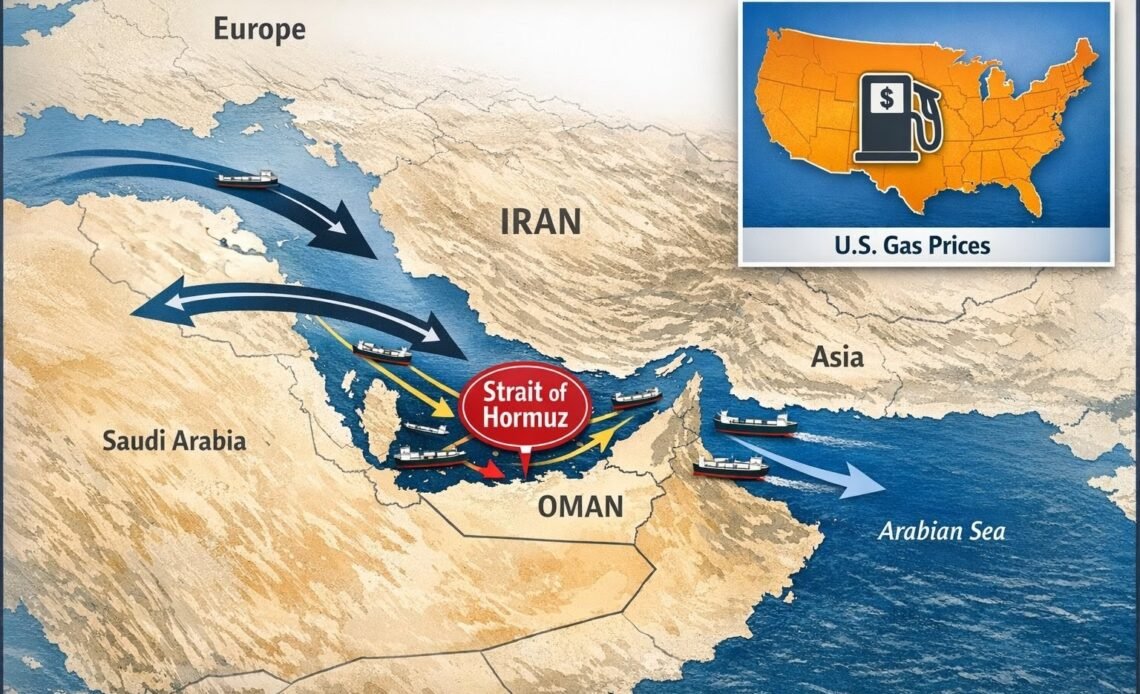
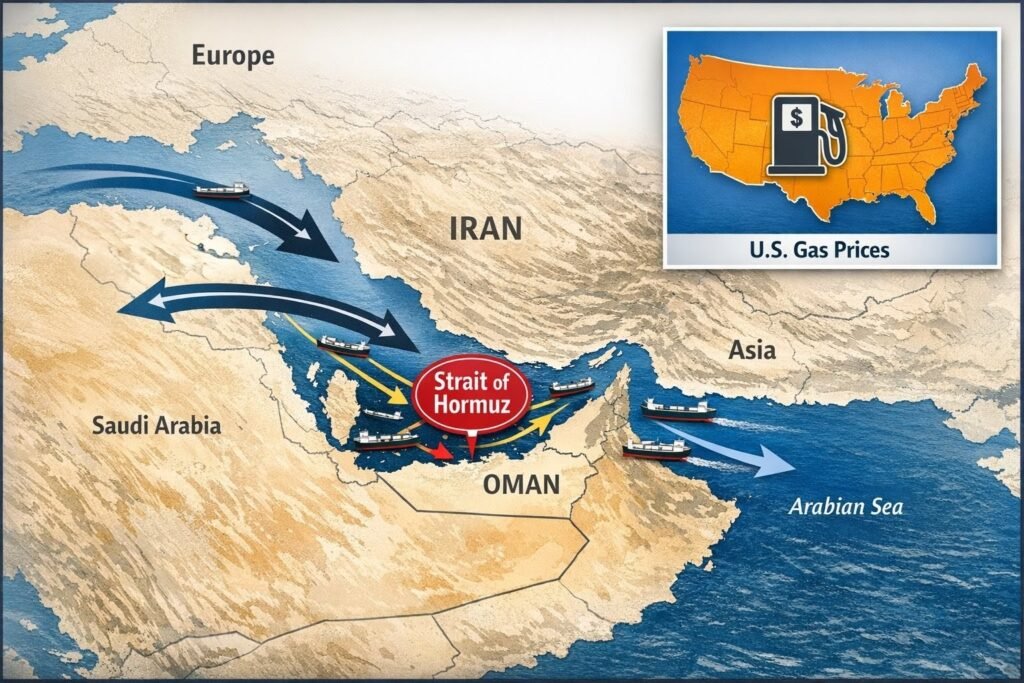
Global energy markets are once again watching the Strait of Hormuz as fears grow about a potential closure of this critical oil shipping corridor. Any disruption in this narrow passage between Iran and Oman can ripple through the global economy within hours. According to data from the U.S. Energy Information Administration (EIA), nearly one fifth of the world’s seaborne crude oil moves through the Strait of Hormuz each day.
As geopolitical tensions increase and shipping risks rise, traders, policymakers, and consumers are asking the same question: will Americans soon feel the impact at the gas pump? Reports from Reuters suggest that oil markets have already begun reacting to the uncertainty, pushing crude prices higher and raising concerns about gasoline costs across the United States.
Why the Strait of Hormuz Matters
The Strait of Hormuz is a narrow maritime corridor between Oman and Iran that acts as a gateway for energy exports from key oil‑producing nations like Saudi Arabia, Iraq, Kuwait, Qatar and the UAE. On a typical day, roughly 15–20 million barrels of crude oil and liquefied natural gas transit through this channel, representing approximately 20% of global seaborne oil and nearly the same share of LNG shipments.
When this vital artery is under threat or closed, global markets react instantly. Traders price in supply risk before physical shortages fully materialize, causing oil benchmarks such as Brent crude and West Texas Intermediate (WTI) to climb sharply.
Current Market Signals: Prices on the Rise
Recent reports show oil prices surging as geopolitical tensions disrupt flows through the Strait. Brent crude and WTI have both climbed significantly, driven by concerns over a supply bottleneck and broader market risk premiums.
The immediate consequence of these price surges is already reflected at the pump:
- U.S. gasoline prices have climbed above $3 per gallon, with spikes seen in major metropolitan areas like Metro Detroit.
- Diesel prices, crucial for freight and manufacturing, have crossed $4 per gallon, driving up transportation and consumer good costs.
These increases are not random fluctuations; they stem from supply constraints and higher risk assessments in global markets.
How Higher Oil Prices Translate to Higher Gas Prices
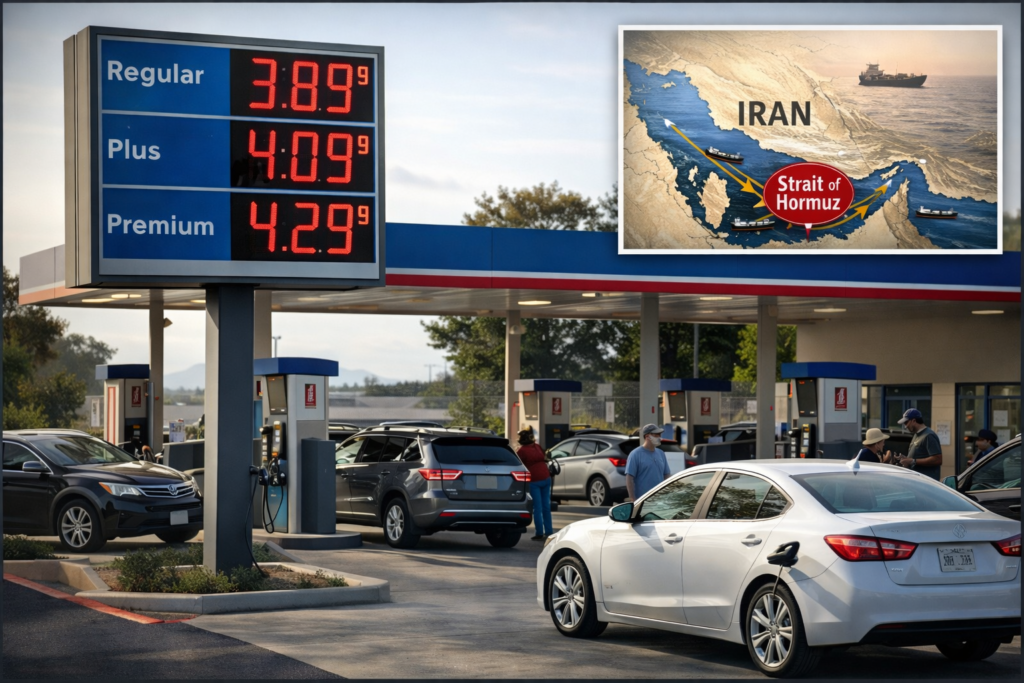
Oil price movements ripple through the economy in predictable ways:
- Crude Oil Costs
Crude oil is the primary input in gasoline and diesel production. When crude benchmarks rise, whether due to actual supply disruption or market fear of future shortages, refiners face higher costs. These costs often translate into higher wholesale gasoline prices, which stations pass on to drivers. - Gasoline Wholesale and Retail Pricing
Gas stations adjust prices based on wholesale market movements. Even modest increases in crude and wholesale gasoline can result in noticeable pump price changes within days. - Inflation Feedback Loop
Rising fuel costs feed into broader inflation. Higher transportation costs push up the cost of goods ranging from food to consumer products, especially in an already inflation‑sensitive economy.
So, Will Americans Pay More Now?
The short answer is yes, Americans are already paying more at the pump, and the risk remains that prices could rise further if supply disruptions persist.
Analysts and market observers emphasize that:
- Short‑term closure or slowdown in the strait leads to immediate price spikes.
- Continued disruption could push oil prices significantly higher, which historically translates into higher gasoline prices for consumers.
However, unlike some countries, the United States has a more diversified energy mix and produces significant volumes of its own oil. This means the U.S. is less vulnerable to direct imports through the strait than other regions, but global price linkages still affect domestic fuel costs.
What This Means for the Average American
Gas Pump Costs
If the crisis prolongs:
- National averages could rise above current levels, potentially toward $3.25–$3.50 per gallon in coming weeks.
Inflation and Living Costs
Energy price increases tend to push overall inflation higher, affecting:
- Grocery prices
- Freight and delivery costs
- Utility and transport expenses
This impact is tied to the ripple effect of energy costs across the economy.
Economic Confidence and Growth
Higher fuel costs can slow spending in other sectors, influence interest rate expectations, and weigh on consumer sentiment, especially if the conflict continues without resolution.
Frequently Asked Questions (FAQs)
Why does a disruption at the Strait of Hormuz affect gas prices in the U.S.?
Although the U.S. imports only a small portion of its oil from the Middle East, global oil markets are interconnected. A supply risk anywhere causes international benchmark prices to rise, which then influences U.S. retail prices.
Has the U.S. government taken action to stabilize fuel prices?
Governments may release strategic reserves or adjust energy policy to ease price volatility, but these measures typically offer short‑term relief rather than long‑lasting price reductions.
Could gasoline price spikes lead to higher inflation?
Yes. Rising energy costs tend to feed into broader consumer inflation, affecting transportation, goods and services prices across the economy. (PBS)
What happens if the Strait reopens quickly?
If maritime traffic is restored soon, oil markets may recalibrate lower, easing pressure on gas prices as risk premiums recede.
Are there alternative routes for oil besides the Strait of Hormuz?
Long‑term alternatives exist, like pipelines or other maritime routes, but none can replicate the volume that passes through Hormuz quickly or without significant investment.
Conclusion: The Pump Pain Is Real, But Not Permanent
The closure of the Strait of Hormuz has already begun to affect global energy markets and U.S. fuel costs. While Americans may feel the impact at the pump now, the degree of ongoing price increases will depend on how long the disruption continues and how markets adjust.
The situation underscores how sensitive the global energy system is to geopolitical events and highlights the interconnected nature of today’s oil and gas markets.
Publishing well‑researched, topical content like this not only informs your audience but also aligns with high‑value search patterns, increasing your chances of strong organic traffic and engagement.