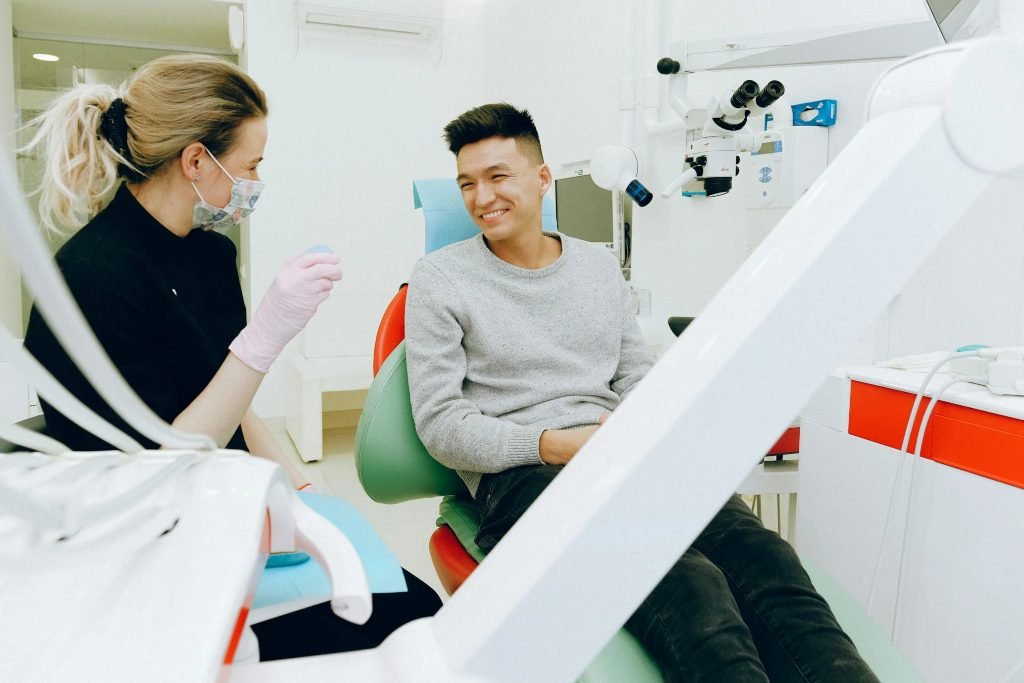
Cosmetic dental services can change the color, shape, spacing or visible balance of a smile, but they do not all solve the same problem. Whitening treats certain stains. Bonding can repair a small chip or gap. Veneers cover the front of teeth. Orthodontic treatment moves teeth. The safest starting point is the least invasive option that fits the actual concern.
Cosmetic work also does not replace routine or restorative care. Decay, gum disease, infection and bite problems should be diagnosed before appearance becomes the priority. Otherwise, a polished surface can hide a problem that still needs treatment.
What counts as a cosmetic dental service?
Cosmetic dentistry primarily aims to improve appearance. The Cleveland Clinic’s cosmetic dentistry overview includes whitening, bonding, veneers, tooth contouring and gum contouring among common services.
Some treatments sit in both cosmetic and restorative dentistry. A crown may restore a weakened tooth while also improving its appearance. An implant can replace a missing tooth and support chewing as well as appearance. Whether a procedure is cosmetic, restorative or both depends on why it is being done, not simply how the finished tooth looks.
Match the concern to the treatment
| Main concern | Possible starting option | Important limitation |
|---|---|---|
| Surface staining | Professional or dentist-guided whitening | It cannot change tooth shape and may not correct discoloration inside a tooth. |
| Small chip, uneven edge or narrow gap | Composite bonding | Resin can stain, chip or need repair over time. |
| Several shape or color concerns | Composite or porcelain veneers | Some veneers require enamel removal, making treatment irreversible. |
| Crowding, rotation or spacing | Orthodontic assessment | Moving teeth takes time and usually requires retainers afterward. |
| Uneven gum line | Gum-contouring assessment | The cause and amount of removable tissue must be evaluated first. |
A treatment should solve the cause, not merely resemble a solution. For example, veneers can make mildly uneven teeth look straighter, but they do not move the teeth or correct a bite. Whitening can brighten natural enamel, but it will not whiten existing crowns, fillings or veneers.
What should happen before cosmetic treatment?
A proper consultation starts with oral health, not a sales package. The government-supported Better Health Channel guidance recommends a thorough dental examination before cosmetic procedures.
- Discuss the exact feature you want to change and what a realistic result would look like.
- Check for decay, gum inflammation, cracks, infection and existing restorations.
- Assess the bite and habits such as clenching or grinding that could damage new work.
- Review medicines, allergies, smoking and health conditions that may affect healing.
- Compare conservative and reversible options before removing healthy tooth or gum tissue.
Benefits are personal, not guaranteed
A well-chosen procedure may make a stain, chip, gap or uneven gum line less noticeable. Some people also feel more comfortable smiling afterward. Those are reasonable goals, but they are not guaranteed outcomes, and cosmetic treatment does not automatically improve oral health.
Results also require maintenance. Whitening can fade. Bonding can discolor or chip. Veneers can loosen, wear or need replacement. Aligners are followed by retainers. The useful question is not only “How will this look?” but also “What am I committing to later?”
Risks and tradeoffs vary by procedure
- Whitening: Tooth sensitivity and gum irritation are common adverse effects. The American Dental Association’s whitening review also finds insufficient evidence for popular charcoal-based whitening methods.
- Bonding: Composite resin is conservative and repairable, but it is not as resistant to staining and wear as porcelain.
- Veneers: The ADA’s patient guidance on veneers warns that treatment is not reversible when enamel is removed. Veneers may chip, crack, loosen or need replacement, and unhealthy teeth should be treated first.
- Tooth contouring: Enamel removal is permanent and limited by how much healthy enamel is available.
- Gum contouring: This is a surgical change. Recovery, discomfort and risks depend on the method and extent of treatment.
How to compare a dentist and treatment plan
Use photographs and reviews as conversation starters, not proof of what your result will be. Lighting, angles and case selection can make a portfolio look more predictable than real treatment is.
- Verify that the dentist is licensed and ask who will perform every part of the procedure.
- Ask how often the clinician performs the proposed treatment and what alternatives were considered.
- Request a written plan showing the teeth involved, materials, irreversible steps, expected maintenance and follow-up care.
- Ask what happens if the bite feels wrong, a restoration chips or the proposed appearance is not achieved.
- For major or irreversible work, consider a second opinion before treatment begins.
Our practical guide to comparing dentists and treatment plans explains licence checks, review quality and questions to ask without relying on “best dentist” advertising.
Cost and insurance need a separate check
Price depends on the procedure, number of teeth, material, laboratory work, location and future maintenance. Purely cosmetic services are commonly excluded from dental insurance, while work with a restorative purpose may be handled differently by a plan.
For current national examples and an itemized-quote checklist, see our guide to cosmetic dentistry costs and tradeoffs. Always confirm local prices and insurance terms before agreeing to treatment.
When to contact the dentist after treatment
Follow the instructions for your specific procedure. Contact the treating dentist if pain or swelling is worsening rather than improving, your bite suddenly feels different, a veneer or bonded area becomes loose, bleeding continues, or you develop fever or signs of infection. Seek urgent care for severe swelling that affects breathing or swallowing.
The bottom line
Cosmetic dental services can address specific appearance concerns, but the right choice depends on oral health, treatment limits and the amount of healthy tissue involved. Start conservatively, understand what is irreversible, budget for maintenance and choose a licensed dentist who explains alternatives without pressure.
