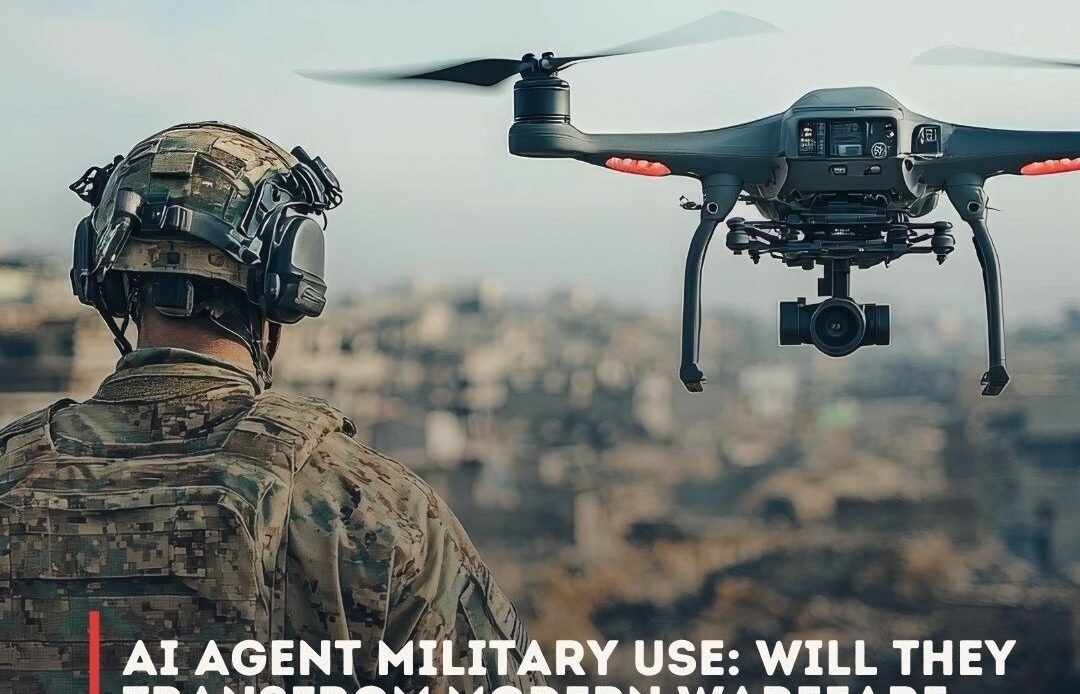
Modern warfare is entering a new era where machines do not just assist soldiers. They analyze data, predict enemy movements, and even recommend targets within seconds. AI agent tools are rapidly becoming one of the most powerful tools in modern defense strategies.
Recent conflicts and rising geopolitical tensions between nations such as the United States, Iran, and Israel have highlighted how advanced technologies are reshaping the battlefield. Military organizations are now integrating AI systems into intelligence analysis, drone operations, cybersecurity, and strategic planning.
According to defense market research, global spending on military artificial intelligence could exceed $30 billion by 2030, as governments race to develop smarter defense technologies.
The result is a new form of warfare where decisions that once took hours can now occur at machine speed.
What Is an AI Agent in the Military
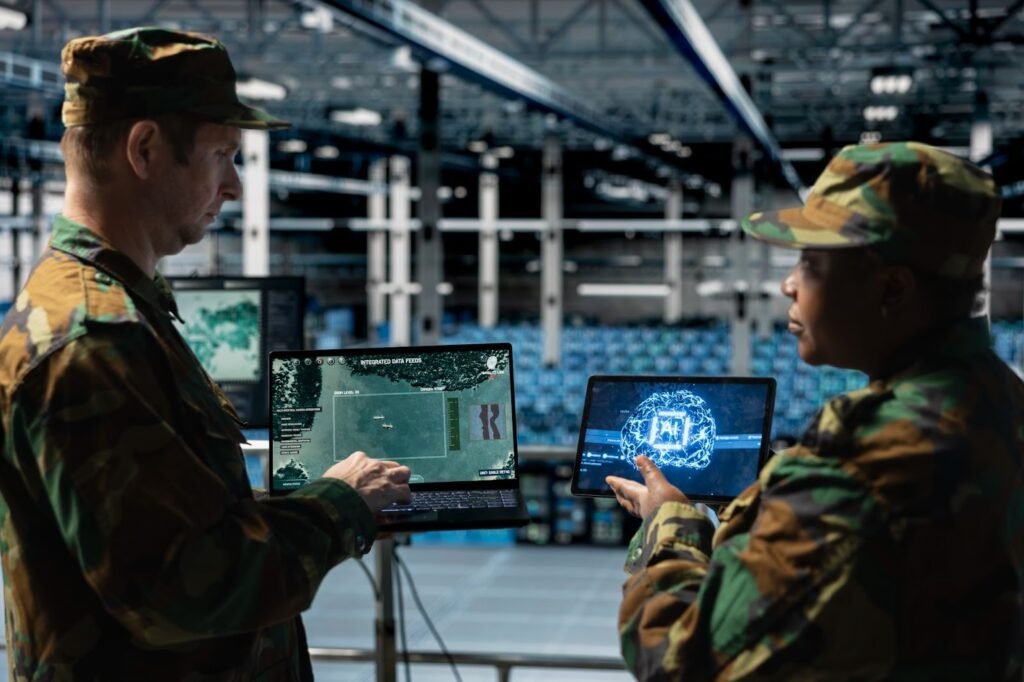
An AI agent is a software system capable of analyzing data, making decisions, and performing tasks without constant human control. In military operations these systems can monitor surveillance feeds, detect threats, and assist commanders in real time.
Instead of manually processing thousands of intelligence reports, an AI agent can scan satellite images, radar signals, and communication data simultaneously. This dramatically accelerates decision making in high risk environments.
Modern defense systems increasingly rely on neural agent AI models, which are advanced machine learning architectures designed to learn patterns from massive military datasets. These systems can recognize enemy vehicles, missile launch signatures, and unusual communication activity across multiple intelligence channels.
Military planners increasingly rely on these systems to shorten the gap between detecting a threat and responding to it.
Real Examples of AI Agent Military Use
Artificial intelligence is already being deployed in several defense systems around the world.
AI assisted targeting systems
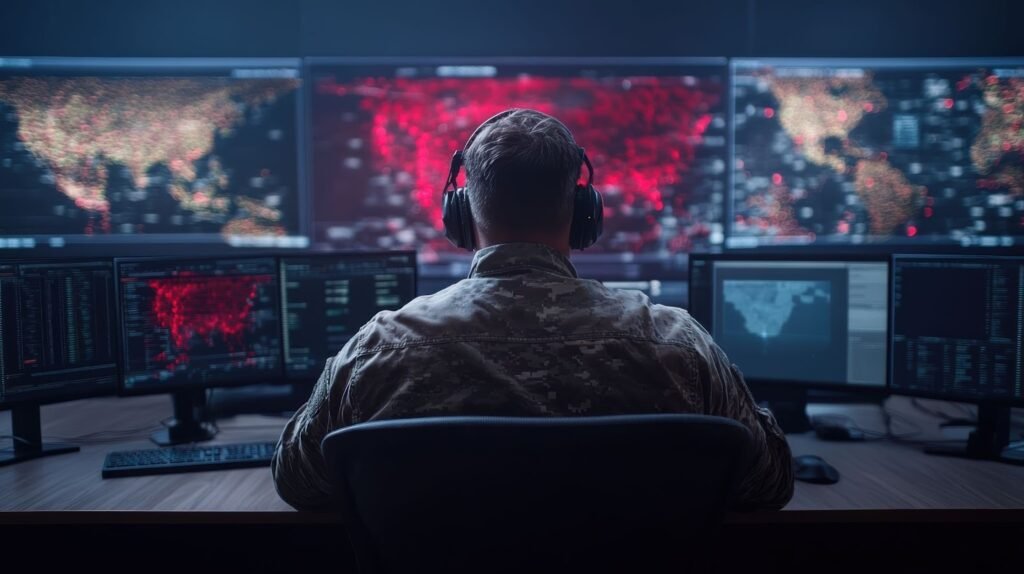
During modern conflicts, AI powered systems can analyze massive amounts of surveillance data to identify potential targets. Some military tools automatically evaluate buildings, vehicles, or individuals that might pose a threat and suggest targets for human analysts to review.
One well known example is Project Maven, developed by the United States Department of Defense. This AI system analyzes drone footage and automatically identifies objects such as vehicles or suspicious activity.
More information about the program can be found here: Defense.gov
These systems dramatically reduce the time needed for intelligence processing and mission planning.
Read More: XI’s AI Ambitions Challenge China’s Labor Market
Autonomous combat drones
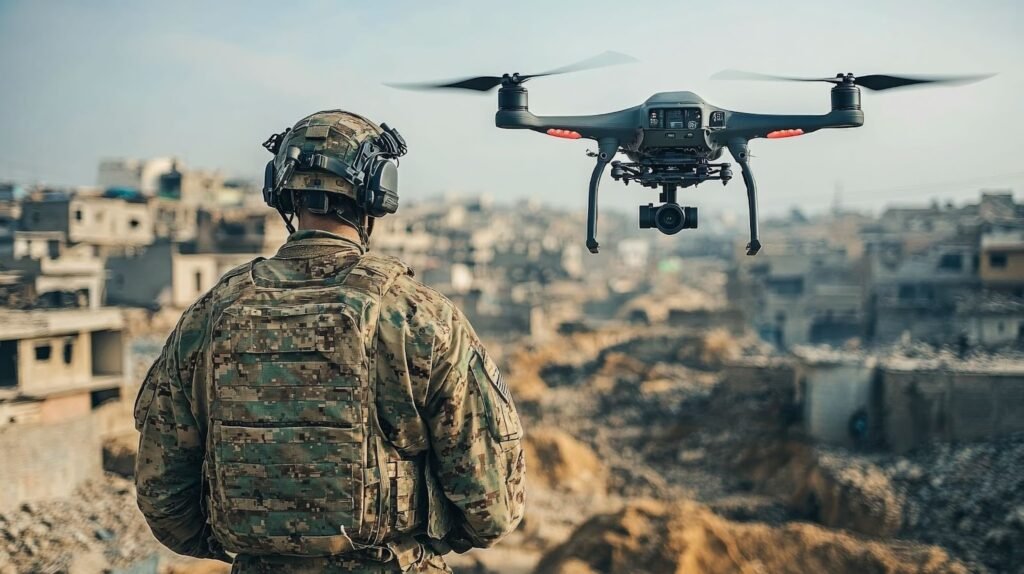
Military drones are increasingly equipped with AI technology that allows them to identify objects, track targets, and operate with limited human intervention.
For example, AI enabled drones can conduct reconnaissance missions and detect enemy movement using machine learning algorithms.
In recent conflicts, autonomous drones have been used for surveillance, precision strikes, and electronic warfare operations.
Autonomous drone technology is also being tested through programs such as Skyborg, which aims to develop AI controlled combat drones that can support fighter pilots.
AI pilot systems in fighter jets
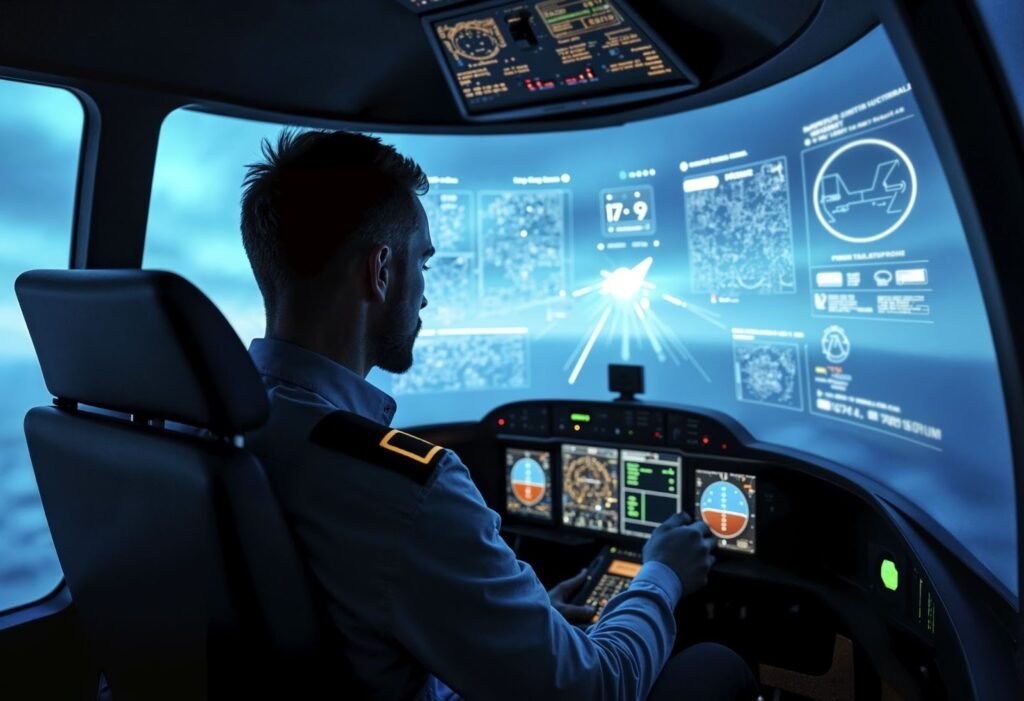
Advanced experiments conducted by the United States military have demonstrated that AI systems can fly fighter jets and perform complex combat maneuvers.
In a famous defense research test organized by the Defense Advanced Research Projects Agency, an AI pilot successfully defeated a human pilot in simulated dogfights during the AlphaDogfight Trials.
These experiments show how neural agent AI systems can perform high speed tactical decision making during aerial combat.
Such systems could eventually act as autonomous wingmen that support human pilots in combat.
AI in Recent Military Operations
Artificial intelligence is increasingly used in real world military conflicts. Defense analysts have reported that advanced AI models were used by the United States military for intelligence analysis and battlefield planning during operations related to tensions in the Middle East.
AI systems helped process large volumes of surveillance data, satellite imagery, and intercepted communications to support operational planning.
Experts warn that AI may compress the traditional military decision chain, allowing strikes to occur far faster than human analysts could manage alone.
This shift is reshaping how modern wars are planned and executed.
The Military AI Market: Business and Industry Perspective
The global military AI market is projected to exceed $30 billion by 2030, driven by defense budgets and technology partnerships. Governments and defense contractors are investing heavily in AI research to gain a strategic advantage.
Leading defense technology companies like Palantir Technologies, Lockheed Martin, and Northrop Grumman are developing AI systems for intelligence analysis, autonomous drones, and battlefield simulations.
For businesses, these innovations create opportunities in defense software, AI analytics, cybersecurity, and drone technology, highlighting how technology investment directly impacts military and commercial industries.
Military Applications of Artificial Intelligence
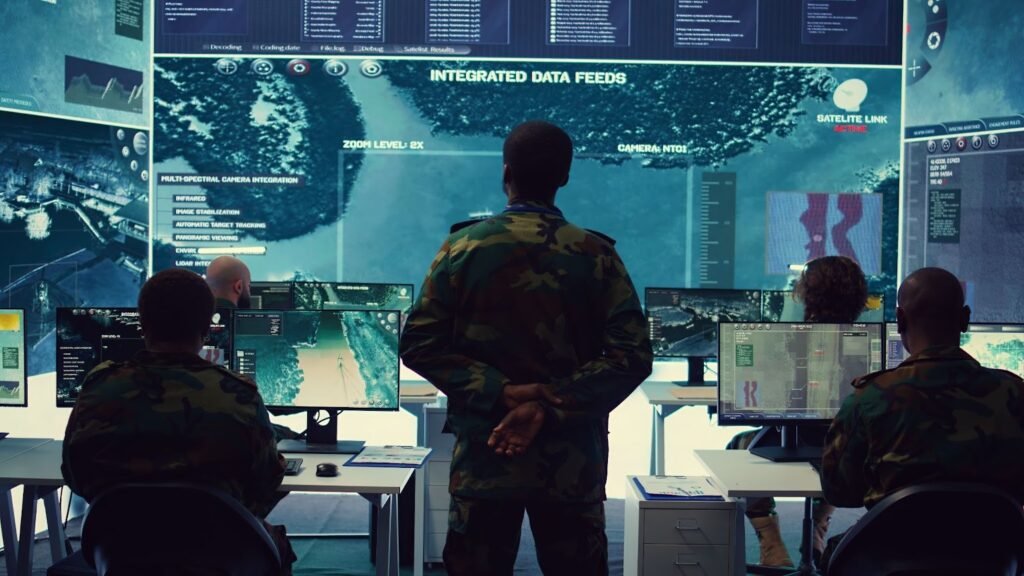
Artificial intelligence agents are now used across many military functions.
Intelligence and surveillance
AI systems analyze satellite imagery, drone footage, and communication signals to detect unusual activity or potential threats.
Cyber warfare
AI helps defend military networks from cyber attacks and can also be used to identify vulnerabilities in enemy systems.
Autonomous weapons systems
Some experimental weapons systems are capable of selecting targets and executing attacks with limited human intervention.
Logistics and battlefield planning
AI can optimize supply routes, predict equipment failures, and simulate military scenarios for training purposes.
Many defense analysts consider these applications one of the most important AI agent useful case study examples in modern technology, demonstrating how artificial intelligence can operate in complex real world environments.
AI in Military Training
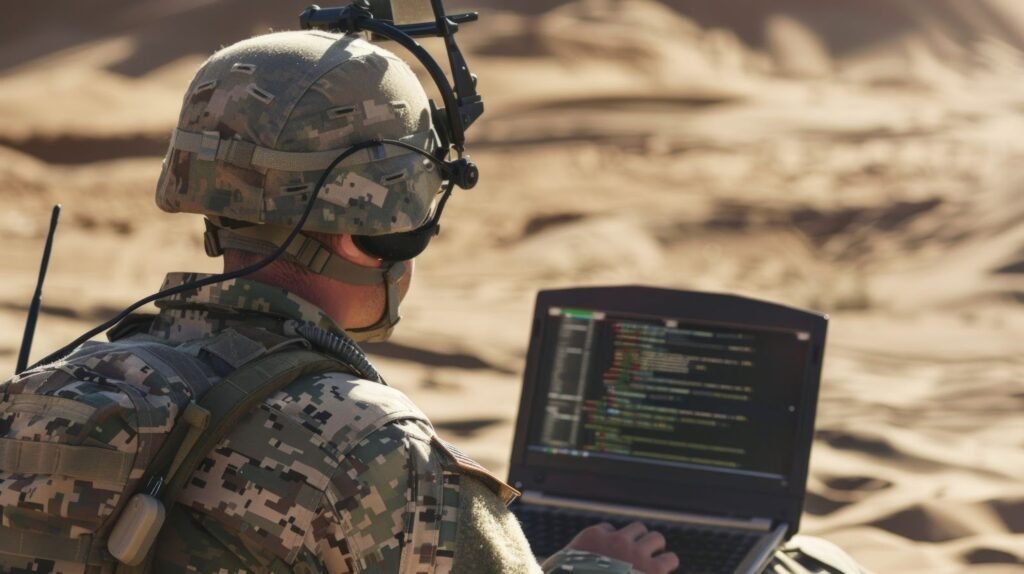
Artificial intelligence is also transforming military training programs.
Advanced simulations powered by AI allow soldiers and pilots to train in realistic virtual environments where enemy behavior adapts dynamically.
These simulations often use neural agent AI systems that continuously learn from human actions and adapt their strategies.
This creates highly realistic combat training scenarios without the cost or risk of real world exercises.
AI in Military Companies and Defense Technology
Defense contractors and technology companies are investing heavily in military AI research.
Governments increasingly partner with technology firms to develop AI models capable of intelligence analysis, cybersecurity defense, and battlefield simulations.
Companies working with defense agencies include:
- Palantir Technologies
- Lockheed Martin
- Northrop Grumman
These companies develop AI systems used for intelligence platforms, autonomous drones, and military analytics software.
This collaboration between technology and defense sectors is accelerating the adoption of AI in warfare.
Pros and Cons of AI in the Military
While artificial intelligence offers powerful advantages, it also raises serious ethical and strategic concerns.
Advantages
- Faster decision making in combat
- Improved accuracy in surveillance and targeting
- Reduced risk for human soldiers
- Enhanced intelligence analysis
Concerns
- Risk of autonomous weapons operating without human oversight
- Potential civilian casualties due to automated targeting
- Ethical questions about machines making life and death decisions
- Possibility of an AI arms race between nations
Some researchers also compare the development of AI agents in warfare with debates around AI agent vs chatbot systems, highlighting how AI agents are capable of independent decision making while chatbots are typically limited to conversation tasks.
The Future of AI in Warfare

Artificial intelligence is likely to become a central element of military strategy over the next decade.
Future battlefields may include:
- Autonomous drone swarms
- AI controlled defense systems
- Robotic ground units
- AI assisted cyber warfare platforms
Countries around the world are investing billions into military AI research as part of a broader race for technological superiority.
According to the Center for Security and Emerging Technology (CSET), countries like the U.S., China, and Russia are heavily investing in AI defense systems, driving rapid advancements in autonomous drones, AI decision-making platforms, and battlefield simulations.
RAND Corporation experts note that AI can compress the decision-making timeline in warfare from hours to minutes, reshaping strategic planning.
Research report: AI and National Security by Georgetown.edu
Some experts believe warfare could shift toward highly automated systems where humans supervise rather than directly control operations.
Frequently Asked Questions
What is an AI agent in the military?
An AI agent in the military is a software system designed to analyze data, detect threats, and support military decision making without continuous human control.
Are autonomous weapons already used in warfare?
Most military doctrines still require human authorization before lethal strikes, although experimental autonomous systems are currently being tested.
Which countries lead military AI development?
The leading nations developing military artificial intelligence technologies include the United States, China, Russia, Israel, and the United Kingdom.
Why is AI important in modern warfare?
AI allows militaries to process intelligence data faster, detect threats earlier, and make decisions in real time, which provides a strategic advantage during modern conflicts.
Final Thoughts
Artificial intelligence agents are rapidly transforming how modern militaries operate. From autonomous drones to advanced intelligence systems, AI technologies are enabling faster decisions, improved surveillance, and new forms of combat strategy.
However, the rise of military AI also raises important ethical and geopolitical questions. As global tensions continue to shape defense innovation, the role of AI in warfare will remain one of the most important technological developments of the twenty-first century.
Understanding how AI agents are used in the military today provides a glimpse into the future of global security and modern warfare.