SAN FRANCISCO, March 7, 2026 — According to reporting by Reuters, the OpenAI Pentagon deal is already triggering internal fallout after a top robotics executive resigned over concerns related to surveillance and military use of artificial intelligence.
The controversy surrounding the OpenAI Pentagon deal intensified this week after senior robotics leader Caitlin Kalinowski stepped down from her role at OpenAI. Her resignation came shortly after the company finalized an agreement allowing its artificial intelligence technology to operate within the classified cloud networks of the U.S. Department of Defense.
The move highlights a growing debate across the tech industry about how powerful AI systems should be deployed in national security operations.
OpenAI Pentagon Deal Triggers Internal Ethics Debate
The OpenAI Pentagon deal enables the defense department to use OpenAI’s AI models for several military-related applications. These may include cybersecurity analysis, logistics planning and intelligence processing.
However, critics argue the agreement could expand government surveillance and accelerate the development of autonomous weapons systems.
Kalinowski said the deal raised governance concerns and that the announcement appeared rushed without clear safeguards.
“AI has an important role in national security. But surveillance of Americans without judicial oversight and lethal autonomy without human authorization are lines that deserved more deliberation,”
Kalinowski wrote in a public statement announcing her resignation.
She emphasized that her decision was based on principle rather than disagreement with colleagues at the company.
Before joining OpenAI in 2024, Kalinowski previously led augmented-reality hardware development at Meta Platforms.
OpenAI Defends the Pentagon Partnership
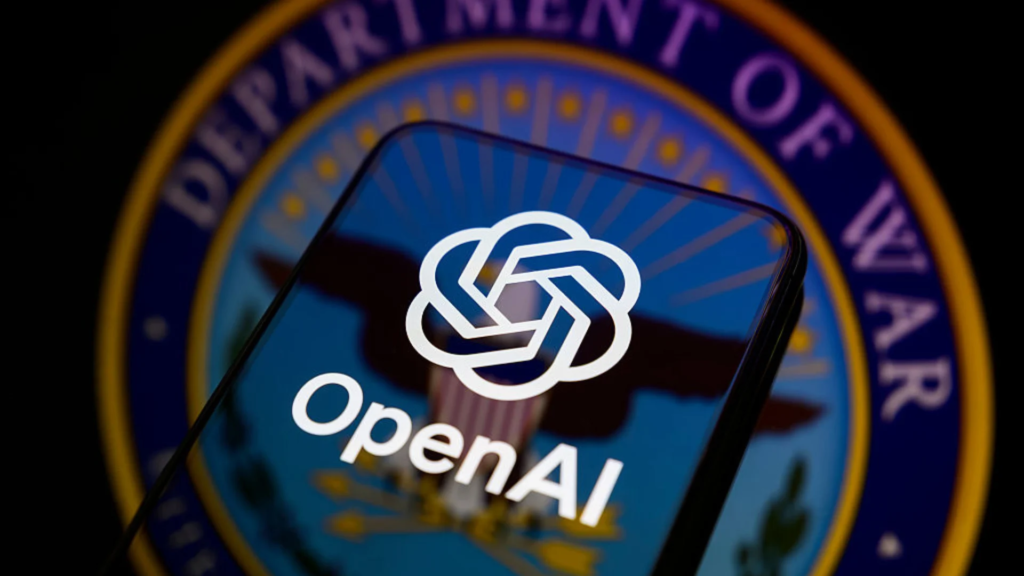
Despite criticism, OpenAI leadership maintains that the OpenAI Pentagon deal includes strong safeguards designed to prevent misuse.
The company stated that its policies explicitly prohibit two major uses:
- Domestic surveillance of U.S. citizens
- Fully autonomous weapons systems
Executives say the partnership focuses on defensive and analytical capabilities rather than combat applications.
Sam Altman, CEO of OpenAI, has also indicated that the company is revising certain terms of the defense agreement to clarify ethical boundaries and reassure both employees and the public.
The company argues that AI technologies can strengthen national security while still respecting civil liberties.
The Wider AI Industry Context
The OpenAI Pentagon deal also emerged after negotiations between the Pentagon and rival AI firm Anthropic collapsed earlier this year.
Anthropic reportedly sought strict guarantees preventing its technology from being used for mass surveillance or autonomous weapons. When those negotiations failed, the U.S. government shifted toward working more closely with OpenAI instead.
That shift illustrates a broader competition among leading AI developers to define the ethical limits of military partnerships.
Several researchers and employees across the industry have warned that AI systems could rapidly transform warfare if not carefully regulated.
A Growing Market for Military AI
The controversy around the OpenAI Pentagon deal is unfolding at a time when defense agencies worldwide are investing heavily in artificial intelligence.
According to defense analysts, the global military AI market could exceed $30 billion by 2030, driven by demand for automated intelligence analysis, cyber defense systems and battlefield decision support tools.
The Pentagon has already partnered with several technology companies to build AI-powered tools for national security applications.
For Silicon Valley firms, these contracts represent significant revenue opportunities. However, they also raise complex questions about ethics, transparency and governance.
Expert Perspective on the OpenAI Pentagon Deal
Experts say the tension revealed by Kalinowski’s resignation reflects a deeper cultural divide inside the AI industry.
Kalinowski herself acknowledged the dilemma facing technology companies working with government agencies.
“This wasn’t an easy call,” she said. “My concern is that these decisions are too important to be rushed without defined guardrails.”
Her statement underscores the growing pressure on AI companies to clearly define how their technologies can and cannot be used.
What the Resignation Means for OpenAI
Kalinowski’s departure represents one of the most visible internal protests tied to the OpenAI Pentagon deal.
While OpenAI’s robotics division is still a relatively small part of the company’s overall strategy, the team has been exploring advanced hardware projects including robotic systems and experimental automation platforms.
The resignation may slow those initiatives temporarily, but analysts believe the larger impact will be reputational.
As AI companies scale their technologies globally, employee expectations around ethics and transparency are becoming more influential in corporate decision-making.
The Future of the OpenAI Pentagon Deal
The debate over the OpenAI Pentagon deal is unlikely to end soon.
Governments want access to advanced AI capabilities for defense and intelligence purposes. At the same time, researchers and civil-rights advocates are demanding strict rules governing how those systems are deployed.
The outcome of this debate could shape the next phase of the global AI race.
And as the technology becomes more powerful, decisions made today about partnerships like the OpenAI Pentagon deal may ultimately determine how artificial intelligence influences national security, civil liberties and the future of warfare.