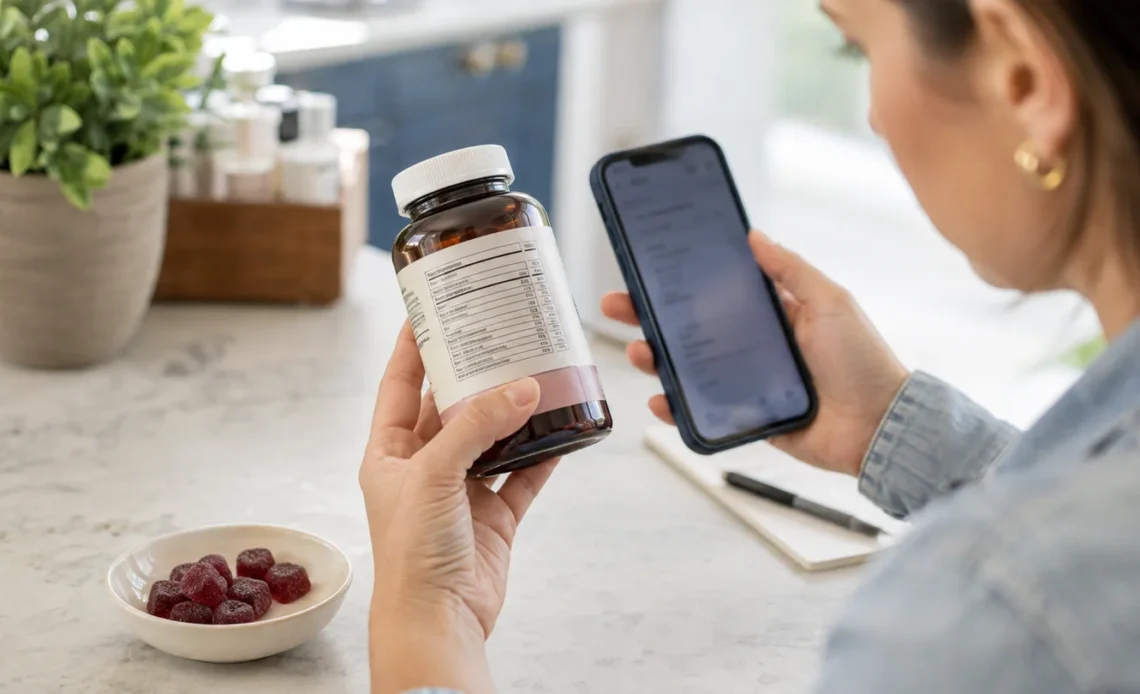
Most weight-loss gummies are not proven to produce meaningful, lasting weight loss. A gummy is simply a delivery form. Whether it does anything depends on the ingredients, dose and finished formula, and most finished products have not been tested in strong, long-term human trials.
That does not mean every ingredient is useless. It means a promising study on vinegar, caffeine or fiber is not proof that the colorful bottle in an advertisement will work. The label deserves more attention than the candy-like appearance.
What are weight-loss gummies?
Weight-loss gummies are dietary supplements marketed for appetite control, fat burning, ketosis or metabolism support. Common formulas contain apple cider vinegar, beta-hydroxybutyrate (BHB) salts, caffeine, green tea extract, fiber or mixtures hidden behind a proprietary blend.
These products are not the same as prescription weight-management medicines. In the United States, dietary supplements do not need FDA approval before sale, and manufacturers do not have to prove to the FDA that a supplement is effective first. The NIH Office of Dietary Supplements says there is little scientific evidence that weight-loss supplements work, while some can interact with medicines or cause harm.
| Common gummy type | What the marketing suggests | What the evidence actually tells you |
|---|---|---|
| Apple cider vinegar | Promises fat loss or appetite control | Research on vinegar is mixed and does not establish that a particular gummy causes meaningful, sustained weight loss. |
| Keto or BHB | Claims ketosis will reduce body fat | Raising blood ketones is not the same as proving body-fat loss. Evidence for finished gummy products is limited. |
| Fiber | Keeps you full | Some fibers may affect fullness, but that does not make every fiber gummy an effective weight-loss treatment. |
| Caffeine or green tea extract | Boosts metabolism | Any weight effect is generally small or uncertain, and concentrated stimulants or extracts can cause side effects. |
Do weight-loss gummies actually work?
There is no solid basis for expecting a typical over-the-counter gummy to cause substantial weight loss by itself. Studies may examine one isolated ingredient, a different dose or a liquid rather than the finished gummy. Results from that research cannot automatically be transferred to every product containing the ingredient.
Short studies also cannot tell us whether a person will keep weight off. The useful question is not “Does this bottle contain a trendy ingredient?” It is “Has this exact formula been tested against a placebo in enough people, for long enough, with meaningful results?” For most gummies, the answer is no.
What the common ingredients can and cannot show
Apple cider vinegar gummies
Apple cider vinegar has been studied for weight and metabolic outcomes, but the findings do not prove that an ACV gummy will work. Gummies may provide a different amount and formulation than liquid vinegar used in a study. One widely publicized 2024 trial reporting large weight-loss effects was later retracted after concerns about its data, analysis and methods; the BMJ Group advised that its results should not be relied on.
The fair conclusion is not that vinegar can never affect anything. It is that evidence remains too uncertain to treat an ACV gummy as a proven weight-loss method.
Keto and BHB gummies
BHB is a ketone the body can use for energy. Taking an external ketone can raise ketone levels without proving that the body is burning a meaningful amount of stored fat. A higher ketone reading is a biological measurement, not a guarantee of weight loss. Products may also contain minerals, sweeteners or other ingredients that affect tolerability.
Fiber, caffeine and green tea extract
Some fiber can help with fullness, but effects differ by fiber type and amount. Caffeine may produce a small short-term weight effect, yet regular use can reduce that effect as tolerance develops. Concentrated green tea extract is not the same as drinking tea and has been linked to liver injury in some people. A long ingredient list is not a stronger formula. Sometimes it is just a longer list of uncertainties.
Safety issues to consider
Possible problems depend on the formula. Sugar alcohols and some fibers can cause gas, cramping or diarrhea. Caffeine and other stimulants may cause anxiety, poor sleep, a rapid heartbeat or higher blood pressure. Supplements may also interact with prescription medicines.
Another risk is not visible on the label. The FDA maintains notifications for weight-loss products found with hidden ingredients. The agency stresses that its database covers only a fraction of contaminated products, so not finding a brand there does not prove it is safe.
Talk with a clinician or pharmacist before using a weight-loss supplement if you take medication, are pregnant or breastfeeding, or have diabetes, high blood pressure, heart disease, liver disease or another ongoing condition. Seek urgent medical help for chest pain, fainting, trouble breathing, severe palpitations or signs of a serious allergic reaction.
How to evaluate a gummy before buying
- Read the Supplement Facts panel. Look for exact ingredient amounts rather than a proprietary blend that hides the dose.
- Look for research on the finished product. An ingredient study is not the same as a trial of the gummy in your hand.
- Treat dramatic promises as warnings. The Federal Trade Commission flags claims of fast, effortless or permanent weight loss as false promises.
- Check independent certification. USP or NSF certification can help verify manufacturing and label quality, but it does not prove a product causes weight loss.
- Check the real cost. Review serving count, recurring subscription terms and the cancellation policy before entering payment details.
What is a better next step?
If weight is affecting your health, a primary-care clinician or registered dietitian can help identify a realistic plan and check for medicines or conditions that influence weight. Evidence-based care may include nutrition, activity, sleep support, behavioral treatment and, for some people, prescription medication or metabolic surgery.
If the goal is changing one localized fat bulge rather than losing weight, that is a different question. Our guide to what CoolSculpting can and cannot do explains the distinction, expected results and important risks.
The bottom line
Weight-loss gummies are convenient, but convenience is not clinical proof. Most do not have strong evidence for meaningful, lasting weight loss, and some ingredients can cause side effects or interact with medication. Judge the exact formula, not the front-label promise, and get professional advice when your health or medicines make the choice less straightforward.
