



An IT roadmap is a document that outlines the plan for an organization’s information technology (IT) initiatives over a specific period of time. It typically includes a list of projects and initiatives that the organization plans to undertake, as well as the timeline for completing each one. The roadmap is designed to help organizations align their IT strategies with their overall business goals and priorities, and to provide a clear plan for implementing and managing new technologies.

The content of an tech roadmap will vary depending on the needs and goals of the organization, but it may include details such as:
- The specific IT projects and initiatives that are planned
- The resources required to complete each project (e.g., budget, personnel, equipment)
- The timeline for completing each project
- The expected benefits and outcomes of each project
- Any dependencies or risks associated with each project
- Any key milestones or checkpoints for tracking progress
An information technology roadmap is a dynamic document that is regularly updated as the organization’s priorities and plans change. It is typically developed and maintained by the IT department, but may involve input from other departments and stakeholders.
Importance of IT Roadmap
An technology roadmap is an important tool for helping organizations plan and manage their IT initiatives effectively. It provides a clear, structured plan for implementing new technologies and initiatives, which can help ensure that projects are completed on time and within budget. It also helps to align IT projects with the overall goals and priorities of the organization, which can help to maximize the benefits of new technologies and initiatives.
In addition to these benefits, an tech roadmap can also help organizations to:
- Identify potential risks and dependencies associated with IT projects, and plan accordingly
- Communicate the organization’s IT plans and priorities to key stakeholders, such as employees, customers, and investors
- Manage and allocate resources effectively, by outlining the resources required for each project and the timeline for completing it
- Track progress and measure the success of IT initiatives, by setting clear milestones and checkpoints
Overall, an IT roadmap is a valuable tool for helping organizations to plan, implement, and manage their IT initiatives in a strategic and effective manner.
Benefits of an information technology roadmap
An IT roadmap can provide a number of benefits to an organization, including:

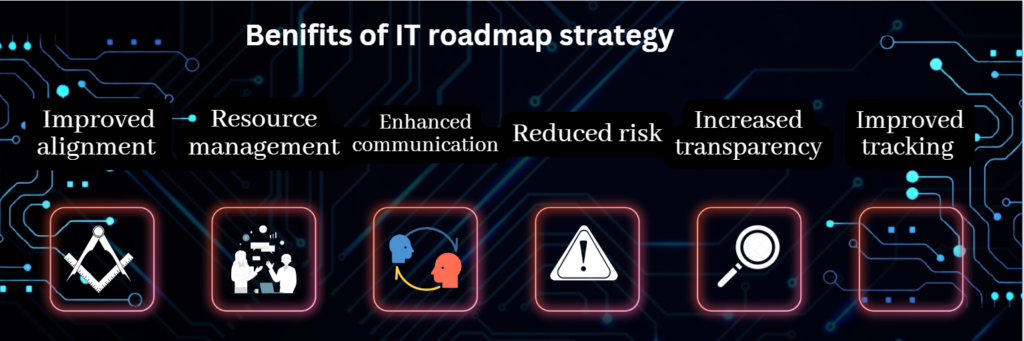
- Improved alignment between IT initiatives and business goals: An IT roadmap helps to align IT projects with the overall goals and priorities of the organization, which can help to maximize the benefits of new technologies and initiatives.
- Better resource management: An IT roadmap helps to outline the resources required for each project, including budget, personnel, and equipment. This can help organizations to allocate resources effectively and ensure that projects are completed on time and within budget.
- Enhanced communication: An IT roadmap can help to communicate the organization’s IT plans and priorities to key stakeholders, such as employees, customers, and investors. This can help to ensure that everyone is aware of the organization’s direction and can work together to achieve its goals.
- Reduced risk and increased predictability: An IT roadmap can help organizations to identify potential risks and dependencies associated with IT projects, and plan accordingly. This can help to reduce the risk of delays or setbacks, and increase the predictability of project outcomes.
- Increased transparency: An IT roadmap provides a clear, structured plan for implementing new technologies and initiatives, which can increase transparency and help to build trust with stakeholders.
- Improved tracking and measurement: An technology roadmap sets clear milestones and checkpoints for tracking progress, business growth and measuring the success of IT initiatives. This can help organizations to track their progress and identify areas for improvement.
Implementation of technology roadmap strategy
Here are some best practices for implementing an IT roadmap strategy:
- Involve key stakeholders: It is important to involve key stakeholders in the development and implementation of the IT roadmap. This includes representatives from the information technology department, as well as other departments and teams that will be impacted by the roadmap. Involving stakeholders can help to ensure that the roadmap aligns with the needs and goals of the organization, and that all stakeholders are aware of the plan and committed to its success.
- Define clear goals and objectives: The IT roadmap should be developed with clear goals and objectives in mind. These should be specific, measurable, achievable, relevant, and time-bound (SMART). Defining clear goals and objectives can help to ensure that the IT roadmap is focused and effective, and that projects and initiatives are aligned with the overall direction of the organization.
- Prioritize projects and initiatives: It is important to prioritize projects and initiatives in the IT roadmap, based on the organization’s goals and resources. This can help to ensure that the most important projects are completed first, and that resources are allocated effectively.
- Identify dependencies and risks: The technology roadmap should identify any dependencies or risks associated with each project or initiative. This can help to anticipate potential challenges and plan accordingly.
- Set milestones and checkpoints: Setting milestones and checkpoints can help to track progress and measure the success of the IT roadmap. It is important to review the roadmap regularly and adjust it as needed based on the progress of projects and initiatives.
- Communicate the roadmap: The IT roadmap should be communicated to all relevant stakeholders, including employees, customers, and investors. This can help to ensure that everyone is aware of the organization’s IT plans and priorities, and can work together to achieve its goals.
Result oriented Information technology roadmap
To create a result-oriented IT roadmap, it is important to:
- Set clear goals and objectives: The IT roadmap should be developed with specific, measurable, achievable, relevant, and time-bound (SMART) goals and objectives in mind. This can help to ensure that the roadmap is focused and effective, and that projects and initiatives are aligned with the overall direction of the organization.
- Prioritize projects and initiatives: It is important to prioritize projects and initiatives in the IT roadmap, based on the organization’s goals and resources. This can help to ensure that the most important projects are completed first, and that resources are allocated effectively.
- Identify and assess risks and dependencies: This should identify any dependencies or risks associated with each project or initiative. This can help to anticipate potential challenges and plan accordingly.
- Set clear milestones and checkpoints: Setting clear milestones and checkpoints can help to track progress and measure the success of the it. It is important to review the roadmap regularly and adjust it as needed based on the progress of projects and initiatives.
- Communicate the roadmap: The IT roadmap should be communicated to all relevant stakeholders, including employees, customers, and investors. This can help to ensure that everyone is aware of the organization’s IT plans and priorities, and can work together to achieve its goals.
- Monitor and review progress: Regularly monitoring and reviewing progress can help to ensure that the IT roadmap is on track and achieving its goals. It is important to make adjustments as needed based on the progress of projects and initiatives.
Concluding the article
In conclusion, an IT roadmap is a valuable tool for helping organizations to plan, implement, and manage their IT initiatives in a strategic and effective manner. It provides a clear, structured plan for implementing new technologies and initiatives, and helps to align IT projects with the overall goals and priorities of the organization. An IT roadmap can also help organizations to manage and allocate resources effectively, reduce risk, increase predictability, and track progress and measure the success of their IT initiatives. Overall, an IT roadmap is an important tool for helping organizations to achieve their IT and business goals in a coordinated and effective way.
-

Scalp Care by Hair Type: What Your Roots Are Trying to Tell You
-

How Digital Marketing Changes as a Business Grows


-

How AI Search Is Changing SEO for Businesses in 2026
-

Itchy Scalp and Hair Loss in Women: Hidden Causes + Fix

-
What is an IT Roadmap? Best way to Implement IT roadmap
An IT roadmap is a document that outlines the plan for an organization’s information technology (IT) initiatives over a specific period of time. It typically includes a list of projects and initiatives that the organization plans to undertake, as well as the timeline for completing each one. The roadmap is designed to help organizations align…