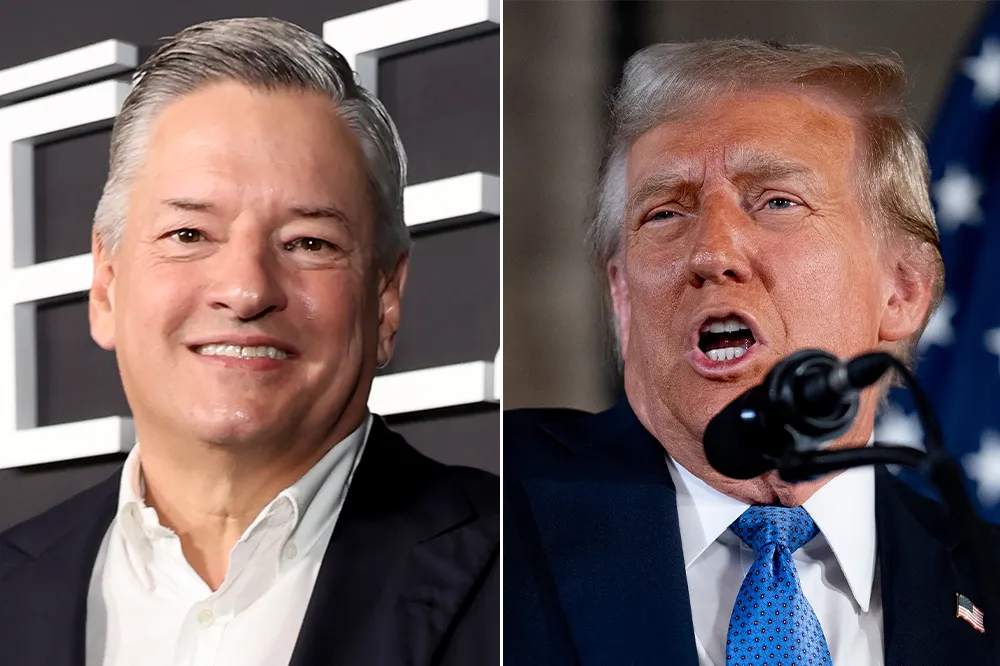
Netflix’s co-CEO, Ted Sarandos, is making headlines this week for his scheduled White House visit — a move that goes far beyond a routine executive trip and signifies the growing intersection of politics, antitrust concerns, and the future of media consolidation. The visit underscores how high-stakes media mergers now require not just boardroom negotiations, but engagement with regulatory and political power players.
By Muntazir Mehdi – Business Graduate, Market Analyst & Global Economics Observer – Date: February 26, 2026

Who Is Ted Sarandos and Why White House Visit Matters
Ted Sarandos, an American media executive and co-chief executive officer of Netflix, has been a central architect of the company’s content strategy for decades, helping steer the platform from a DVD rental service to a global streaming giant.
His leadership has been pivotal in Netflix’s pivot toward original content, international growth, and now one of the largest proposed media deals in history: the acquisition of Warner Bros. Discovery (WBD).
Sarandos’ visit to the White House on Thursday, February 25, 2026 is directly connected to this $82.7 billion proposed acquisition — a deal that could reshape the global entertainment landscape.
What Happens When Streaming Meets Politics
A Deal Under Scrutiny
Netflix’s bid to acquire Warner Bros. Discovery — which would bring storied studios like Warner Bros., HBO, and DC Comics under its umbrella — is subject to intense regulatory scrutiny.
The U.S. Department of Justice’s Antitrust Division has already issued what’s known as a “second request,” significantly delaying the regulatory review process and signaling that competition authorities are carefully weighing the deal’s implications for market competition.
This is where Sarandos’ White House engagement becomes strategically significant: he’s not just advocating for his company but engaging in a broader discussion about how the federal government views media consolidation and market dominance.
Ted Sarandos White House Visit: More Than Meet-and-Greet
According to Reuters and Politico, Sarandos is set to attend meetings at the White House on Thursday to discuss the Warner Bros. Discovery bid, emphasizing the political dynamics tied to the deal.
While White House meetings between executives and political leaders are not unusual, the context here is critical: it signals that Netflix’s media strategy has entered the realm of national discourse, where policymakers and regulators are weighing both economic and cultural impacts of a potential media giant.
This isn’t Netflix’s first brush with the White House. Over the past year, Sarandos also met with former President Donald Trump in Washington to discuss the potential deal — highlighting how political figures from both major U.S. parties are engaging with the company’s ambitions. – Bloomberg.com
Read More on ArticleThirteen
- How to Detect AI-Generated Images & Videos in 2026 (Easy & Accurate Guide)
- Kent Meningitis Outbreak: Cases Fall, but the MenB Cluster Is Still a Serious Warning
- Meta’s Metaverse Enters a Long Farewell Under Zuckerberg
- Could Oil Hit $200 a Barrel? Analysts Are Starting to Think It’s No Longer Far-Fetched
- Will AI Create More Billionaires or Mass Unemployment? Here’s What You Need to Know
Why the Warner Bros. Bid Is a Turning Point
A Historic Media Merger
If approved, Netflix’s acquisition of Warner Bros. Discovery would rank among the largest media deals in history, folding a century-old Hollywood studio into a Silicon Valley streaming platform. This merger would give Netflix not only its current streaming catalog but a vast legacy catalog of films, blockbuster franchises, and award-winning TV shows.
This transformation would redefine the entertainment industry’s competitive map, significantly expanding Netflix’s control over both production and distribution — precisely what antitrust watchdogs scrutinize closely.
Political and Regulatory Pressure Points
There are several reasons the deal has drawn political attention:
1. Antitrust Concerns
Critics worry that combining two major media forces could stifle competition in an already concentrated streaming market. With global rivals like Disney+, Paramount+, and Amazon Prime Video pushing content aggressively, regulatory agencies are investigating whether the merger could harm consumer choice.
2. Political Dynamics
High-profile figures like Donald Trump have voiced opinions on the matter. Trump publicly criticized Netflix for having a large market share and suggested the deal “could be a problem,” putting media consolidation into everyday political conversation.
Moreover, Trump demanded that Netflix fire board member Susan Rice — a former national security adviser — which Sarandos publicly dismissed as unrelated to the business process.
These interventions — though informal — add another layer of political visibility to what is already a significant corporate challenge.
Netflix’s Response and Corporate Strategy
Sarandos has been careful to maintain that this is a business deal, not a political one. In a BBC interview, he emphasized that regulatory bodies like the Department of Justice — not political leaders — are ultimately responsible for reviewing the transaction.
This distinction is crucial for two reasons:
- It reinforces Netflix’s commitment to legal and regulatory processes, rather than courting political influence.
- It signals confidence in the long-term growth potential of the combined enterprise, regardless of political rhetoric.
What This Means for the Streaming Economy
The broader streaming and media landscape is at an inflection point, with several intersecting trends:
1. Market Consolidation
Major tech and media companies are aggressively pursuing mergers and acquisitions to secure content libraries and customer bases. Netflix’s bid for Warner Bros. Discovery is emblematic of this trend — a strategic leap to secure more content and scale in a saturated market.
2. Consumer Implications
If the merger succeeds, subscribers could benefit from deeper content portfolios and integrated viewing experiences across platforms and genres. On the flip side, critics fear reduced competition could lead to higher prices and fewer choices.
3. Regulatory Precedent
How regulators ultimately handle this deal will send messages about future tech-media mergers. A blocked or heavily conditioned approval could deter similar consolidation efforts in the future.
Leadership and Industry Positioning
Ted Sarandos, as co-CEO, embodies Netflix’s evolving identity: not just a tech innovator, but a media conglomerate now involved in political and economic discussions at the national level. His role — once focused on programming and subscriber growth — now includes navigating complex regulatory frameworks and public policy considerations.
Netflix’s leadership structure, with co-CEOs Sarandos and Greg Peters, reflects its dual focus on content and business strategy. Peters handles operational aspects, while Sarandos continues to be the public face of major strategic engagements. (Wikipedia)
Conclusion: A Defining Moment for Netflix and Media Policy
Sarandos’ visit to the White House is more than a meeting — it is a symbolic and strategic moment in the evolution of media, technology, and political engagement. What happens with the Warner Bros. Discovery bid will influence:
- The shape of global entertainment platforms
- Future antitrust and regulatory frameworks
- The relationship between private enterprise and public governance
As the industry watches closely, this episode reminds us that the stakes in the streaming wars extend far beyond subscriber counts and content libraries — they intersect with public policy, economic power, and cultural influence on a global scale.
Frequently Asked Questions – FAQ
Why is Ted Sarandos visiting the White House?
Ted Sarandos is visiting the White House to discuss Netflix’s proposed acquisition of Warner Bros. Discovery. The visit highlights the political and regulatory importance of the deal, which is currently under antitrust review in the United States.
What is the value of the Netflix–Warner Bros. Discovery deal?
The proposed acquisition is valued at approximately $82–83 billion, making it one of the largest potential media mergers in history.
Is the White House responsible for approving the Netflix deal?
No. The approval process is handled by regulatory authorities, primarily the U.S. Department of Justice’s Antitrust Division. However, political discussions can influence broader regulatory perspectives.
Why is the Warner Bros. acquisition facing scrutiny?
The deal is under scrutiny due to concerns about media consolidation, competition in the streaming market, and potential impacts on consumer choice and pricing.