What It Means for Investors and Businesses in 2026
By Muntazir Mehdi – Business Graduate, Market Analyst & Global Economics Observer

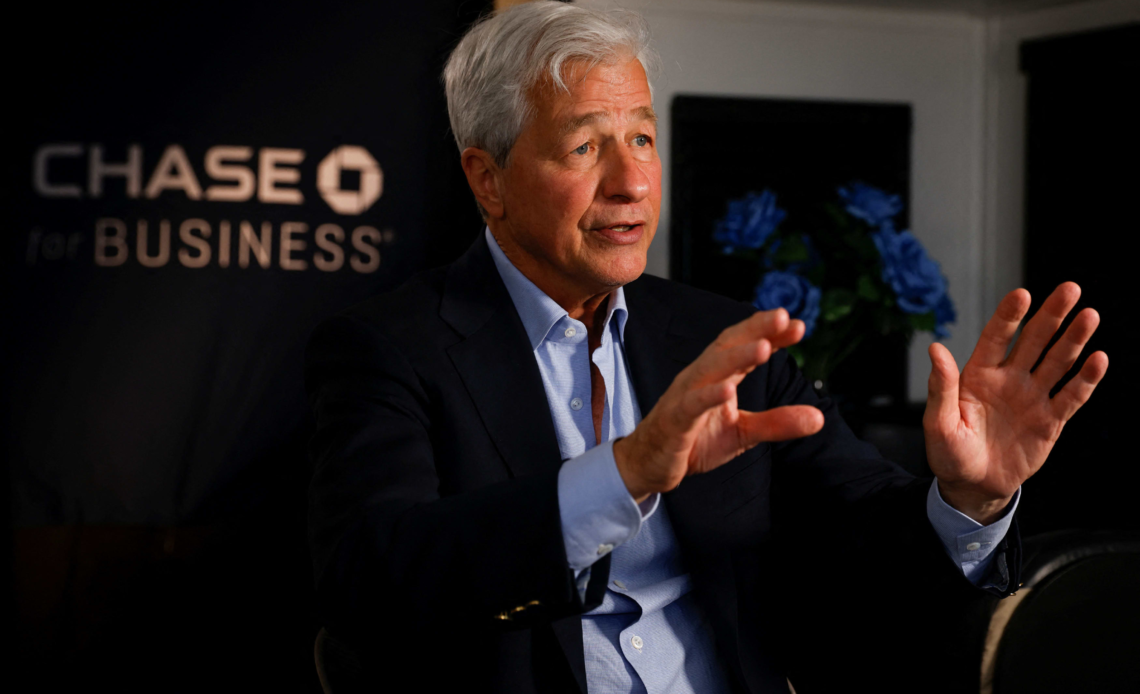
Jamie Dimon, CEO of JPMorgan Chase, is not known for dramatic headlines. When he speaks cautiously about markets, investors pay attention. In his latest remarks during JPMorgan’s investor discussions and media interviews. Jamie Dimon warns economic warnings for investors and businesses.
Asset prices are high, risk-taking is rising, and his “anxiety is high.”
Jamie Dimon
His message was not a prediction of an immediate crash. Instead, it was a disciplined warning about growing imbalances in the financial system. For business leaders, investors, and policymakers, this is a moment to pause and reassess risk.
As someone who closely studies global economic cycles, credit markets, and capital flows, I believe Dimon’s message deserves serious attention — especially in today’s environment of elevated stock markets, strong credit demand, and rapid technological transformation.
High Asset Prices: Why Dimon Is Concerned
According to recent coverage by CNBC, Jamie Dimon warned that high asset prices are adding to economic risks. Stock markets remain near record levels, credit spreads are tight, and investors continue to show strong appetite for risk.
High asset prices are not automatically a problem. They often reflect economic growth, innovation, and confidence. However, history shows that when valuations become stretched and optimism becomes excessive, markets become fragile.
Dimon’s concern appears rooted in three realities:
- Markets are pricing in near-perfect conditions.
- Geopolitical and fiscal risks remain elevated.
- Credit markets are becoming increasingly competitive.
When prices rise faster than underlying earnings or economic fundamentals, corrections can be sharp. We saw similar dynamics before the dot-com bubble and before the 2008 financial crisis. Dimon is not saying we are in a crisis — but he is reminding investors that risk does not disappear simply because markets are strong.
For long-term investors, this is a reminder to avoid complacency. Risk management matters most when markets look calm.
The “Loan Rush” and Credit Market Competition
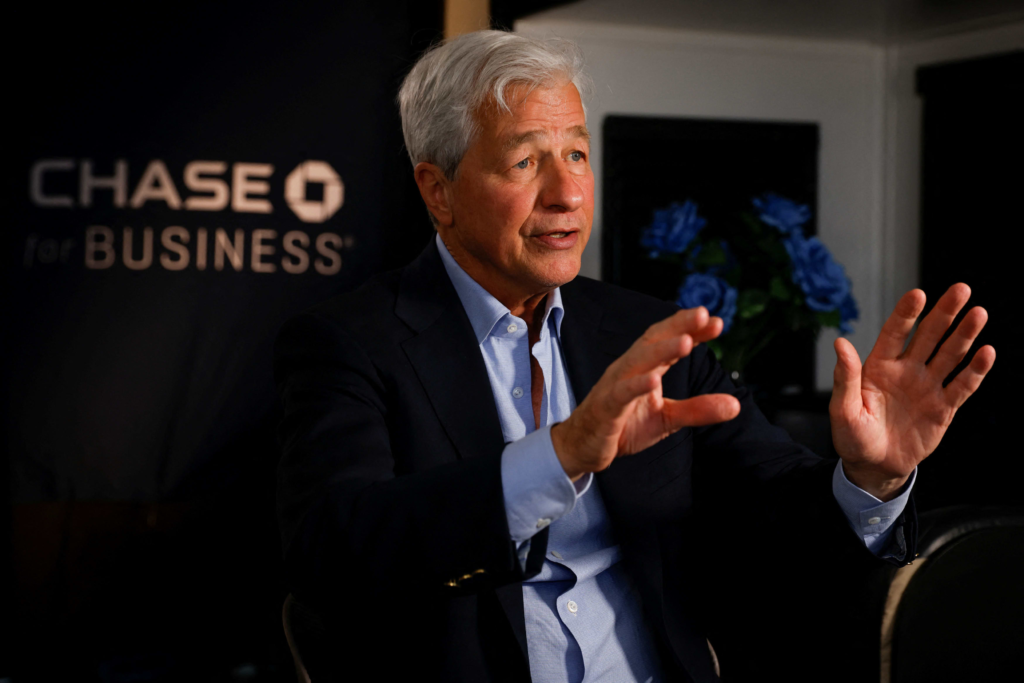
Another major point raised in recent reports is Dimon’s concern about aggressive lending behavior across the financial system.
Banks and private credit firms are competing intensely to issue loans. In a high-rate environment, lending can be profitable. But when competition becomes too aggressive, underwriting standards can weaken.
Dimon reportedly suggested that some lenders may be doing “dumb things” to win deals. This language reflects concern that certain institutions may be chasing short-term gains while ignoring long-term risk.
From an economic perspective, credit cycles follow a predictable pattern:
- Early cycle: lending is cautious.
- Mid cycle: confidence grows.
- Late cycle: competition increases and standards loosen.
- Downturn: defaults rise and losses appear.
We may not be at the final stage yet, but signs of competitive pressure are visible.
One important factor today is the rise of private credit markets. These non-bank lenders are growing rapidly and operate under different regulatory frameworks than traditional banks. While they provide useful liquidity to businesses, they also increase complexity and potential systemic risk if underwriting weakens.
Strong institutions must remain disciplined — even if competitors are not.
Jamie Dimon
Organic Growth Over Acquisitions
While Dimon expressed caution about market risks, he also shared a confident outlook about JPMorgan’s strategy.
Rather than relying heavily on acquisitions, the bank plans to focus on organic growth — expanding its existing businesses, investing in technology, and strengthening customer relationships.
This approach reflects long-term strategic thinking.
Organic growth offers several advantages:
- Reduces integration risk from large acquisitions.
- Allows better control over culture and compliance.
- It builds sustainable competitive advantages.
Reports indicate that JPMorgan plans to deploy tens of billions of dollars into internal growth initiatives over the coming years. That signals confidence in its operational model and capital strength.
From a corporate strategy standpoint, this is notable. In uncertain environments, disciplined internal growth often outperforms aggressive expansion through mergers.
Technology Will “Change Everything”
Another important theme in Dimon’s comments is technology — especially artificial intelligence.
He acknowledged that technology will transform banking and finance. Automation, AI-driven analytics, and digital platforms are already improving efficiency, reducing costs, and enhancing risk assessment.
However, Dimon also appears realistic about the limits of technological hype. Not every AI investment will succeed. Some projects will fail. Capital must be allocated carefully.
From an economic perspective, technological transformation typically follows a cycle:
- Innovation wave
- Rapid investment
- Overvaluation in certain segments
- Consolidation and efficiency gains
We are currently in the investment-heavy stage of AI development. Financial institutions are racing to adopt new systems. But disciplined firms will focus on practical implementation rather than speculative excitement.
Technology is a tool — not a guarantee of growth.
Why This Matters for Global Markets
Dimon’s message is relevant beyond JPMorgan. It reflects broader macroeconomic dynamics shaping 2026.
1. Fiscal Pressures
Many advanced economies are carrying high government debt levels. Rising interest costs create long-term fiscal challenges. Markets may not fully price in these structural pressures.
2. Geopolitical Risk
Trade tensions, regional conflicts, and shifting alliances continue to create uncertainty. High asset valuations can be vulnerable to unexpected geopolitical shocks.
3. Interest Rate Sensitivity
Even if central banks stabilize rates, economies remain sensitive to financing costs. Real estate, corporate borrowing, and consumer credit are all affected.
When multiple risks coexist, elevated asset prices reduce the margin of safety.
Dimon’s anxiety appears rooted in this combination — not a single trigger, but accumulated vulnerabilities.
A Balanced Interpretation
It is important not to misinterpret Dimon’s comments as panic. He did not predict an imminent recession. He did not suggest that JPMorgan sees a collapse ahead. Instead, he emphasized vigilance. Strong leaders think in probabilities, not certainties.
Markets often reward optimism in the short term. But institutions survive long term through risk discipline.
From my analysis, Dimon’s remarks align with classic late-cycle dynamics:
- Growth remains solid.
- Liquidity is still available.
- Asset prices are elevated.
- Risk appetite is strong.
- Experienced leaders become cautious.
This pattern does not guarantee a downturn — but it increases the importance of preparedness.
Practical Lessons for Investors
Based on these developments, investors should consider the following principles:
- Diversification Matters
Avoid overexposure to highly valued sectors without earnings support. - Focus on Fundamentals
Cash flow, balance sheet strength, and competitive advantage are more important than momentum. - Evaluate Credit Quality
If investing in fixed income or private credit, analyze underwriting standards and default risk carefully. - Maintain Liquidity
Opportunities often emerge during volatility. Liquidity provides flexibility.
Practical Lessons for Business Leaders
Corporate executives should also take note.
- Strengthen balance sheets.
- Avoid excessive leverage during expansion.
- Invest in technology strategically, not emotionally.
- Stress-test financial models against downside scenarios.
Economic cycles are inevitable. Preparation determines resilience.
Final Thoughts: Discipline Over Complacency
Jamie Dimon’s latest comments reflect the mindset of a seasoned risk manager. When asset prices are high and markets feel comfortable, anxiety among experienced leaders is often a sign of prudence — not fear.
The global economy in 2026 is not weak. Growth continues. Innovation is strong. But vulnerabilities are building quietly.
History teaches us that financial stress rarely begins when everyone expects it. It begins when risk feels minimal.
In uncertain times, caution is not pessimism — it is strategy.
Muntazir Mehdi
As a business graduate and market analyst who studies global economics and capital cycles, I interpret Dimon’s message as a call for discipline:
- Respect market valuations.
- Monitor credit standards.
- Invest in technology responsibly.
- Prepare for multiple scenarios.