


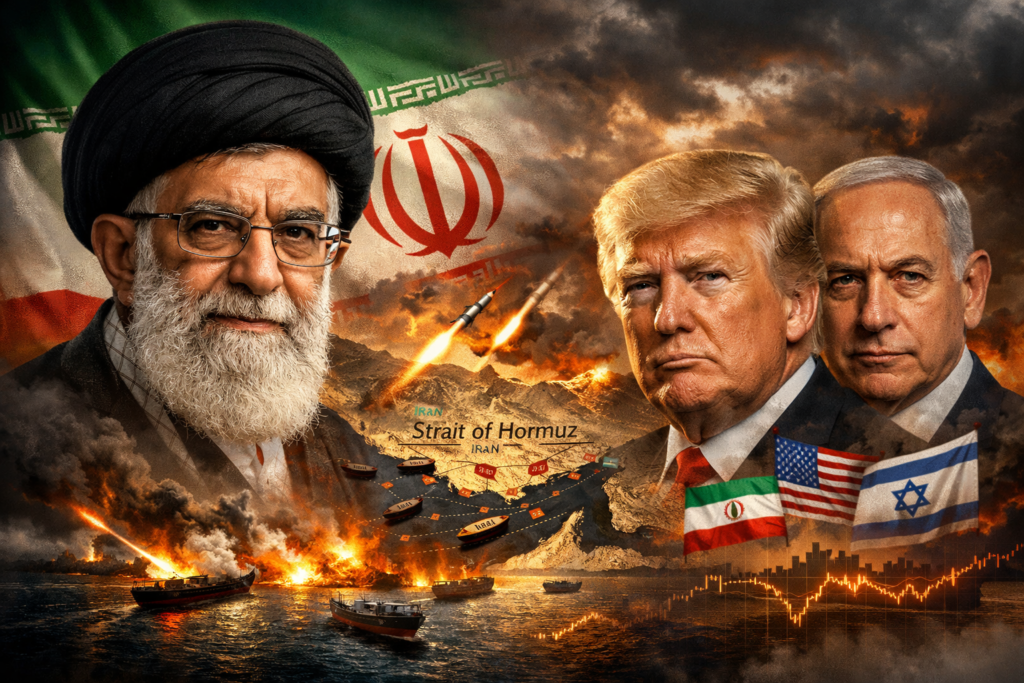
Why This Narrow Waterway Matters to Your Wallet
When tensions rise around the Strait of Hormuz, oil markets react within minutes.
This narrow maritime corridor connects the Persian Gulf to international waters and carries roughly 20% of global petroleum liquids consumption, according to the U.S. Energy Information Administration.
That is not a regional statistic. It is a global economic pressure point.
When risk perception increases due to United States–Iran tensions, markets immediately price uncertainty. Traders add a risk premium. Shipping insurers adjust rates. Energy importers hedge aggressively.
The result is simple: higher oil prices.
And higher oil prices rarely stay at fuel pumps. They ripple into transportation, food logistics, manufacturing, and technology infrastructure.
This is not distant geopolitics, furthermore it is embedded in the price structure of modern life.
What Happens If the Strait of Hormuz Is Disrupted?
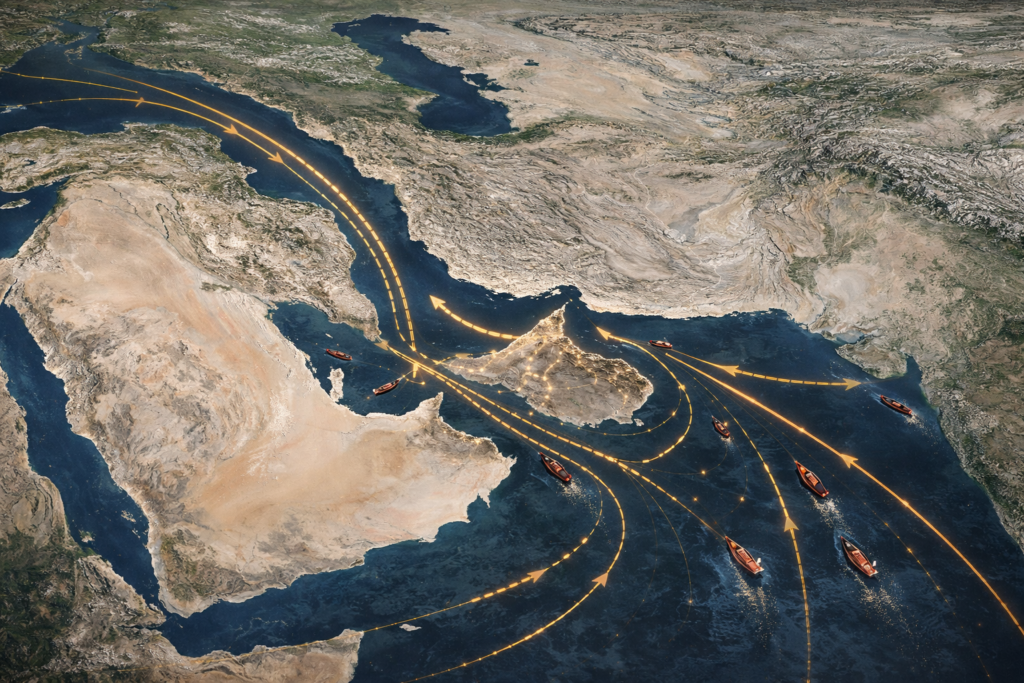
Oil markets are forward-looking. They do not wait for physical disruption. Even the possibility of restricted flows can move Brent crude several percentage points within days.
Historical escalations in the Gulf have triggered rapid price spikes. Analysts at the International Energy Agency and major investment banks often model double-digit upside risk during shipping instability.
Why such sensitivity?
Because approximately one-fifth of global petroleum liquids and a large share of liquefied natural gas exports pass through this single corridor. Major Asian economies — China, India, Japan, and South Korea — rely heavily on Gulf energy flows.
A disruption does not need to last months to create inflationary shock. Even temporary uncertainty tightens supply expectations.
Markets react first.
Consumers feel it later.
READ MORE: OpenAI’s Pentagon deal
Scenario Modeling: If Oil Jumps 20 Percent
Below is a simplified macroeconomic impact model:
| Scenario | Oil Price Impact | Inflation Risk | Market Reaction |
| Minor Tension | +5 | Moderate | Market Reaction |
| Shipping Disruption | +15 | High | Equity selloff, bond stress |
| Sustained Blockage | +20- 25%+ | Severe | Recession risk, policy tightening |
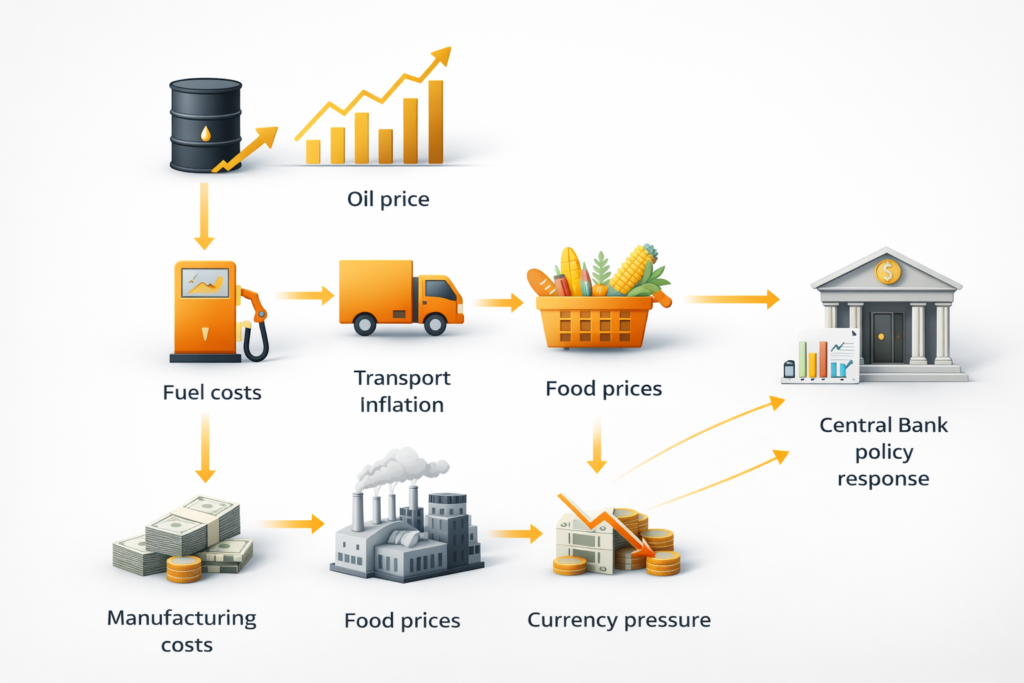
If Brent crude rises 20%:
- Fuel prices increase within weeks
- Freight and shipping costs rise
- Food inflation accelerates
- Import bills widen in developing economies
- Central banks delay interest rate cuts
For businesses operating on thin margins, this creates dual pressure: higher input costs and weaker consumer purchasing power.
Energy risk becomes revenue risk.
Will Higher Oil Prices Trigger Inflation Again?
Oil is not merely a commodity. It is a foundational cost input across the global economy. About 20 million barrels of oil per day transited through the Strait of Hormuz in 2024, making it the world’s most critical oil chokepoint – AL Jazeera Statistics of year 2024
When crude rises:
- Transport companies pay more for diesel
- Airlines increase ticket prices
- Shipping costs expand
- Fertilizer and agricultural expenses climb
- Electricity costs rise in importing nations
This is classic cost-push inflation.
The impact is amplified in emerging markets where energy imports dominate trade balances. Rising oil bills strain foreign exchange reserves, weaken currencies, and compound domestic inflation.
Central banks — including the Federal Reserve — closely monitor such shocks because energy-driven inflation can delay monetary easing cycles.
For households already stretched by high living costs, another energy spike would feel less like geopolitics and more like a monthly budget crisis.
Technology Supply Chains Are Not Immune
Energy shocks no longer affect only heavy industry.
Modern technology infrastructure is energy intensive.
- Semiconductor fabrication requires uninterrupted power
- Data centers consume massive electricity volumes
- Global electronics rely on maritime logistics networks
If shipping insurance premiums rise near Iranian waters, freight costs increase globally.
That impacts:
- Consumer electronics pricing
- Cloud infrastructure expenses
- Server hardware imports
- Telecom deployment budgets
Even software firms feel secondary pressure through rising operational costs.
In an interconnected economy, energy volatility compresses digital margins.

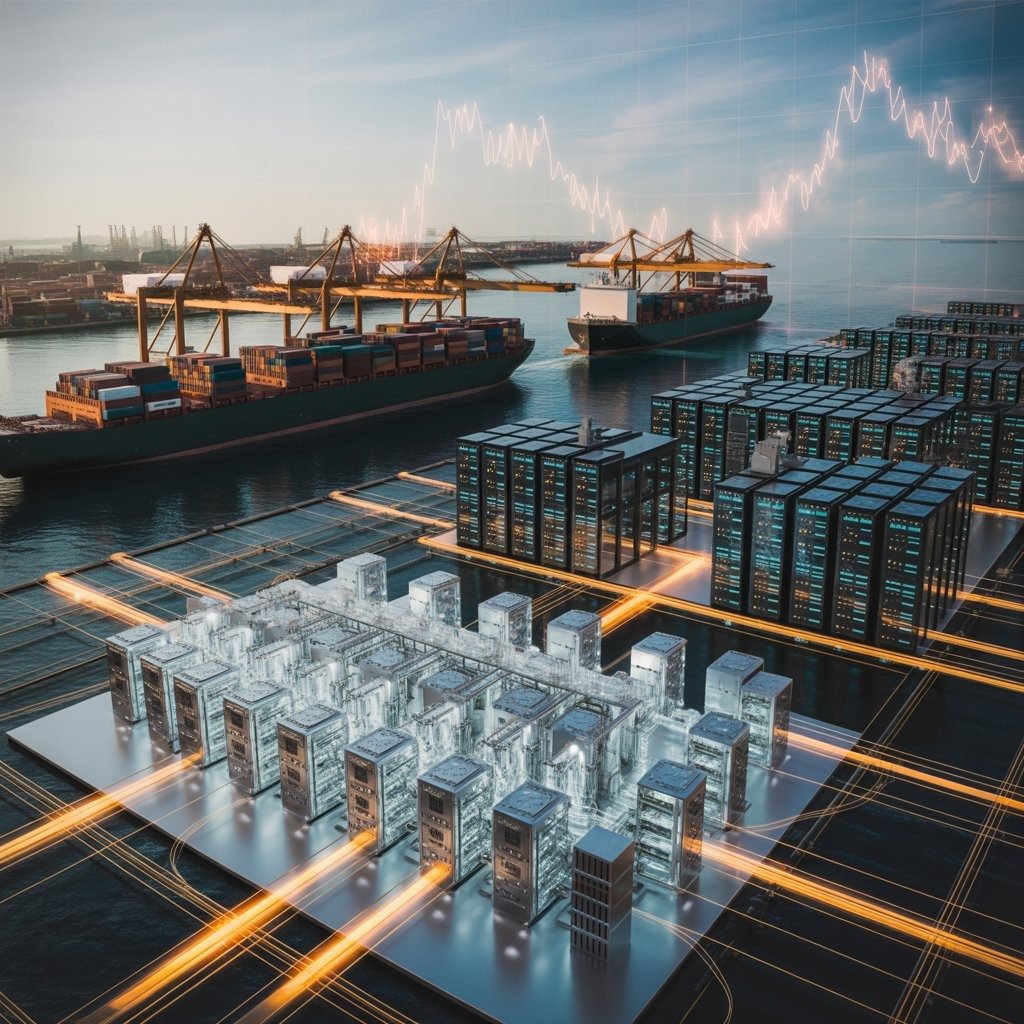
This mirrors structural vulnerabilities discussed in broader supply chain conflicts, including technology power struggles between major economies.
Sanctions, Escalation, and Fragmented Trade
Years of sanctions on Iran have already constrained export flows. Escalation scenarios increase the probability of tighter enforcement or maritime restrictions.
From a business standpoint, sanctions create:
- Compliance complexity for multinational firms
- Volatility in energy derivatives markets
- Reduced predictability for long-term investment planning
Energy markets are global. Risk flows across borders instantly.
Who Benefits When Risk Rises?
Economic shocks redistribute income.
Short-term beneficiaries often include:
- Energy exporting nations
- Oil trading desks
- Defense contractors
- Commodity hedge funds
Meanwhile, small businesses, logistics firms, and consumers absorb rising costs.
The imbalance matters because inflation spreads widely while gains concentrate in strategic sectors.
That is what transforms Hormuz risk from foreign policy tension into a domestic cost-of-living issue.
Why This Matters Now
Current US–Iran tensions increase the probability of volatility — even without full-scale conflict.
Market price risk, not certainty.
The Strait of Hormuz is only 33 kilometers wide at its narrowest point, yet it influences trillions in trade flows annually.
If tensions persist into the coming quarters, Brent crude volatility may remain structurally elevated, even without physical disruption.
For investors, entrepreneurs, and professionals, the strategic takeaway is clear:
- Energy security equals economic stability.
- Geopolitical risk equals inflation risk.
- Oil volatility equals margin compression.
Understanding these connections allows businesses to anticipate exposure rather than react to crisis headlines.
Final Strategic Perspective
When military headlines dominate news cycles, markets focus on supply routes.
When markets reprice oil, businesses feel the pressure.
Or when businesses pass on costs, households absorb the impact.
A narrow waterway in the Gulf can quietly reshape global inflation trajectories, technology budgets, and living standards worldwide.
This is not distant politics.
It is a structural economic risk operating in real time.