


Nobody panics about an itchy scalp. You scratch it, switch shampoos, move on. Then three months later your ponytail is half the thickness it used to be and suddenly the itching you ignored feels a lot more relevant.
That’s how it goes for most women. The shedding gets the attention. The itch got there first.
An itchy scalp and hair loss in women aren’t two separate problems happening at the same time. They’re connected. Almost always. The scalp is reacting to something, could be inflammation, product buildup, a fungal issue, hormones doing something new. Whatever it is, when it goes on long enough, your follicles pay for it.
Scalp Is Skin. Nobody Treats It Like Skin.
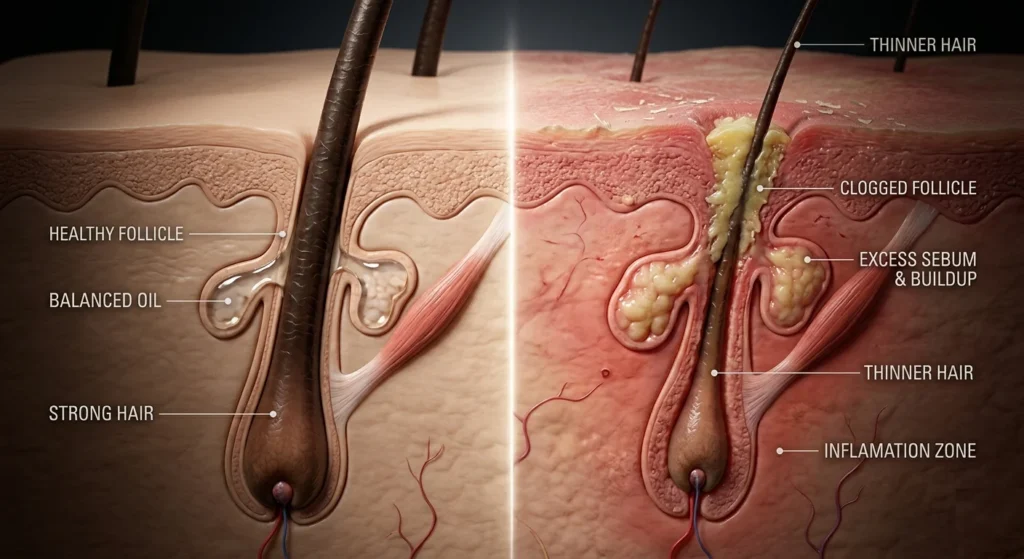
Your scalp has more blood vessels per square centimeter than your forearms. More oil glands than your face. Its own bacterial ecosystem.
Nobody thinks about that. Shampoo, rinse, conditioner, done. Maybe a dry shampoo on day three. That’s the extent of scalp care for most women.
But here’s what actually happens when scalp skin stays irritated. The follicles sitting in that skin weaken. Hair growth cycles shorten. New strands come in thinner. Some follicles just quit entirely. A study in the International Journal of Dermatology looked at women with unexplained diffuse thinning and found chronic scalp inflammation in over 60% of them. Not dramatic bald spots. Gradual loss that nobody could figure out because nobody checked the scalp properly.
The hair wasn’t the problem. The skin growing it was.
So What’s Behind the Itch?
A week of itching after trying a new product? Probably nothing. Persistent scratching that won’t quit for weeks? That’s pointing at something specific.

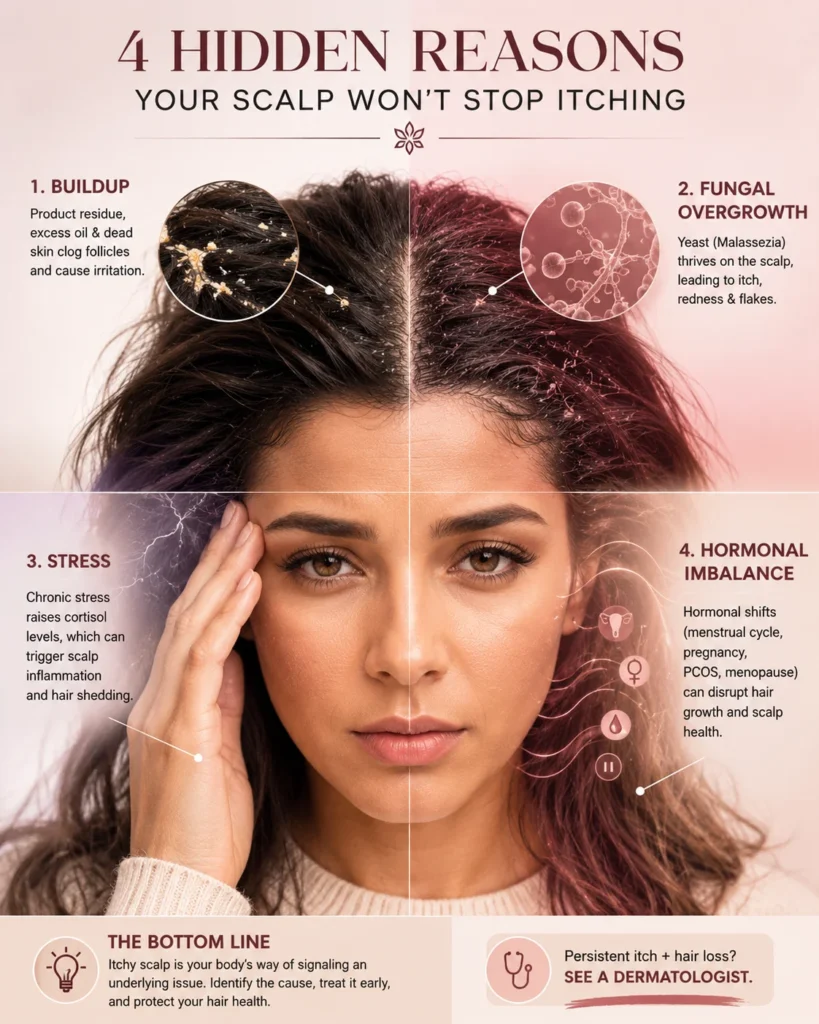
Seborrheic dermatitis tops the list. Yeast-driven inflammation, causes flaking and redness and a constant itch that shampoo alone won’t fix. Women confuse this with regular dandruff constantly. They’re not the same thing.
| Dandruff | Seborrheic Dermatitis | |
| Cause | Dry skin | Malassezia yeast overgrowth |
| Flakes | Small, white, dry | Larger, yellowish, oily |
| Itch level | Mild, comes and goes | Persistent, can be intense |
| Follicle damage? | Rare | Yes, from ongoing inflammation |
Buildup. Product residue, dead skin, excess sebum. It accumulates around follicle openings and basically suffocates them. You itch because the scalp is irritated. You thin because the follicles can’t function under layers of gunk.
Fungal issues. Tinea capitis, mostly. You’ll feel patchy itching, might notice small spots where hair just stops growing. People think of it as a kids’ problem. It’s not. Women pick it up after prolonged antibiotic use, living in humid climates, even sharing hairbrushes. Left alone, it spreads.
Hormonal shifts. Perimenopause. Postpartum. Thyroid changes. These alter how much oil your scalp makes, shift the pH, change the environment follicles live in. Doctors call the resulting hair loss telogen effluvium, too many hairs entering the resting phase at once. The scalp discomfort that rides alongside it? Usually dismissed as coincidence.
It’s not coincidence.
Stress. Not the “rough week at work” kind. Chronic, sustained stress. The kind that keeps cortisol elevated for months. That disrupts hair growth directly. Women who show up reporting sudden scalp tenderness plus extra shedding at the same time, that connection between anxiety and physical symptoms is well documented. Cortisol changes how your body maintains tissue. Scalp tissue included.
When to Actually Worry
Some itching is just dry skin. Seasonal thing. A better conditioner fixes it. Move on.
But what if it doesn’t stop?
Two weeks of scratching and nothing’s working. That’s different. Add visible flaking, yellowish and greasy, not dry white dust. Maybe your scalp is tender in one spot and you can’t figure out why. More hair in your brush than last month. A patch near your temple that feels thinner when you run your fingers through it.
Any two of those showing up together? See a dermatologist. Not your GP. I say that because GPs, honestly, most of them will hand you a medicated shampoo recommendation and send you home. They’re not examining your scalp under magnification. A dermatologist uses a dermoscope, checks follicle health directly, spots the difference between conditions that look identical without one. That distinction matters because the treatments are completely different.
Dandruff or Dry Scalp? Wrong Answer Means Wrong Treatment.
This confusion costs women months.
Dry scalp. Not enough moisture. Small white flakes, powdery, your scalp feels tight. Uncomfortable but not inflamed. Gentler shampoo, wash less often, usually clears up.

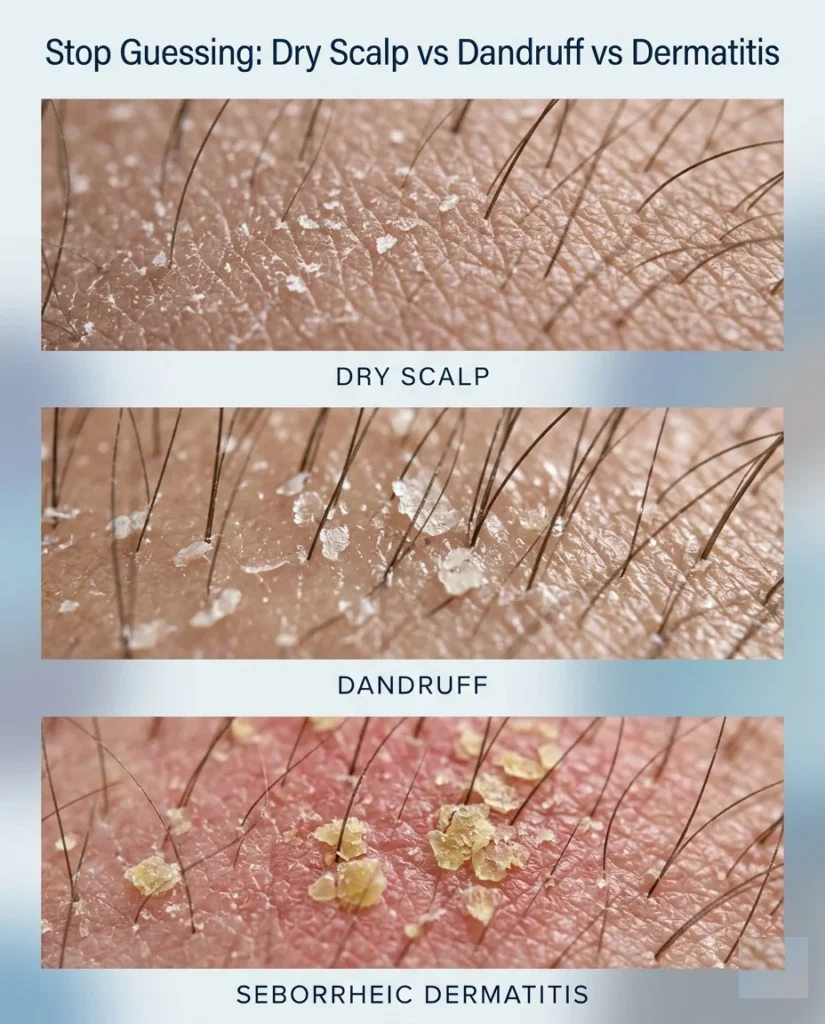
Dandruff? Different animal. Malassezia yeast driving it. Bigger flakes, sometimes oily. Itch is more aggressive, more persistent. And the part nobody tells you: when dandruff is actually seborrheic dermatitis, it creates this low-grade chronic inflammation sitting right around your follicles. Weeks of that. Months of that. Follicles weaken so gradually you don’t notice the thinning until someone, usually a dermatologist, connects it to the flaking you’ve had all along.
Here’s where it gets worse. Grab an anti-dandruff shampoo for a dry scalp problem and you strip whatever moisture was left. Use a moisturizing treatment on seborrheic dermatitis and you’re basically feeding the yeast. Both directions make things worse. Both feel like you’re doing the right thing.
You’re not. Not without knowing which one you actually have.
Fixing It Without Turning Scalp Care Into a Second Job
Nobody needs a twelve-product scalp routine. That’s skincare marketing creeping into hair care. For most women dealing with itchy scalp and thinning hair, three or four actual changes do the work.
Washing frequency. Every day is too much. Two, maybe three times a week unless you’re genuinely sweating. Over-washing strips your scalp’s natural oil, your body overcorrects by producing more, and you’re stuck in this cycle of greasy roots and irritated skin. Sulfate-free shampoo. Non-negotiable if your scalp is already angry.
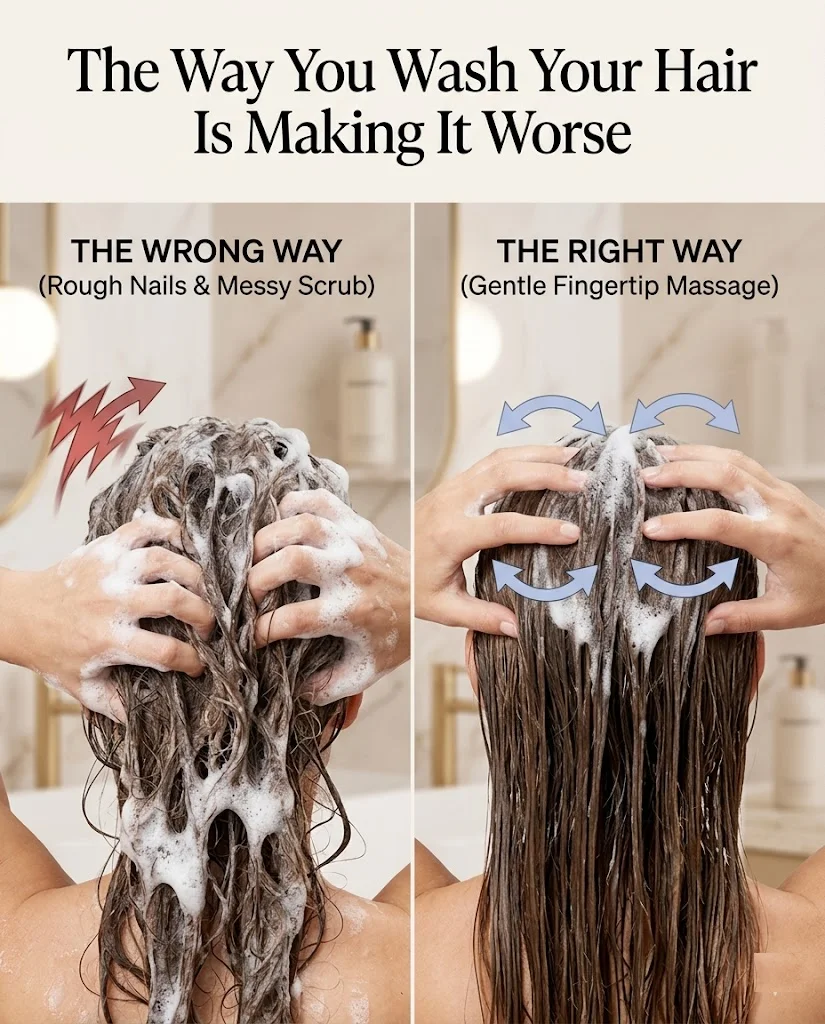
How you wash matters more than what you use. Seriously. Watch how most women shampoo. Product goes on the lengths, fingers barely touch the scalp, rinse, done. Thirty seconds of actual fingertip pressure on the scalp, circular motions, that alone clears buildup that’s been sitting on follicles for days. One client I read about in a trichology forum said her dermatologist told her the same thing, just wash your scalp properly, and her itching dropped by half in two weeks. No new products. Just technique.
Ingredients. Salicylic acid for buildup. Zinc pyrithione for yeast. Tea tree oil has antifungal properties but careful, undiluted tea tree on sensitive scalp skin burns. Which ingredient you need depends entirely on what’s causing your specific problem. That’s where most women waste money, buying products for the wrong condition. Knowing whether your hair is high or low porosity changes which ingredients actually work for you.
Your hairstyle might be the problem. Tight ponytails. Slicked-back buns. Braids pulled taut for eight hours. Traction alopecia is one of the most preventable forms of hair loss and one of the most ignored. If your scalp aches after wearing your hair up all day? That’s not “getting used to it.” That’s follicle damage happening while you sit at your desk. Same way standing on your feet all day wrecks your legs, sustained tension wrecks your hairline.
What a Dermatologist Actually Does (That You Can’t Do at Home)
You can fix buildup at home. You can switch shampoos, adjust washing frequency, stop wearing tight styles. That handles maybe 40% of cases.
The other 60%? You need someone looking at your scalp with a dermoscope.
A dermoscopy exam shows things you’d never catch in your bathroom mirror. Miniaturized follicles, meaning hairs growing back thinner each cycle. Perifollicular redness that signals inflammation deep enough to affect growth. Scalp scaling patterns that differentiate psoriasis from seborrheic dermatitis from contact dermatitis. Three conditions that look almost the same to you. Completely different treatments.
Blood work comes next if the dermatologist suspects something systemic. Thyroid panel. Ferritin levels, because iron deficiency flies under the radar in women who menstruate heavily. Hormonal markers if there’s reason to check. Sometimes the scalp issue is just the surface-level symptom of something internal that hasn’t been caught yet.
One thing worth knowing: women’s health supplements get recommended a lot for hair thinning. Some of them help. Biotin, iron, vitamin D when you’re genuinely deficient. But supplementing without bloodwork confirming a deficiency is guesswork. Expensive guesswork, usually.
The Scalp-Hair Connection Nobody Explained to You
Think of your scalp like soil. Follicles are the roots. When soil quality drops, what grows out of it suffers. Simple concept but somehow it gets lost in the noise of product marketing and miracle serums.
Scalp microbiome matters. That bacterial and fungal balance on your scalp isn’t just sitting there. It’s actively protecting follicles, regulating oil, keeping inflammation in check. Mess with it, through over-washing, harsh products, prolonged antibiotic use, and the environment your hair grows in changes. Not overnight. Slowly. The kind of slow where you don’t realize what happened until you’re holding a handful of hair six months later.
This is why the “just use this shampoo” advice fails so often. Shampoo treats the surface. If the issue is deeper, microbiome disruption, hormonal imbalance, chronic inflammation at the follicle level, surface-level fixes won’t cut it. Understanding your specific hair and scalp type changes how you approach the whole thing. A frizz problem and a thinning problem can start from the exact same scalp condition. Different symptoms, same root cause.
When It Grows Back and When It Doesn’t
Honest answer because too many articles dodge this part.
Most itching-related hair loss in women is reversible. Seborrheic dermatitis, treated properly, the hair comes back. Telogen effluvium from stress or hormonal shifts, once the trigger resolves, regrowth starts within three to six months. Traction alopecia caught early, stop the tension, follicles recover.
Caught late? Different story. Prolonged inflammation can scar follicles. Scarring alopecia means those follicles are done. No regrowth. No treatment brings them back. That’s the stakes of ignoring persistent scalp symptoms for a year because you figured it was “just dandruff.”
Not trying to scare anyone. Just stating what dermatologists see regularly and wish patients had come in sooner for.
Stop Ignoring What Your Scalp Keeps Telling You
Your scalp itches for a reason. It’s inflamed, irritated, infected, or reacting to something you’re doing to it daily. When that goes on long enough, hair loss follows. That’s not a maybe. That’s how follicle biology works.
The fix isn’t complicated for most women. Wash properly. Drop the sulfates. Loosen the ponytail. Pay attention to whether you’re dealing with dry scalp or something yeast-driven. And if nothing improves in a few weeks, get a dermatologist to actually look.
Your hair tells you it’s struggling by falling out. Your scalp told you first. Start listening earlier.